Loading DARC
Preparing the page for you.
Loading DARC
Preparing the page for you.
Led by Dr. Aaditya Malathy, OT, MS (USA), DARC's paediatric occupational therapy (OT) programme supports sensory processing, motor skills development, self-care and school participation. Assessment looks at each child's everyday challenges before building a structured, 45-minute session plan at Ashok Nagar or Pallikaranai, Chennai.
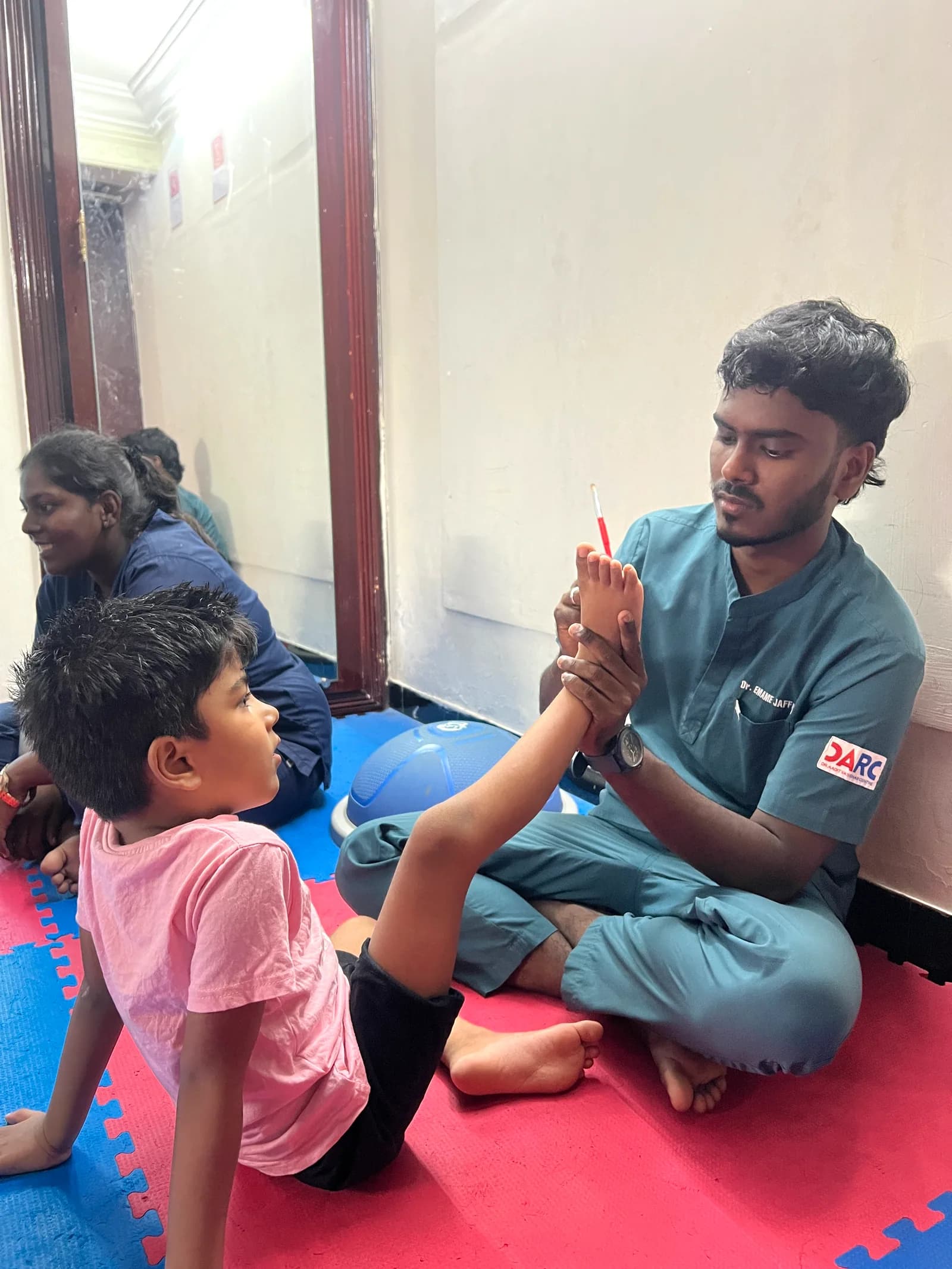
Led by Dr. Aaditya
Occupational Therapy
🧠 Root Cause OT
Dr. Aaditya personally leads the initial consultation for every new family — mapping the child's sensory, motor, and reflex profile before any therapy begins.
Ashok Nagar
Branch
Pallikaranai
Branch
Online
OT Guidance
Goals
Measured Monthly
Parent
Guidance Included
Monthly
Progress Reviews
Home
Parent Guidance
Outcomes vary by child and depend on assessment findings, therapy consistency, home practice, and family goals.
DARC's OT begins with understanding the child's foundations — sensory, motor, reflex, and functional patterns — before choosing any intervention approach. Every session is 45 minutes, structured, and tied to a goal that the family can follow.
Dr. Aaditya maps each child's sensory processing, primitive reflexes, and postural responses before planning therapy.
Rather than activities for their own sake, OT at DARC targets the underlying foundations affecting daily participation.
OT goals are aligned with Speech, Special Education, and parent guidance so that gains carry across all areas of the child's life.
Families receive structured reviews covering what improved, what needs support, and the next focus — every month.
Consultation-led start
Every OT journey begins with Dr. Aaditya's personal consultation — not a junior assessment.
Root cause precision
Sensory, motor, reflex, and functional foundations are assessed before choosing any therapy approach.
Transparent reviews
Parents follow progress monthly with goal updates, observations, and the next therapy direction.
Every OT journey begins with Dr. Aaditya's direct consultation. Session plans are adapted monthly based on progress reviews, not preset protocols.
OT Lead
Founder, DARC. Clinical lead for Occupational Therapy across all DARC branches.
"Occupational therapy at DARC is not about doing activities for the sake of activities. It is about finding the right sensory, motor, and reflex foundation that needs support — and building from there, one structured session at a time."Dr. Aaditya Malathy
DARC's OT approach is built on one principle: clarity before intervention. After understanding the child's sensory profile, motor foundations, reflex patterns, and daily function challenges, Dr. Aaditya builds a child-specific plan — updated monthly based on what the family observes at home.
🔍 Our approach
For each developmental area, DARC uses structured, evidence-informed methods to build skills and independence.
Focus
Processing sensory input effectively for better regulation and function.
Our Approach
Addressing underlying sensory processing challenges through structured, sensory-informed methods.
Progress Review: Reviewed
Focus
Self-feeding, dressing, hygiene, and independence in routines.
Our Approach
Teaching practical skills for self-feeding, dressing, hygiene, and toileting.
Progress Review: Reviewed
Focus
Hand strength, precision, and coordination for writing and daily tasks.
Our Approach
Building hand strength, coordination, and precision for writing and play.
Progress Review: Reviewed
Focus
Emotional control, attention, and managing sensory input.
Our Approach
Helping children manage emotions and sensory input through structured strategies.
Progress Review: Reviewed
👨👩👧 For Families
● Results
Every child is different. Progress depends on the child's profile, consistency, home support, and the therapy direction identified at consultation.
🗓️ Your journey
A structured, transparent journey from consultation to measurable progress.
Assessment
Dr. Aaditya personally leads the initial consultation, mapping sensory, motor, reflex, and daily function concerns.
Individual plan
45-minute sessions targeting the root-cause foundations identified in the consultation.
Agreed reviews
Parents receive a structured review covering goals, observations, improvements, and the next focus area.
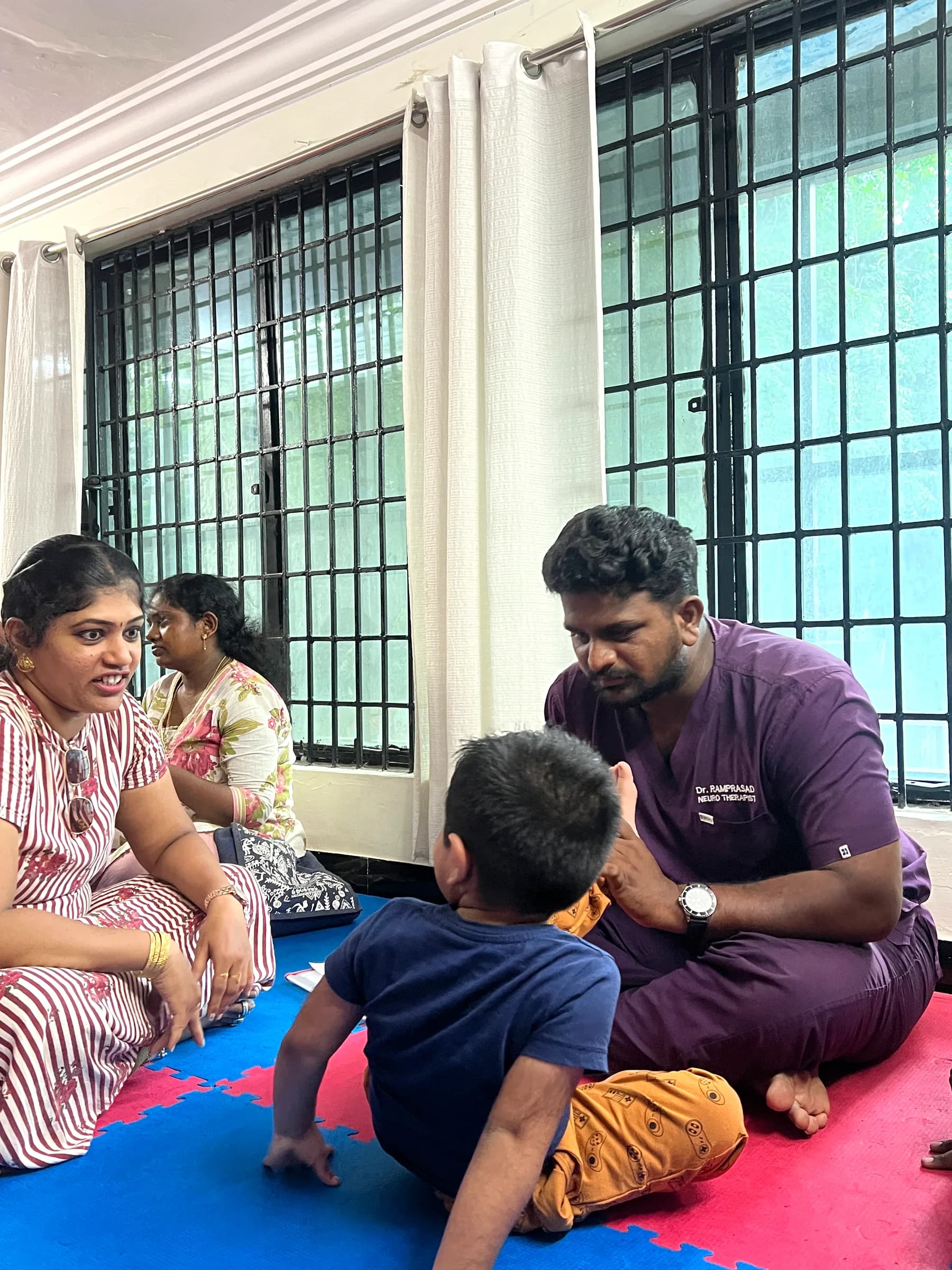
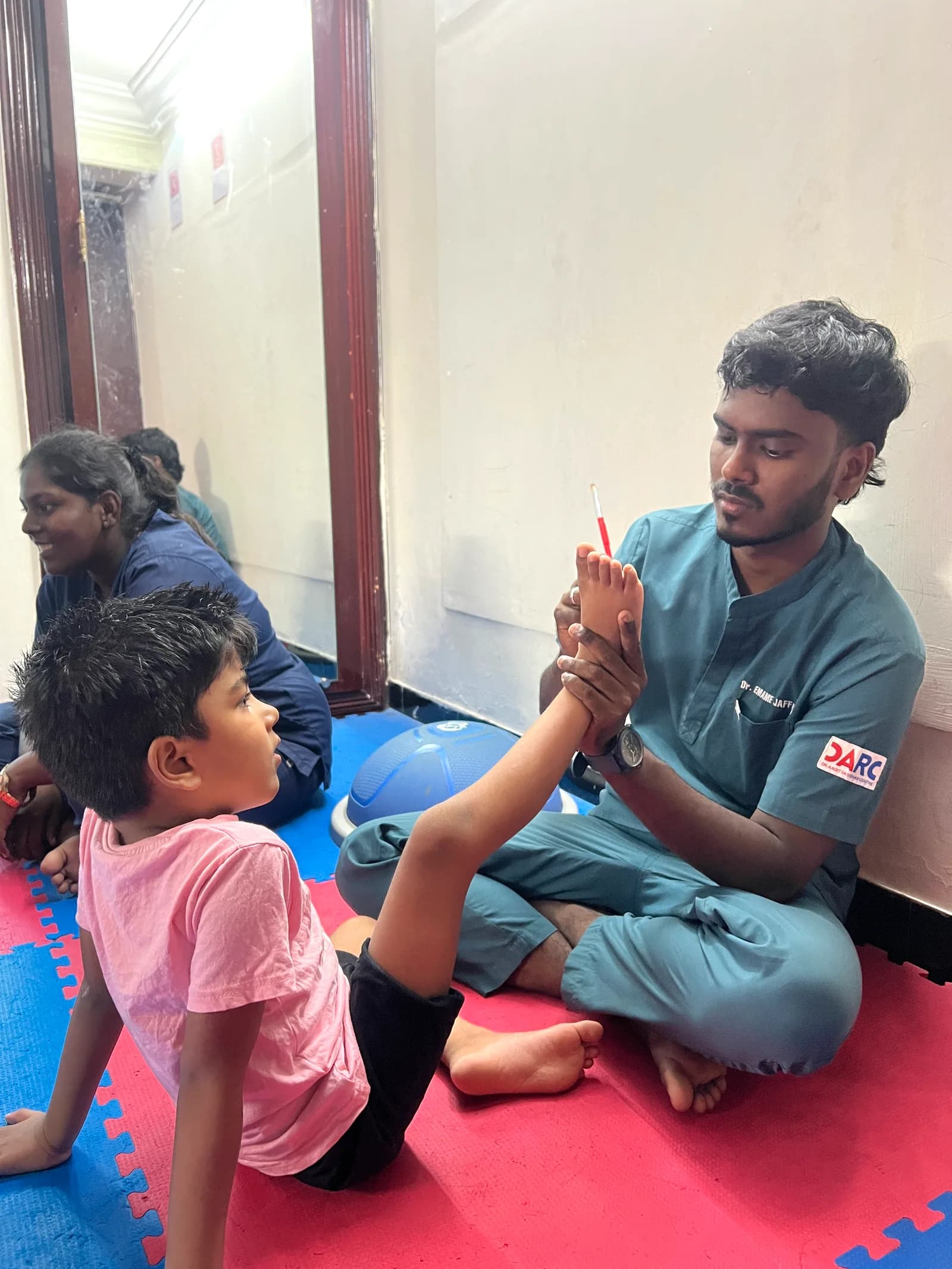
Every family receives a practical home programme alongside therapy — sensory routines, motor activities, self-care practice, and regulation strategies — designed to fit into daily life. Parents are guided on what to do, what to avoid, and how to support therapy goals at home.
Your therapists
Every child at DARC has a named therapist and a structured plan. Your child is not a number in a schedule.

OT, MS (USA)
Occupational Therapist and Founder
Dr. Aaditya leads DARC's assessment-first, root-cause focused approach for children with autism, ADHD, developmental delay, sensory processing concerns and daily function challenges.
Paediatric occupational therapy and sensory-motor support
Paediatric OT Team
DARC's OT team supports sensory processing, fine motor skills, handwriting readiness, attention, self-care routines and daily independence for children.
How it works
Every new family begins with a personal consultation with Dr. Aaditya. Your child's therapy team is then confirmed based on what the assessment identifies — not a generic assignment. The same therapist leads every session so your child builds familiarity and trust.
🎥 Patient Stories
Shared voluntarily by DARC families. Tap any video to watch.
A parent shares their child's therapy journey at DARC
A family shares what changed for them
Trust, clarity, and visible progress
Real parent feedback from DARC Chennai
Parents talk about their experience
A parent story about care and guidance
Clinic support shared by a DARC family
A therapy journey shared by a parent
Individual outcomes vary. Stories shared voluntarily by DARC families — no compensation given.
Connected care
Most children at DARC benefit from a connected plan across OT, speech, behaviour support, and parent coaching. The right combination depends on the assessment — but these are the services most often linked with OT.
Occupational therapy for children helps them develop the skills needed to participate meaningfully in daily life — including self-care, play, school learning, and social interaction. The word “occupation” in paediatric OT refers to all the activities a child needs and wants to do, not just work.
A paediatric occupational therapist assesses a child's sensory processing, fine and gross motor development, reflex integration, attention, self-regulation, and functional abilities. Rather than treating surface behaviours, OT at DARC targets the underlying neurological and developmental foundations — sensory, motor, reflex, and postural — that affect daily participation.
At DARC, occupational therapy is led by Dr. Aaditya Malathy (OT, MS USA)— Founder of DARC and a specialist in paediatric OT, sensory integration, primitive reflex integration, and photobiomodulation. Every child's therapy direction begins with Dr. Aaditya's personal consultation, followed by a structured, goal-based programme reviewed monthly.
Paediatric OT in Chennai at DARC supports children with autism, ADHD, sensory processing differences, developmental delay, cerebral palsy, Down syndrome, fine motor delays, self-care skill gaps, handwriting difficulties, school readiness concerns, and more. Both in-clinic sessions (Ashok Nagar and Pallikaranai) and online guidance are available.
Parent OT library
Use these parent guides to understand common OT concerns, compare centres responsibly, and prepare useful questions before an assessment.
Explore all 10 occupational therapy parent guidesYour first assessment
A paediatric occupational therapy assessment explores participation in activities such as play, dressing and school routines. The aim is to understand the child's abilities, environment and family priorities before recommending an individual plan.
Step 1
Choose a specific example from home or school: what the child can do, which part is difficult, and how much help is needed. Bring existing developmental reports and relevant teacher observations rather than assuming a single sensory or motor cause.
Step 2
AOTA's evaluation guidance starts with activity history and performance. Ask how the findings relate to your child's daily participation, whether another assessment is needed and why any proposed activity or support is appropriate.
Step 3
Ask how a goal will be measured in a familiar routine and what support the child needs now. Progress should be discussed in terms of participation and help needed, as well as observations during a therapy session.
Step 4
Discuss the recommended frequency, assessment and session fees, and a review point before committing. Tell the therapist what your family can realistically practise between visits. The programme should fit the assessed goals rather than a fixed package or improvement deadline.
New No: 59, 7th Avenue, Ashok Nagar, Chennai, Tamil Nadu 600083
Choose Ashok Nagar when central Chennai travel is more practical for regular assessment, therapy and parent-review visits.
5/1077, Maxworth Nagar 2nd Street, Maxworth Nagar, Pallikaranai, Chennai, Tamil Nadu 600129
Choose Pallikaranai when south Chennai access makes consistent visits and parent participation easier for your family.
❓ Common Questions
Paediatric occupational therapy (OT) helps children develop the skills needed for daily life, including self-care, play, school, and social participation. A paediatric OT assesses a child's sensory processing, motor development, reflex integration, and functional abilities, then builds a structured plan to address the underlying foundations. At DARC, OT is led by Dr. Aaditya Malathy (OT, MS USA) and focuses on root cause understanding before any therapy begins.
There is no fixed age — early intervention is generally more effective. Families at DARC have started therapy for children as young as 18 months. If you are noticing concerns with sensory behaviour, motor skills, self-care, attention, or school readiness, an assessment is the right next step regardless of age.
Sensory integration therapy helps children whose brains process sensory input differently — leading to over-reaction, under-reaction, or poor regulation. A sensory-informed OT uses structured activities involving vestibular (movement), proprioceptive (body awareness), and tactile (touch) input to help the child's nervous system organise and respond more effectively.
Primitive reflexes are automatic movement patterns present at birth. When these reflexes do not integrate by the expected age, they can affect posture, coordination, attention, learning, and emotional regulation. DARC's OT approach includes assessing and integrating retained primitive reflexes as part of a child's overall therapy plan.
Frequency is decided after assessment. Some children need higher-frequency support, while others may begin with fewer sessions plus a structured home programme.
Sensory activities are selected and supervised by trained therapists based on the child's profile, comfort, and regulation needs.
Progress varies by the child's starting point, goals, participation and support between visits. The therapist agrees a review point and discusses changes in daily activities and the help needed. DARC does not promise a fixed improvement deadline.
Yes. Parents receive a practical home programme including sensory routines, motor activities, self-care practice, and regulation strategies — designed to fit into daily life.
Yes. Dr. Aaditya personally leads every initial consultation for new families. This ensures that the therapy direction is grounded in a direct, thorough understanding of each child.
Occupational therapy price depends on the assessment findings, recommended session frequency, and plan length. DARC explains the fees clearly after the OT assessment, before parents commit to a therapy plan.
Occupational therapy benefits can include better sensory regulation, stronger fine motor and handwriting skills, improved self-care independence, and easier participation in school and daily routines. Benefits vary by child and depend on consistency, the child's starting point, and the goals set after assessment.
When choosing a paediatric occupational therapist near you, check their qualifications, experience with your child's needs, assessment process, home guidance and progress reviews. DARC offers paediatric OT at Ashok Nagar and Pallikaranai in Chennai, guided by Dr. Aaditya Malathy, OT, MS (USA). Choose a branch you can attend consistently and ask how the proposed goals relate to your child's daily activities.
A paediatric occupational therapy evaluation starts with your child's daily routines and your priorities. The occupational therapist observes relevant play, hand skills, coordination, sensory responses and self-care tasks, then explains the findings and proposed goals. Bring any previous reports and examples of tasks your child finds difficult. Assessment tools are selected for the child's age and needs.
Occupational therapy focuses on participation in daily activities such as dressing, eating, play, writing and school routines. Physiotherapy, also called physical therapy or PT, focuses on movement, posture, balance and mobility. Their goals can overlap. DARC coordinates OT and paediatric physiotherapy when an assessment identifies a need for both.
Fine motor skills involve controlled hand and finger movements used in play, pencil use and self-care. Motor planning involves organising and carrying out a movement or task. DARC chooses occupational therapy activities around the child's functional goals, which may include hand coordination, using both hands together, pre-writing practice or completing the steps of dressing. Activities and progress measures are individualised.
Clinical lead
Occupational Therapist and Founder · OT, MS (USA)
View professional profileThese references inform the general educational content on this page. They do not imply endorsement of DARC and do not replace an individual assessment.
DARC does not promise a cure or a fixed result. Recommendations depend on the child's needs, safety, participation and professional assessment.
✦ Next step
Book an OT assessment or start with the Child Development Check so DARC can guide the right therapy direction.