Loading DARC
Preparing the page for you.
Loading DARC
Preparing the page for you.
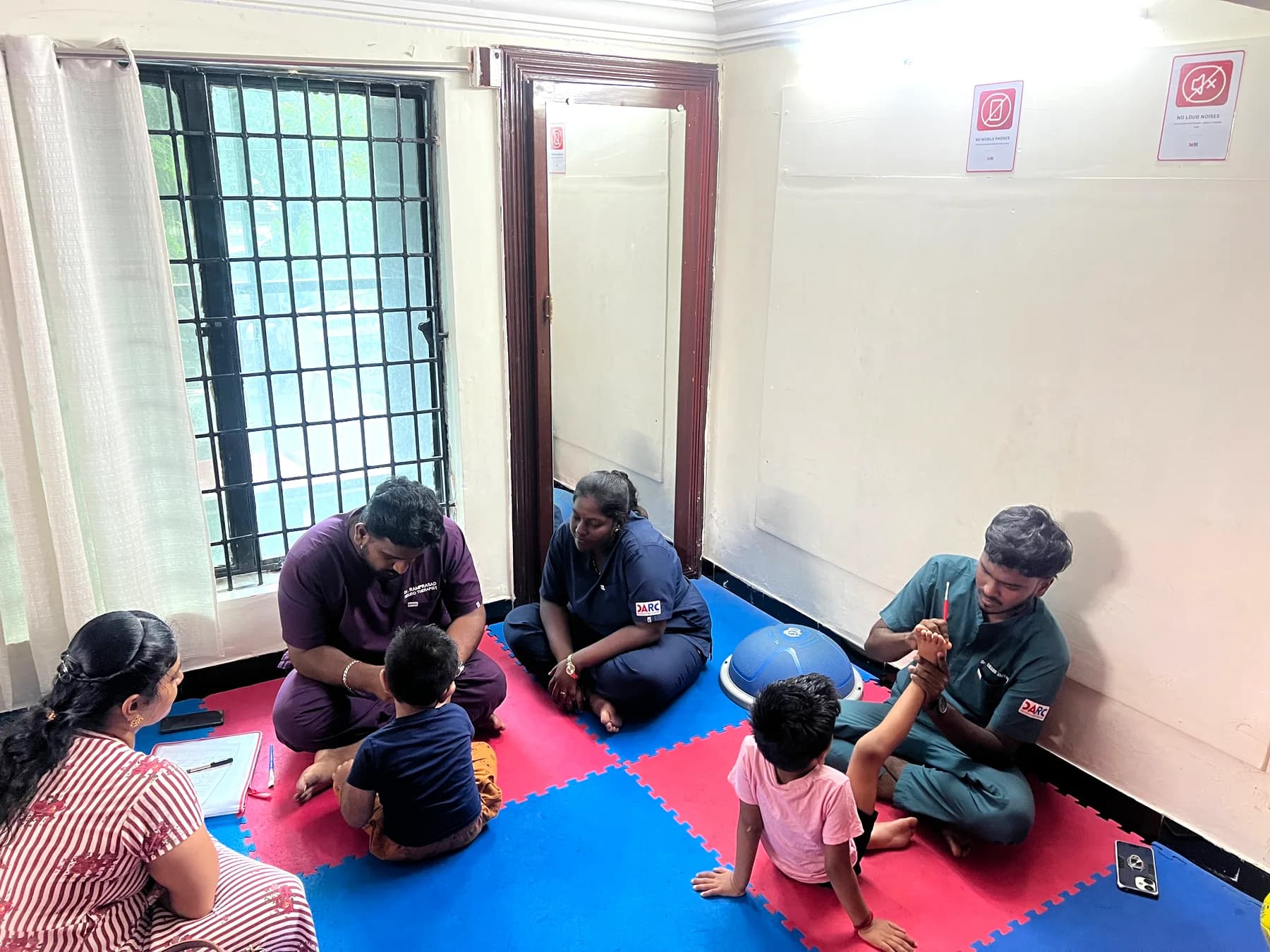
Led by Dr. Aaditya Malathy, OT, MS (USA), DARC's Sensory Integration programme supports children whose nervous systems struggle to process and respond to everyday sensory input — including touch, sound, movement, and body awareness. Each session is 45 minutes, structured, and mapped to a child-specific sensory profile.
Led by Dr. Aaditya
Sensory Integration
🧠 Root Cause SI
Dr. Aaditya maps each child's sensory responses before any therapy begins — over-responsivity, seeking patterns, body awareness, and regulation needs all assessed first.
Ashok Nagar
Branch
Pallikaranai
Branch
Online
SI Guidance
Profile
Sensory Mapping
Child-led
Comfort Respected
Monthly
Progress Reviews
Home
Routine Support
Outcomes vary by child and depend on assessment findings, therapy consistency, home practice, and individual sensory profile.
DARC's Sensory Integration approach is built on profile-first assessment. Understanding how each child's nervous system processes input — before selecting any activity — is what makes the therapy effective and the sensory diet sustainable at home.
Dr. Aaditya maps each child's unique sensory responses — over-responsivity, under-responsivity, seeking patterns, and body awareness needs — before any therapy begins.
Activities are sequenced and graded carefully — never forced — building the nervous system's capacity to process and tolerate everyday sensory input.
A personalised daily sensory routine is built into the child's home and school day — meeting sensory needs appropriately throughout the day.
Families receive structured monthly updates covering sensory tolerance, regulation improvements, behaviour changes, and the next therapy focus.
Assessment-led planning
Sensory activities are chosen based on the child's specific profile — not a general protocol for all sensory difficulties.
Regulation-first approach
Sensory work at DARC addresses the nervous system foundations — not just the surface behaviours that sensory challenges produce.
Transparent monthly reviews
Parents receive clear updates on what changed, what still needs support, and what the home sensory routine should focus on next.
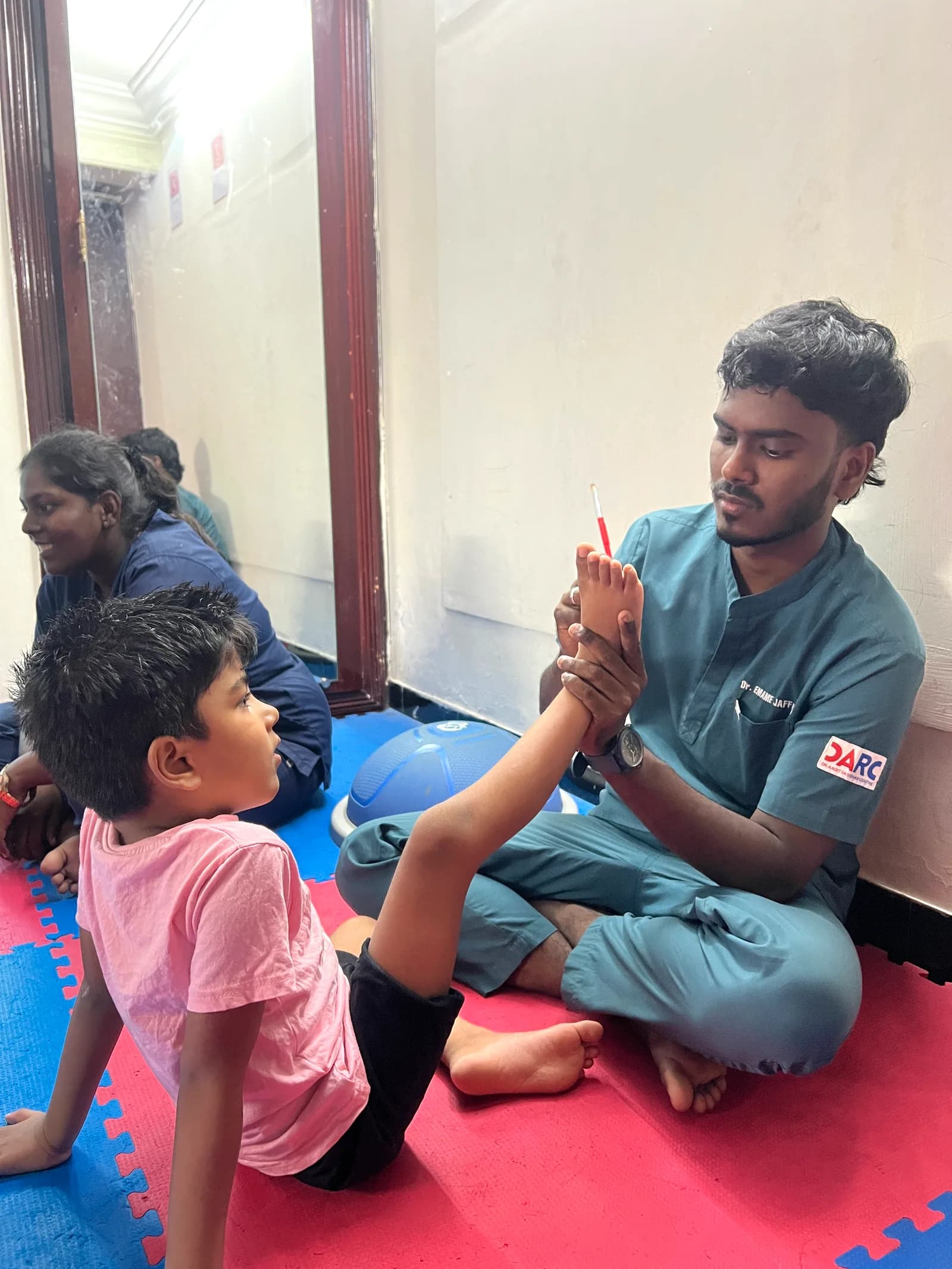
Dr. Aaditya personally leads the sensory assessment and builds each child's programme. Activities are never forced and are always supervised based on the child's comfort and regulatory state.
SI Lead
Founder, DARC. Clinical lead for Sensory Integration Therapy across all branches.
"Many behaviours that families find challenging — meltdowns, avoidance, aggression, shutdowns — are rooted in unmet sensory needs. When we understand the child's sensory profile first, we can address the foundation, and behaviour often improves from the inside out."Dr. Aaditya Malathy
DARC's sensory integration approach begins with mapping each child's unique neurological responses — then designing graded, structured activities that build the nervous system's capacity to process and tolerate everyday sensory input. A personalised home sensory diet is introduced as therapy progresses.
🔍 Dr. Aaditya's Method
Each sensory challenge is approached systematically using structured, sensory-informed methods adapted to the child's unique neurological profile.
Focus
Extreme reactions to everyday sounds, textures, touch, or movement.
Our Approach
Gradual, controlled exposure to sensory experiences using structured, sensory-informed methods.
Progress Review: Reviewed
Focus
Constant movement, mouthing, crashing, or seeking strong input.
Our Approach
Customised daily activity schedules that meet the child's sensory needs appropriately.
Progress Review: Reviewed
Focus
Difficulty knowing where the body is in space, clumsiness, coordination.
Our Approach
Activities targeting the body's sense of position and movement to improve coordination.
Progress Review: Reviewed
Focus
Meltdowns, shutdowns, difficulty transitioning, or managing daily change.
Our Approach
Building the child's internal regulation system through sensory-based calming strategies.
Progress Review: Reviewed
👨👩👧 For Families
● Results
Every child is different. Progress depends on the child's sensory profile, therapy consistency, home sensory diet, and family involvement.
🗓️ Your journey
A structured, profile-led journey from sensory assessment to regulation and daily routine integration.
Week 1–2
Dr. Aaditya maps the child's sensory profile — over-responsivity, under-responsivity, seeking patterns, and body awareness needs.
Weeks 3–6
Controlled, graded sensory experiences build the nervous system's capacity to tolerate and process everyday sensory input.
Weeks 7–12
Sensory experiences are layered with motor, attention, and regulation goals. Home sensory diet programmes are introduced.
Month 3+
Skills are carried into home, school, and social environments. Parents are equipped with long-term sensory strategies.
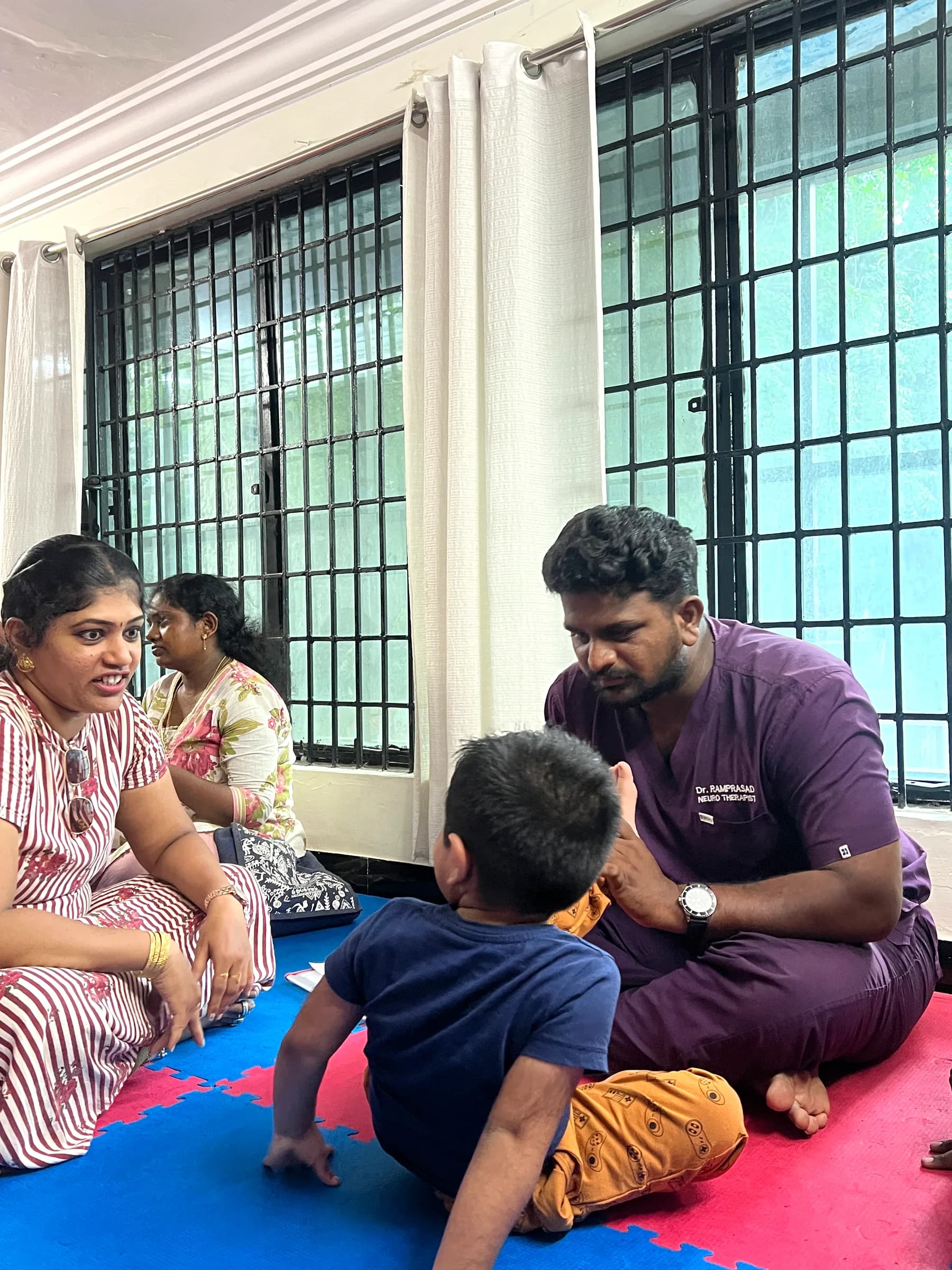
Every family receives a home sensory diet — a personalised schedule of sensory activities throughout the child's day that meet their sensory needs appropriately and improve regulation, focus, and behaviour. Parents are guided on what to do, what to avoid, and how to modify environments at home.

Occupational Therapist and Founder
Dr. Aaditya leads DARC's assessment-first, root-cause focused approach for children with autism, ADHD, developmental delay, sensory processing concerns and daily function challenges.
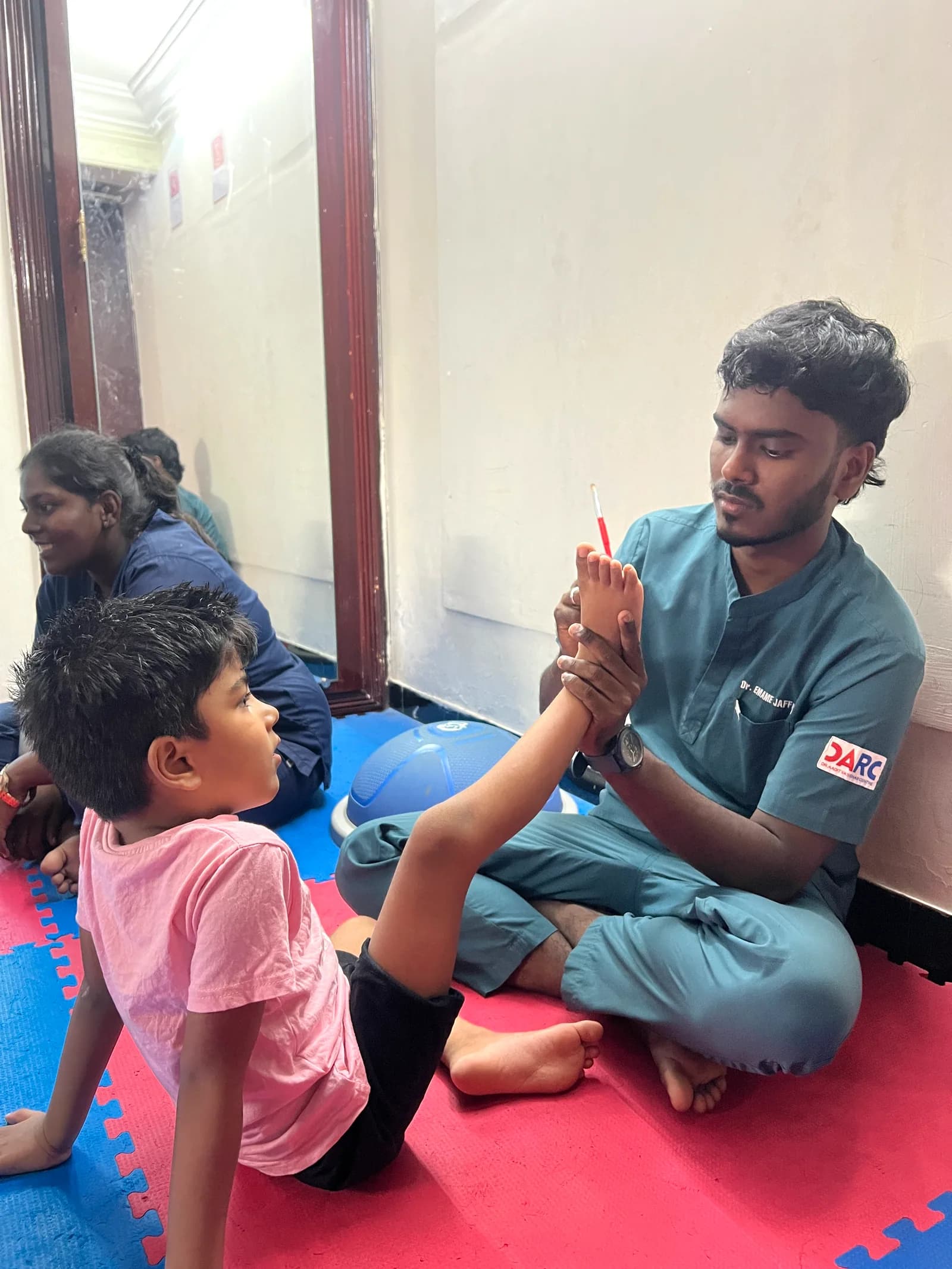
Paediatric OT Team
DARC's OT team supports sensory processing, fine motor skills, handwriting readiness, attention, self-care routines and daily independence for children.
Our SI process
Profile Mapping First
Dr. Aaditya maps over-responsivity, under-responsivity, seeking patterns and body awareness before any activity is chosen.
Graded Activities
Every session is graded to the child's current regulatory state — never forced, always adapted.
Home Sensory Diet
Families receive a personalised daily sensory schedule to maintain regulation across home and school.
🎥 Patient Stories
Shared voluntarily by DARC families. Tap any video to watch.
A parent shares their child's therapy journey at DARC
A family shares what changed for them
Trust, clarity, and visible progress
Real parent feedback from DARC Chennai
Parents talk about their experience
A parent story about care and guidance
Clinic support shared by a DARC family
A therapy journey shared by a parent
Individual outcomes vary. Stories shared voluntarily by DARC families — no compensation given.
🔗 Related Services
Sensory integration is most effective when connected with the child's occupational, communication, and behavioural needs.
Sensory integration therapy is an occupational therapy-based approach that helps children whose nervous systems struggle to process and respond to everyday sensory information — touch, sound, movement, body awareness, and other sensory inputs. When the brain cannot organise these signals effectively, children may be over-sensitive, under-sensitive, or constantly seeking sensory input in ways that interfere with daily life, learning, and relationships.
At DARC, sensory integration is led by Dr. Aaditya Malathy, OT, MS (USA), across both the Ashok Nagar and Pallikaranai branches. Every programme begins with a detailed sensory profile mapping — assessing the child's over-responsivity, under-responsivity, sensory seeking patterns, vestibular and proprioceptive processing, and body awareness — before any activity is chosen. This profile-first approach is what separates effective sensory therapy from generic sensory play.
The therapy uses graded, structured activities that build the nervous system's capacity to tolerate and respond appropriately to sensory input. Activities are carefully sequenced — never forced — and adapted each session based on the child's current regulatory state. A personalised home sensory diet is built into the programme, giving families a practical daily schedule of sensory activities to meet the child's needs between sessions.
Sensory integration therapy at DARC supports children with sensory processing difficulties, autism, ADHD, developmental coordination disorder, hypotonia, primitive reflex retention, and conditions where sensory regulation underpins daily function. Many challenging behaviours — meltdowns, avoidance, aggression, refusal — are rooted in unmet sensory needs. When the sensory foundation is addressed, behaviour, attention, and learning often improve from the inside out.
❓ Common Questions
Sensory integration therapy is an evidence-based occupational therapy approach that helps children whose nervous systems struggle to process everyday sensory input — such as touch, sound, movement, and body awareness. At DARC, each session is built around the child's unique sensory profile, using graded activities to build the nervous system's capacity to tolerate and respond to sensory input effectively.
Sensory processing disorder (sometimes called sensory processing difficulty) describes a condition where the brain has difficulty organising and responding to sensory information from the body and environment. Children may be over-sensitive (over-responsive), under-sensitive (under-responsive), or constantly seeking sensory input. It often co-occurs with autism, ADHD, and developmental coordination difficulties.
A sensory diet is a personalised schedule of sensory activities built into the child's daily routine — designed to meet their sensory needs appropriately throughout the day. It helps improve regulation, focus, behaviour, and participation in everyday activities. DARC provides each family with a specific home sensory diet as part of the therapy programme.
Signs include extreme reactions to sounds, textures, movement, or touch; constant sensory seeking; poor body awareness; difficulty with transitions; or regulation challenges. A sensory assessment can clarify the child's profile.
Yes. All sensory activities at DARC are selected and supervised by Dr. Aaditya based on the child's profile, comfort, and regulatory state. Activities are graded carefully and never forced.
Sensory overload or difficulty regulating may contribute to meltdowns, avoidance or shutdowns for some children. Assessment helps the team understand whether sensory factors are relevant and what support may be appropriate.
Yes. Sensory integration is often delivered alongside OT and Speech Therapy at DARC. Addressing sensory foundations frequently makes communication and skill-building sessions more effective.
There is no fixed timeline. Progress depends on the child's sensory profile, goals, attendance and use of suitable strategies in daily routines. The team reviews progress regularly and adjusts the plan when needed.
Sensory processing describes how a person responds to information such as touch, sound and movement. Sensory modulation concerns how those responses are adjusted; sensory regulation refers to managing sensory needs during everyday activities. A paediatric occupational therapist considers these patterns alongside the child's routines and participation. DARC uses assessment-led sensory support, with goals such as more comfortable dressing, play or classroom transitions.
DARC provides sensory therapy through its Ashok Nagar and Pallikaranai branches in Chennai. Start with an assessment of the child's sensory responses and daily challenges, then discuss suitable clinic activities and home strategies. Choose a branch you can visit regularly; the team explains whether sensory support should be part of occupational therapy or a coordinated plan.
Clinical lead
Occupational Therapist and Founder · OT, MS (USA)
View professional profileThese references inform the general educational content on this page. They do not imply endorsement of DARC and do not replace an individual assessment.
DARC does not promise a cure or a fixed result. Recommendations depend on the child's needs, safety, participation and professional assessment.
✦ Next step
Book a sensory assessment or start with the Child Development Check so DARC can guide the right therapy direction.