Loading DARC
Preparing the page for you.
Loading DARC
Preparing the page for you.
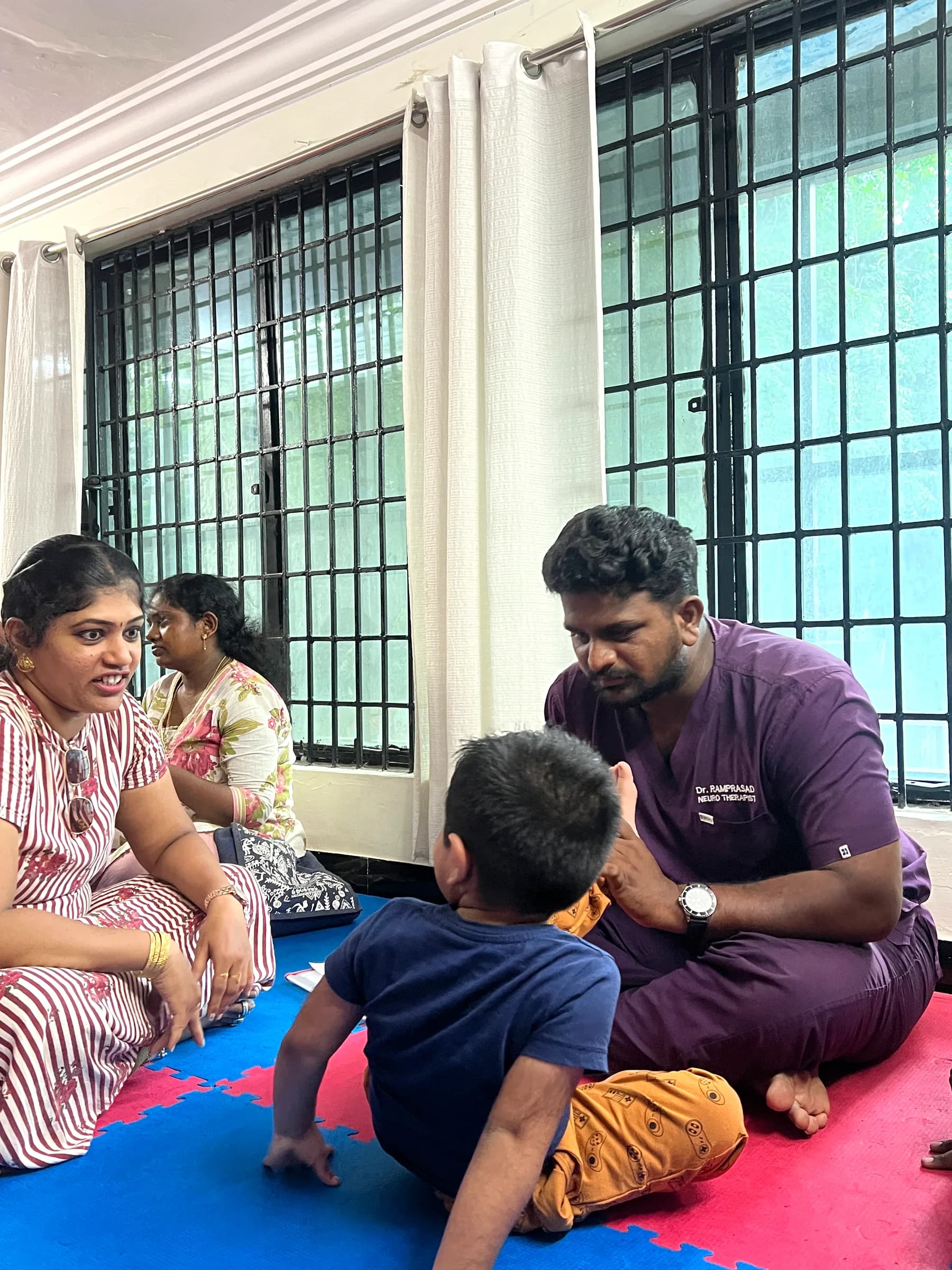
At DARC, behaviour is understood as communication. A child who melts down, shuts down, refuses, or lashes out is expressing something their words cannot yet reach. Our Behavioural Therapy programme is regulation-first and positive behaviour support-informed — understanding the function of behaviour before working on change, and equipping families with strategies that sustain at home.
Regulation-first
Behavioural Therapy
💙 Positive Behaviour Support
DARC identifies the function of each behaviour before choosing a strategy — then equips the child and family with tools that work in real life.
Ashok Nagar
Branch
Pallikaranai
Branch
Online
Parent Coaching
Plan
Behaviour Support
380+
Families Supported
12–18
Weeks Average
Home
Parent Guidance
Outcomes vary by child and depend on assessment findings, therapy consistency, home practice, and family goals.
DARC's behavioural approach is built on one belief: regulation before strategy. Before working on changing any behaviour, the team understands its function, the child's sensory and emotional baseline, and the family's capacity to implement strategies consistently at home.
A child who melts down, shuts down, refuses, or lashes out is communicating something their words cannot yet express. DARC starts by understanding the message.
Every behaviour has a function — escape, attention, sensory need, or communication. DARC identifies the function before choosing a strategy.
Children who are dysregulated cannot learn new skills. Regulation is the foundation from which all behavioural and social skills are built.
Parents receive strategies, language, and routines to maintain consistency at home — so gains made in sessions carry into daily life.
Compassionate, not compliance-based
DARC's approach prioritises the child's dignity and emotional wellbeing — not rote compliance or punishment-based methods.
Positive behaviour support
We understand why behaviours occur and teach better alternatives through structured, positive reinforcement strategies.
Monthly progress reviews
Parents receive clear updates on behaviour patterns, goals, improvements, and the next focus area — every month.
DARC's behavioural approach never uses punishment, forced compliance, or distress-based methods. Every strategy is grounded in compassion, understanding, and the child's long-term wellbeing.
Our philosophy
Positive Behaviour Support-informed, compassionate, and built around the child's communication needs.
"We do not start with trying to stop a behaviour. We start by understanding what the child is trying to communicate — and then we give them a better way to say it, one that works for them and for everyone around them."DARC Behavioural Team
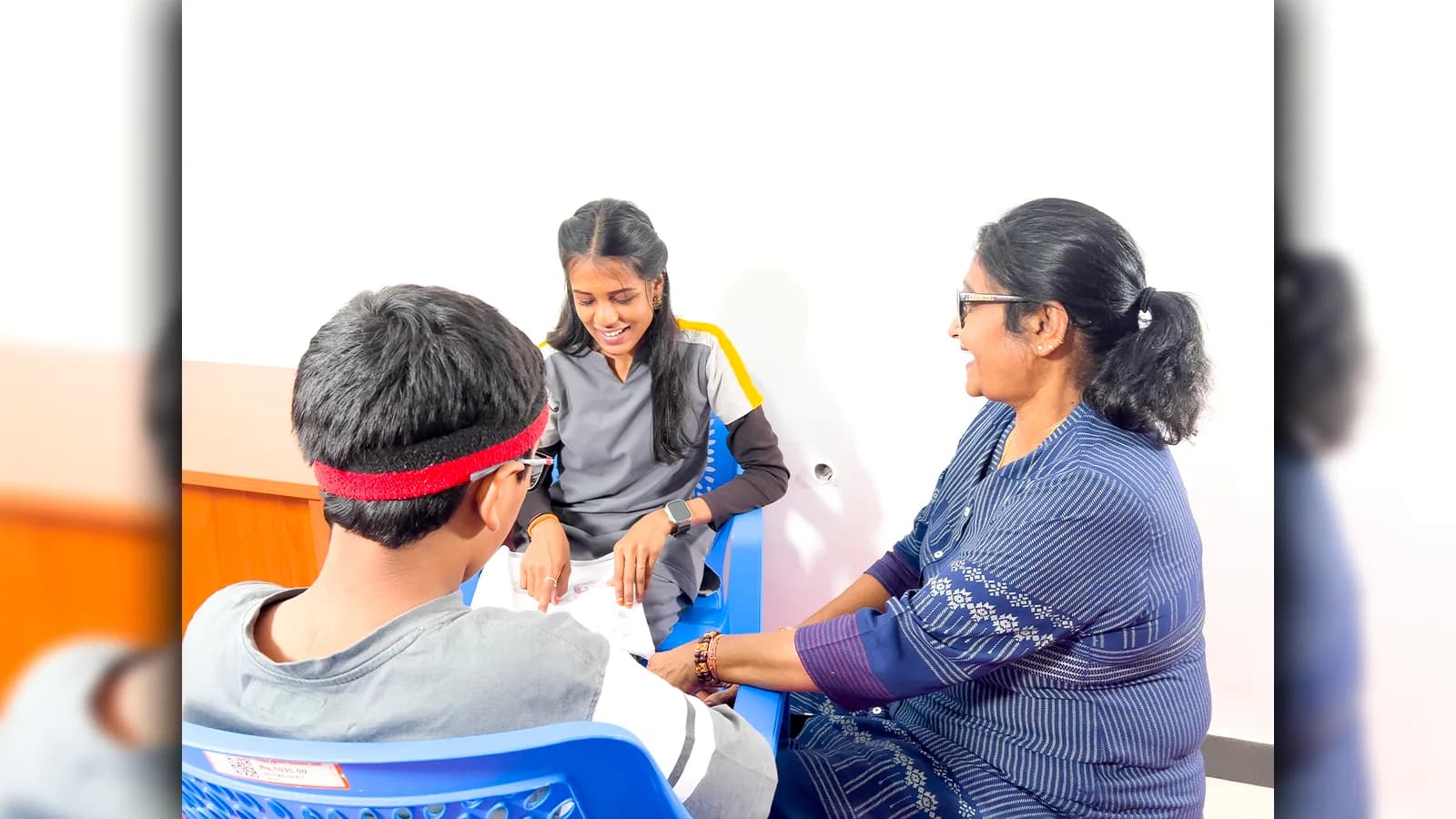
DARC's behavioural approach recognises that children who are dysregulated cannot learn new skills. Regulation is built first — through understanding the sensory, emotional, and environmental factors driving the behaviour — and then replacement skills are taught through structured, compassionate, positive reinforcement-based strategies.
🔍 Our approach
Evidence-based, compassionate behavioural support focused on emotional regulation, social skills, and adaptive behaviours.
Focus
Managing big feelings, reducing meltdowns, and developing coping strategies.
Our Method
Understanding behaviour functions and teaching replacement skills with positive reinforcement.
Progress Review: Reviewed
Focus
Building friendships, conversation skills, and peer play abilities.
Our Method
Teaching children to identify, understand, and manage emotions effectively.
Progress Review: Reviewed
Focus
Developing flexibility with routines, transitions, and daily activities.
Our Method
Building conversation, sharing, turn-taking, and friendship skills through structured practice.
Progress Review: Reviewed
Focus
Teaching children to solve problems and cope with challenges independently.
Our Method
Empowering families with positive behaviour strategies and consistency tools.
Progress Review: Reviewed
● For Children With
● Outcomes
Every child is different. Progress depends on the child's profile, therapy consistency, family involvement, and the strategies implemented at home.
🗓️ Your journey
A structured, transparent journey from assessment to measurable behavioural progress.
Week 1–2
Functional behaviour assessment to understand triggers, functions, and patterns — with parent interview and goal setting.
Weeks 3–6
Teaching replacement behaviours, emotional regulation strategies, and social skills through positive reinforcement.
Weeks 7–14
Practising skills across settings, increasing complexity, and generalising to home, school, and community.
Month 4+
Structured monthly progress reviews. Reducing support gradually and transitioning to parent-led strategies.
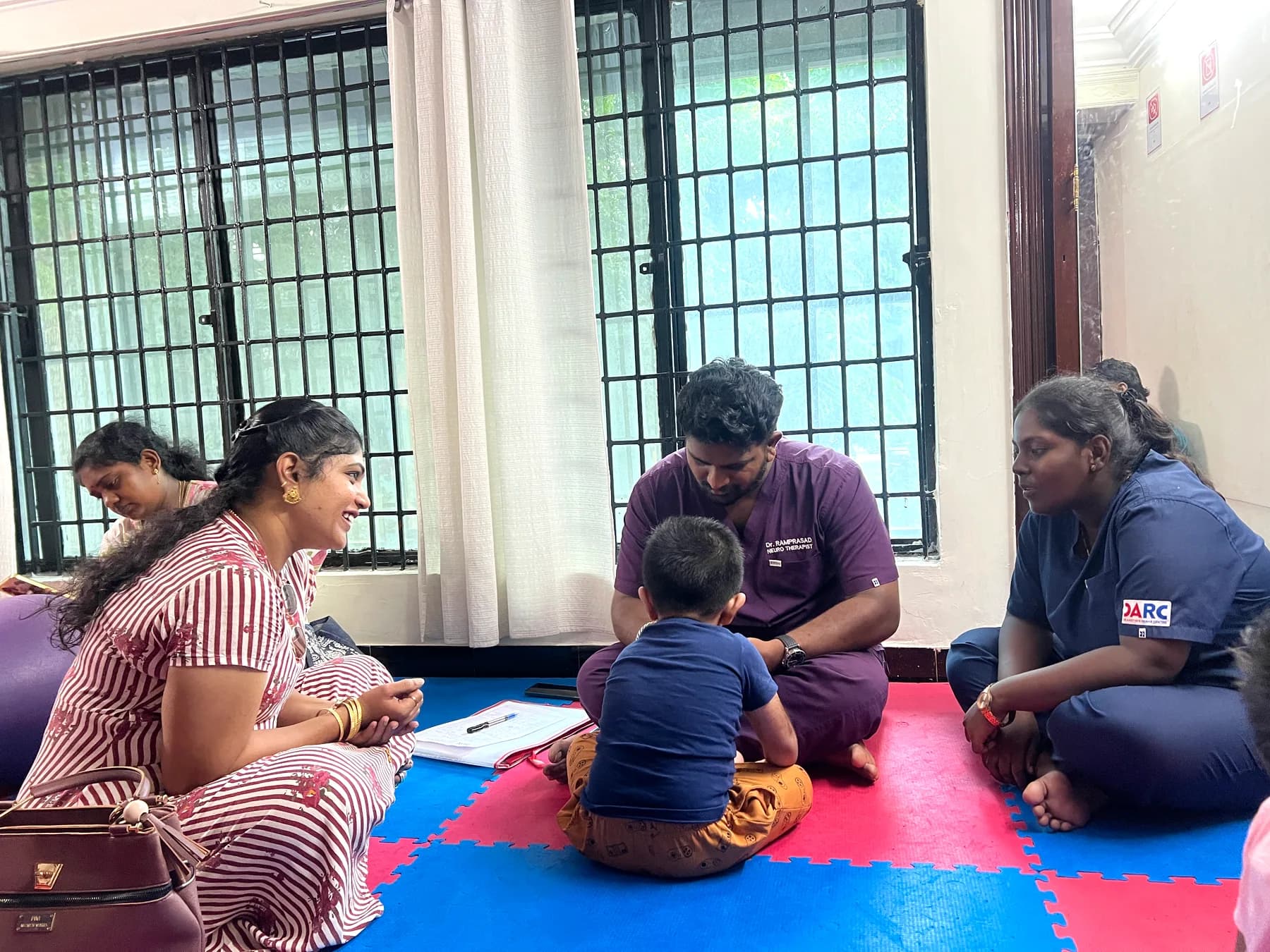
Every family receives practical strategies, language, and routines to maintain consistency at home. DARC guides parents on how to respond to behaviours, prevent escalation, and reinforce positive choices — so therapy gains carry into daily life.

Occupational Therapist and Founder
Dr. Aaditya leads DARC's assessment-first, root-cause focused approach for children with autism, ADHD, developmental delay, sensory processing concerns and daily function challenges.
Behaviour specialists and parent coaches
DARC's behavioural specialists work directly with families on regulation strategies, behaviour management, and home consistency support — so gains made in sessions carry into daily life.
How we work
Functional Assessment
Understanding the why behind each behaviour before any strategy is chosen.
Parent Collaboration
Families receive written strategies, language, and routines to maintain consistency at home.
Monthly Reviews
Progress is tracked monthly with clear updates on behaviour patterns, goals, and next steps.
🎥 Patient Stories
Shared voluntarily by DARC families. Tap any video to watch.
A parent shares their child's therapy journey at DARC
A family shares what changed for them
Trust, clarity, and visible progress
Real parent feedback from DARC Chennai
Parents talk about their experience
A parent story about care and guidance
Clinic support shared by a DARC family
A therapy journey shared by a parent
Individual outcomes vary. Stories shared voluntarily by DARC families — no compensation given.
🔗 Related Services
Behavioural support is most effective when it connects with the child's sensory, communication, and learning needs.
Behavioural therapy for children is a structured, evidence-based approach that helps children understand and manage their emotions, reduce challenging behaviours, and build social and adaptive skills. At DARC, the programme is grounded in Positive Behaviour Support (PBS) — a compassionate framework that begins by identifying the function of each behaviour before selecting any strategy.
Every behaviour has a purpose — whether it is to escape a difficult situation, seek attention, meet a sensory need, or communicate something the child cannot yet express in words. Dr. Aaditya Malathy, OT, MS (USA), leads DARC's clinical direction at Ashok Nagar and Pallikaranai, ensuring that the behavioural approach connects with the child's underlying sensory and emotional profile — not just the surface behaviour.
Common presentations helped through behavioural therapy at DARC include meltdowns, aggression, rigidity, social difficulties, anxiety-driven avoidance, oppositional behaviour, self-injurious behaviour, impulsivity, and behaviour associated with autism or ADHD. The approach is always regulation-first: children who are dysregulated cannot learn new skills, so building regulation capacity is the foundation from which all behavioural and social skills are taught.
Families receive practical strategies, language, and home routines that maintain consistency beyond the therapy room. Monthly progress reviews keep parents informed of behaviour patterns, goals, and what to focus on next. DARC's behavioural programme never uses punishment, forced compliance, or distress-based methods — every strategy prioritises the child's dignity and long-term wellbeing.
❓ Common Questions
Behavioural therapy for children is a structured, evidence-based approach that helps children understand and manage their emotions, reduce challenging behaviours, and build social and adaptive skills. At DARC, it is grounded in Positive Behaviour Support — identifying the function of each behaviour before selecting any strategy, and equipping families with tools that work in real life.
Positive Behaviour Support is an approach that focuses on understanding why a behaviour occurs — its function — and teaching a better, more appropriate alternative. Unlike compliance-based methods, PBS prioritises the child's dignity, long-term wellbeing, and intrinsic motivation. DARC's entire behavioural programme is PBS-informed.
Yes. Behavioural therapy at DARC is commonly used with children with autism who have meltdowns, rigidity, social communication challenges, self-injurious behaviour, or difficulty with transitions. The approach is always regulation-first, compassionate, and adapted to the child's sensory and communication profile.
Behavioural therapy at DARC focuses on Positive Behaviour Support — understanding why behaviours occur and teaching better alternatives through compassionate, child-centred strategies. We prioritise the child's dignity, emotional wellbeing, and intrinsic motivation.
We begin by understanding the function of the behaviour through a functional assessment. We never use punishment. Instead, we identify triggers, teach safer replacement behaviours, and modify the environment to prevent escalation.
Meltdowns are a form of communication. Our goal is to reduce their frequency and intensity by teaching emotional regulation and coping strategies — not to eliminate all emotional expression. Most families see meaningful improvement within 8–12 weeks.
We use visual tools, structured emotion identification activities, play-based strategies, and self-calming techniques that are age-appropriate and easy to practise at home through daily routines.
Yes. We work with families to ensure consistent strategies across environments. Guidance on behaviour plans and classroom-relevant strategies can be provided through parent coaching sessions.
✦ Next step
Book a behavioural assessment or start with the Child Development Check so DARC can guide the right therapy direction.