Speech Therapy for Children in Chennai.
Led by Vasudharany, MSLP— Head Speech-Language Pathologist who completed her Master's from Sri Ramachandra Institute of Higher Education and Research (SRMC), Chennai. Each session is 45 minutes, structured, and goal-based — supporting speech delay, language delay, unclear speech, non-verbal communication, social communication, AAC, and feeding-related concerns.
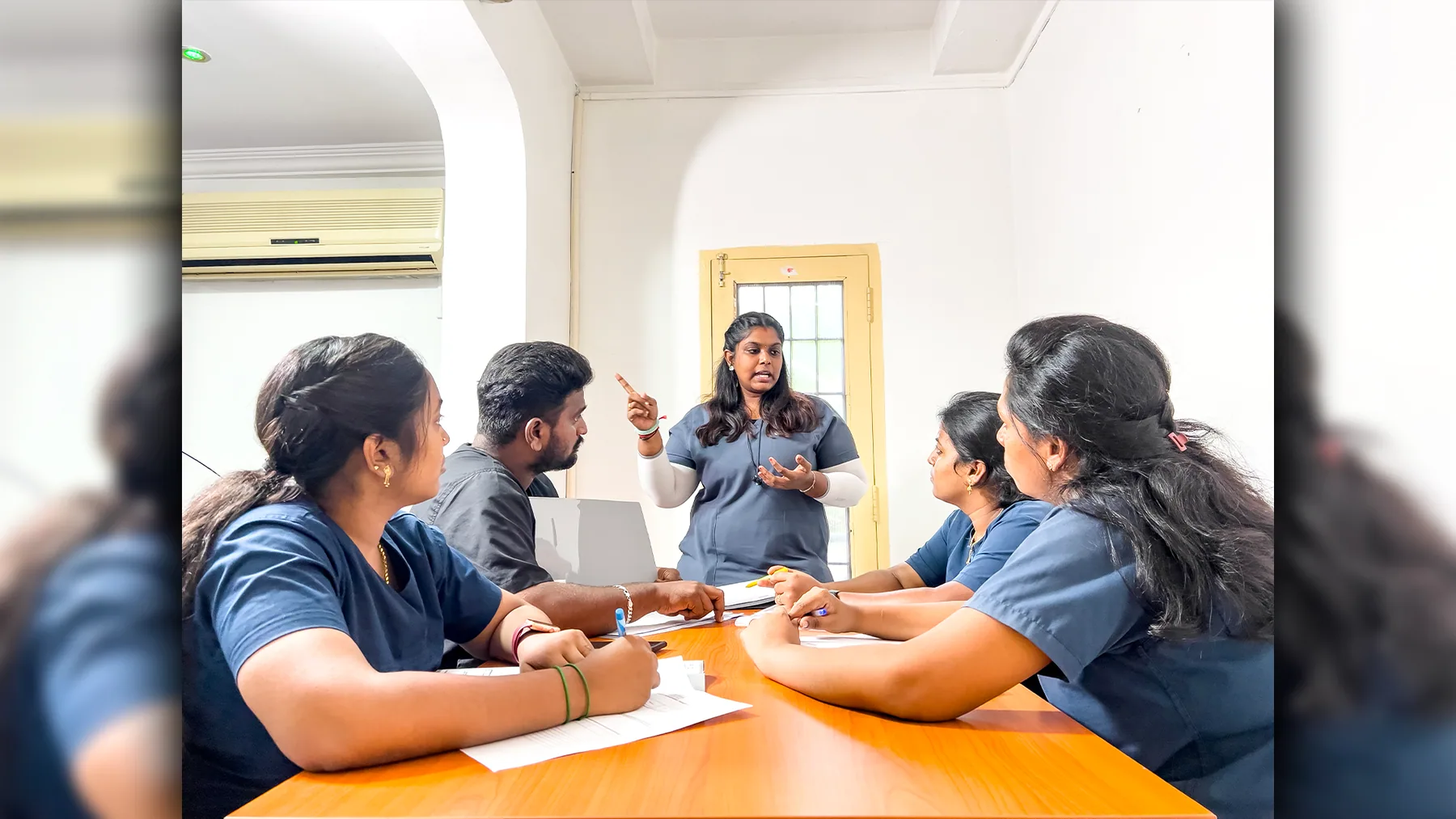
Led by Vasudharany
Speech Therapy
🗣️ Functional Speech
Communication that works in real life.
Vasudharany builds each child's plan around what they need to communicate at home, school, and in daily routines — verbal or AAC-based.
Ashok Nagar
Branch
Pallikaranai
Branch
Online
Speech Guidance
Goals
Measured Monthly
450+
Families Supported
10–16
Weeks Average
Home
Parent Practice
Outcomes vary by child and depend on assessment findings, therapy consistency, home practice, and communication goals.
Speech therapy that goes beyond word count.
DARC's Speech Therapy focuses on what the child needs to communicate in real life — not just formal language milestones. Whether verbal or AAC-based, the goal is functional communication that reduces frustration and grows with the child.
Child-specific communication profile
Vasudharany begins with a thorough understanding of the child's speech, language, social communication, and any feeding-related concerns.
Functional communication goals
Goals are built around what the child needs to communicate in daily life — not just formal language tasks.
AAC and verbal pathways
Where needed, AAC is integrated as a bridge — not a replacement — to support functional communication while verbal speech continues to develop.
Parent-led daily routines
Families receive communication activities that fit naturally into meals, bath time, play, and dressing — no separate homework schedules needed.
Communication, not just correction.
MSLP-led from day one
Vasudharany personally leads the speech assessment and builds the communication plan for every child.
Functional communication focus
Sessions target what the child needs to communicate in real life — expression, understanding, social language, and independence.
Monthly progress clarity
Parents receive structured updates with goals, observations, improvements, and the next communication focus — every month.
MSLP-led speech care
Vasudharany personally leads every assessment and builds each child's communication plan. Session goals are reviewed monthly and adjusted based on what the family observes at home.
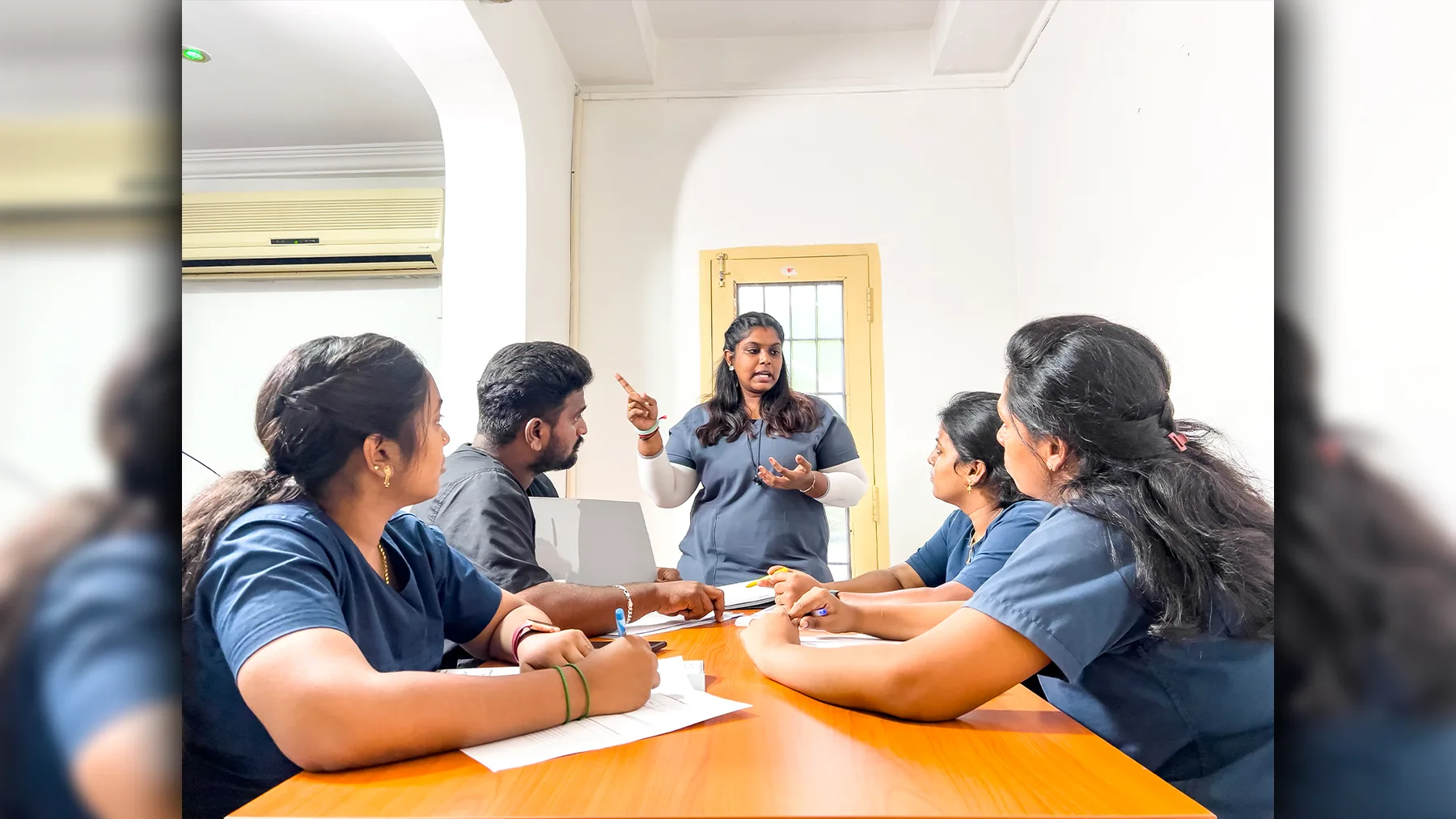
Speech Lead
Vasudharany, MSLP
Head Speech-Language Pathologist, DARC. Master's from Sri Ramachandra Institute (SRMC), Chennai.
From first words to confident communication.
"Speech therapy is not about making a child say words correctly on demand. It is about helping them communicate what they mean, in the ways that work for them — at home, at school, and in the relationships that matter most."Vasudharany, MSLP
DARC's speech approach is built around functional goals — what the child needs to communicate in daily life. Whether through verbal speech, AAC, signs, or a combination, the focus is always on reducing frustration and growing communication confidence, supported by parent strategies that work in the flow of normal routines.
Areas of speech support
🔍 Our approach
Communication Areas We Address
For each communication area, DARC uses structured, evidence-informed methods to build skills and confidence.
Words
Verbal Speech
Clear articulation and speech production.
Our Approach
Articulation & Motor Speech
Improving speech clarity through oral-motor exercises and phonetic practice.
- Oral-motor exercises
- Sound production training
- Apraxia therapy
- Phonological awareness
Progress Review: Reviewed
AAC
Language Development
Vocabulary and sentence building.
Our Approach
Language Development
Building functional vocabulary and sentence structures through play-based activities.
- Vocabulary expansion
- Sentence formulation
- Following instructions
- Early literacy foundations
Progress Review: Planned
Social
Social Communication
Conversation and pragmatic skills.
Our Approach
Social Language (Pragmatics)
Teaching conversational skills, turn-taking, and understanding social cues.
- Turn-taking practice
- Topic maintenance
- Non-verbal cues
- Social stories
Progress Review: Practised
Feed
AAC Integration
Alternative communication systems.
Our Approach
Core Vocabulary & AAC
Teaching functional communication using words, signs, or picture-based systems.
- Picture Exchange (PECS)
- AAC device training
- Core vocabulary focus
- Sign language integration
Progress Review: Guided
👨👩👧 For Families
Who Benefits from Speech Therapy?
● Results
Outcomes You Can Expect
- Functional communication, verbal or AAC-based
- Improved speech clarity and intelligibility
- Expanded vocabulary and sentence length
- Better conversational and social language skills
- Reduced frustration and behavioural challenges
- Increased confidence in expressing needs and wants
- Enhanced family communication and connection
Every child is different. Progress depends on the child's profile, consistency, home support, and the communication goals identified at assessment.
🗓️ Your journey
What Happens in a Speech Session?
A structured, transparent journey from assessment to measurable progress.
Week 1
Communication Assessment
Vasudharany conducts a thorough evaluation of speech, language, social communication, and feeding concerns.
Weeks 2–6
Building Foundation
Structured 45-minute sessions targeting the core communication goals identified in the assessment.
Weeks 7–12
Expanding Skills
Building on early foundations to develop more complex communication abilities.
Month 3+
Monthly Review & Next Focus
Parents receive a structured progress review with observations, improvements, and the next communication direction.
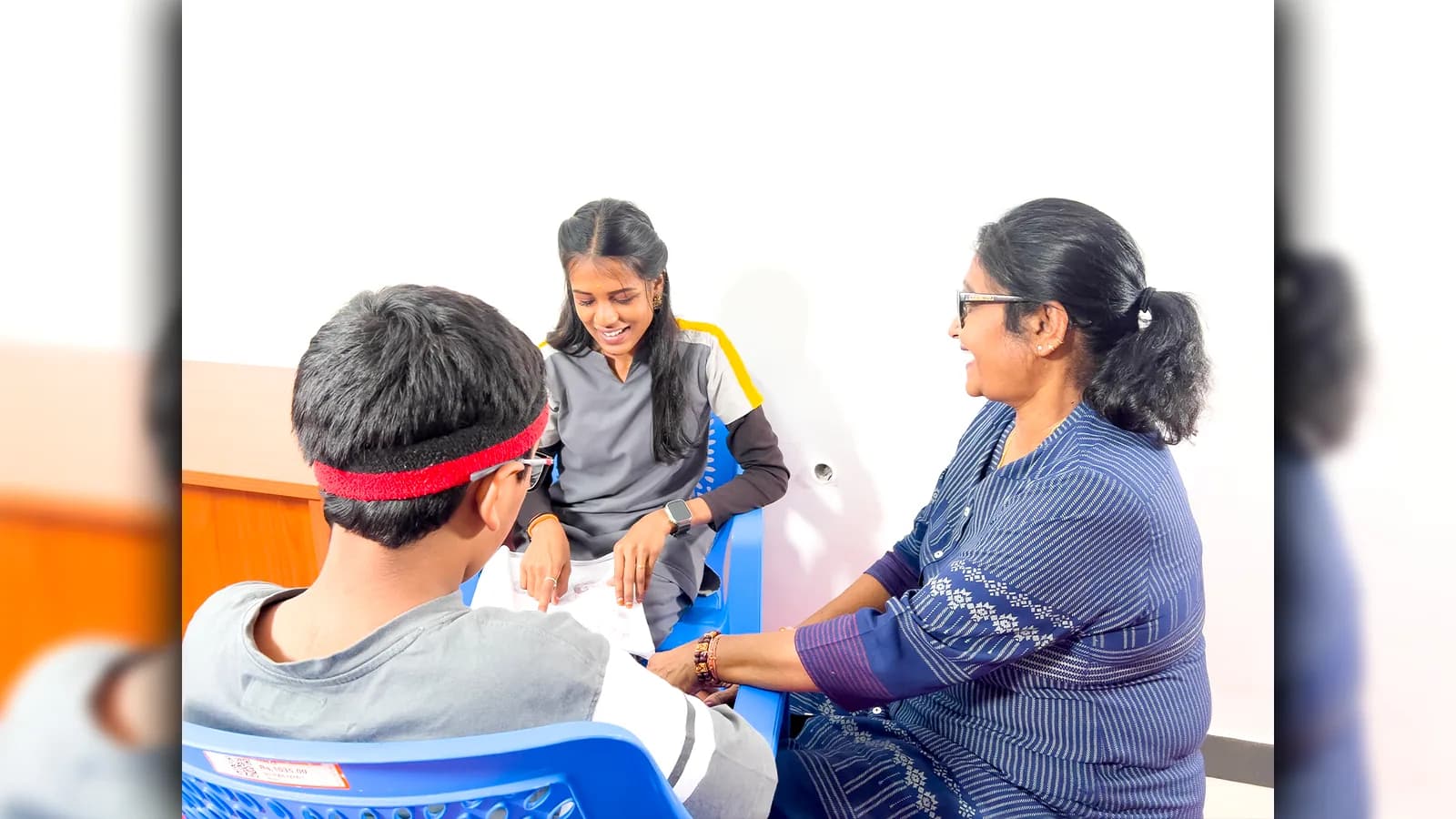
Home Communication Routines
Each week includes 2–3 simple communication activities to practice during natural routines like meals, bath time, or play. Vasudharany shows parents how to create communication opportunities at home without structured homework sessions.
Your speech therapist
The speech team at DARC.
Your child's speech-language plan is built by a qualified MSLP — not handed to an assistant. Every session is 45 minutes with a named therapist.
Head SLP
Vasudharany
Head Speech-Language Pathologist
Vasudharany guides speech, language, communication, AAC and feeding-related goals for children who need support with functional communication and family routines.
DARC Speech Team
Speech-Language Pathologists
Supporting therapists across both branches
DARC's speech team supports Vasudharany's plans across Ashok Nagar and Pallikaranai. Every therapist follows the same assessment-led framework and attends regular clinical reviews led by the Head SLP.
How it works
Vasudharany personally conducts every initial speech assessment and builds the child's communication plan. Ongoing sessions are led by the named therapist assigned to your child — with monthly reviews conducted by Vasudharany to confirm progress direction.
🎥 Patient Stories
Real families.
Real progress.
Shared voluntarily by DARC families. Tap any video to watch.
A parent shares their child's therapy journey at DARC
A family shares what changed for them
Trust, clarity, and visible progress
Real parent feedback from DARC Chennai
Parents talk about their experience
A parent story about care and guidance
Clinic support shared by a DARC family
A therapy journey shared by a parent
Individual outcomes vary. Stories shared voluntarily by DARC families — no compensation given.
Connected care
Speech rarely works alone.
Communication progress is faster when sensory regulation, behaviour, and parent strategies are aligned. These are the services most often connected with speech therapy at DARC.
What is Speech Therapy for Children?
Speech therapy for children — also called speech-language therapy or speech-language pathology — helps children develop the ability to communicate effectively. This includes spoken language, language comprehension, speech clarity, social communication, reading readiness, feeding, and alternative communication (AAC).
A speech-language pathologist (SLP or MSLP) assesses the child's current communication profile across expression, understanding, speech clarity, social language, and feeding. Therapy is then structured around the specific areas affecting the child's ability to communicate at home, school, and with peers.
At DARC, speech therapy is led by Vasudharany, MSLP— Head Speech-Language Pathologist who completed her Master's from Sri Ramachandra Institute of Higher Education and Research (SRMC), Chennai. Each session is 45 minutes, goal-based, and reviewed monthly with families. DARC's approach focuses on functional communication — not just formal language tasks — using strategies that integrate naturally into daily life.
Speech therapy in Chennai at DARC supports children with speech delay, language delay, autism-related communication challenges, childhood apraxia of speech (CAS), non-verbal communication, AAC integration, social communication difficulties, fluency concerns, feeding concerns, and more. In-clinic sessions are available at Ashok Nagar and Pallikaranai. Online speech guidance is also available for families outside Chennai.
❓ Common Questions
Frequently Asked Questions
What is speech therapy for children?›
Speech therapy for children (also called speech-language therapy) helps children develop communication skills including spoken language, understanding language, speech clarity, social communication, and alternative communication. A speech-language pathologist (SLP or MSLP) assesses the child's profile and builds a structured plan to target the specific communication areas that need support. At DARC, speech therapy is led by Vasudharany, MSLP — Head SLP with a Master's degree from Sri Ramachandra Institute (SRMC), Chennai.
What is the difference between speech delay and language delay?›
Speech delay refers to unclear or limited sound production — the child may struggle to say words clearly. Language delay refers to limited understanding or use of words and sentences — the child may not be saying enough words or understanding instructions appropriately for their age. Many children have both. A speech-language assessment at DARC identifies which areas are affected and guides the right therapy direction.
What is AAC therapy and does it stop speech from developing?›
AAC (Augmentative and Alternative Communication) includes picture boards, communication apps, and speech-generating devices. Research consistently shows that AAC supports — not replaces — verbal speech development. At DARC, AAC is introduced only when it helps the child communicate more functionally, reducing frustration while verbal communication continues to grow.
My child is non-verbal. Can speech therapy help?›
Yes. Speech therapy can support communication through verbal speech, signs, picture exchange, AAC, gestures, and parent strategies — depending on the child's needs.
How do I know if my child needs speech therapy?›
If your child has limited words, unclear speech, difficulty following instructions, frustration while communicating, feeding concerns, or social communication challenges — a speech assessment can help clarify the next step.
How long until my child starts talking?›
Every child's timeline is different. Progress depends on the child's profile, consistency, home practice, and the communication goals identified during assessment.
Do you provide home practice activities?›
Yes. Parents receive simple communication activities that fit natural routines like meals, bath time, dressing, reading, and play — guided by Vasudharany.
Does Vasudharany personally lead the speech assessment?›
Yes. Vasudharany personally conducts every initial speech-language assessment and builds each child's communication plan. Session goals are reviewed monthly with the family.
✦ Next step
Ready to understand your child's communication needs?
Book a speech assessment or start with the Child Development Check so DARC can guide the right therapy direction.