Skip to content
Autism support in Chennai

Autism Therapy Centre in Chennai for Children and Families

Autism therapy centre in Chennai: assessment-led OT, speech therapy, sensory integration and parent guidance at DARC Ashok Nagar & Pallikaranai.

Written by Dr. Aaditya Malathy, OT, MS (USA) · Clinically reviewed by Vasudharany, Head SLP · Last updated

Ashok NagarPallikaranaiChennai
DARC autism therapy centre in Chennai supporting children and parents

Assessment-led care

Child-friendly support with clear goals and parent guidance.

Assessment

Plan starts with understanding

Parent

Guidance included

Progress

Goals reviewed clearly

2 Branches

Ashok Nagar · Pallikaranai

Individual recommendations and outcomes depend on assessment findings, participation, consistency and family priorities.

Plan your child’s autism-support consultation

Ages and needs we support

Young children and school-age children with an autism diagnosis or concerns about development, communication and daily participation. The starting point depends on your child’s age, strengths and needs.

Your care team and qualifications

Dr. Aaditya Malathy leads DARC’s consultation-first approach. Occupational therapy, speech-language and special education input can be coordinated when the assessment identifies a need.

  • Dr. Aaditya Malathy

    Occupational Therapist and Founder

    MS (USA)

  • Vasudharany

    Head Speech-Language Pathologist

    MSLP (Master's in Speech-Language Pathology), SRMC

What happens at the first appointment?

  1. Share your family’s priorities

    Discuss developmental history, existing assessments and concerns about communication, play, regulation or independence.

  2. Identify relevant assessments

    The consultation guides which therapy assessments may be useful for your child’s individual profile.

  3. Discuss a coordinated plan

    Review recommended goals, therapy inputs, parent guidance, fees and how progress will be discussed.

What to bring or prepare

Diagnostic or developmental reports if available, current therapy plans and observations from home or school.

Choose your Chennai branch

Ashok Nagar

New No: 59, 7th Ave, Sarvamangala Colony, Manthope Colony, Ashok Nagar, Chennai, Tamil Nadu 600083

Centre hours: Mon–Fri 10:30 AM–8 PM · Sat 9 AM–5:30 PM · Sun closed

Pallikaranai

5/1077, Maxworth Nagar 2nd St, Maxworth Nagar, Pallikaranai, Chennai, Tamil Nadu 600129

Centre hours: Mon–Sat 12 PM–8 PM · Sun closed

Centre hours are not individual clinician availability. Confirm the relevant professional and assessment time before travelling.

Fees and appointment details

Confirm the initial assessment or consultation charge, appointment duration and what feedback or report is included before booking. Therapy fees and frequency are explained after assessment, before you commit to a plan.

Book a consultation

The consultation helps identify the right assessment and next steps for your child.

Is this for my child?

  • Autism diagnosis or suspected autism
  • Speech delay or limited communication
  • Sensory meltdowns or regulation difficulty
  • Poor sitting tolerance, play skills, or social interaction

How long does it take?

  • Most families begin with assessment, then a 8-16 week therapy block with progress reviews.

Is it safe?

  • DARC uses child-friendly, non-invasive therapy. We do not force participation or promise cures.

How much will it cost?

  • Parents receive a recommended plan with frequency and fees after assessment, so cost is connected to the child's actual needs.

Quick parent answer

Looking for autism therapy centre in chennai?

Start with an assessment-led consultation. DARC looks at the concern, the child's daily participation, and any connected sensory, motor, communication, attention, behaviour, or learning needs before recommending therapy direction.

Autism diagnosis or suspected autism

Speech delay or limited communication

Sensory meltdowns or regulation difficulty

Poor sitting tolerance, play skills, or social interaction

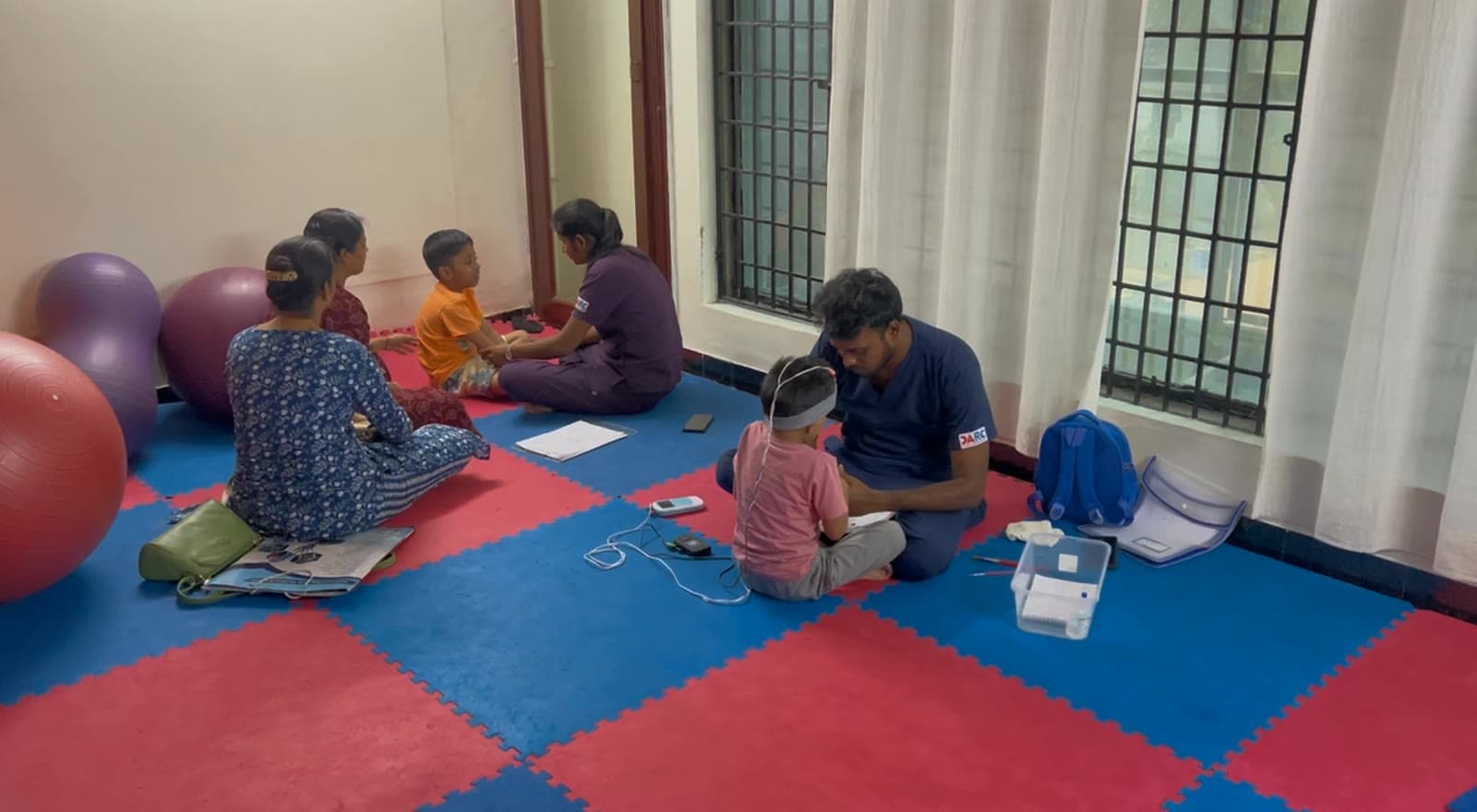
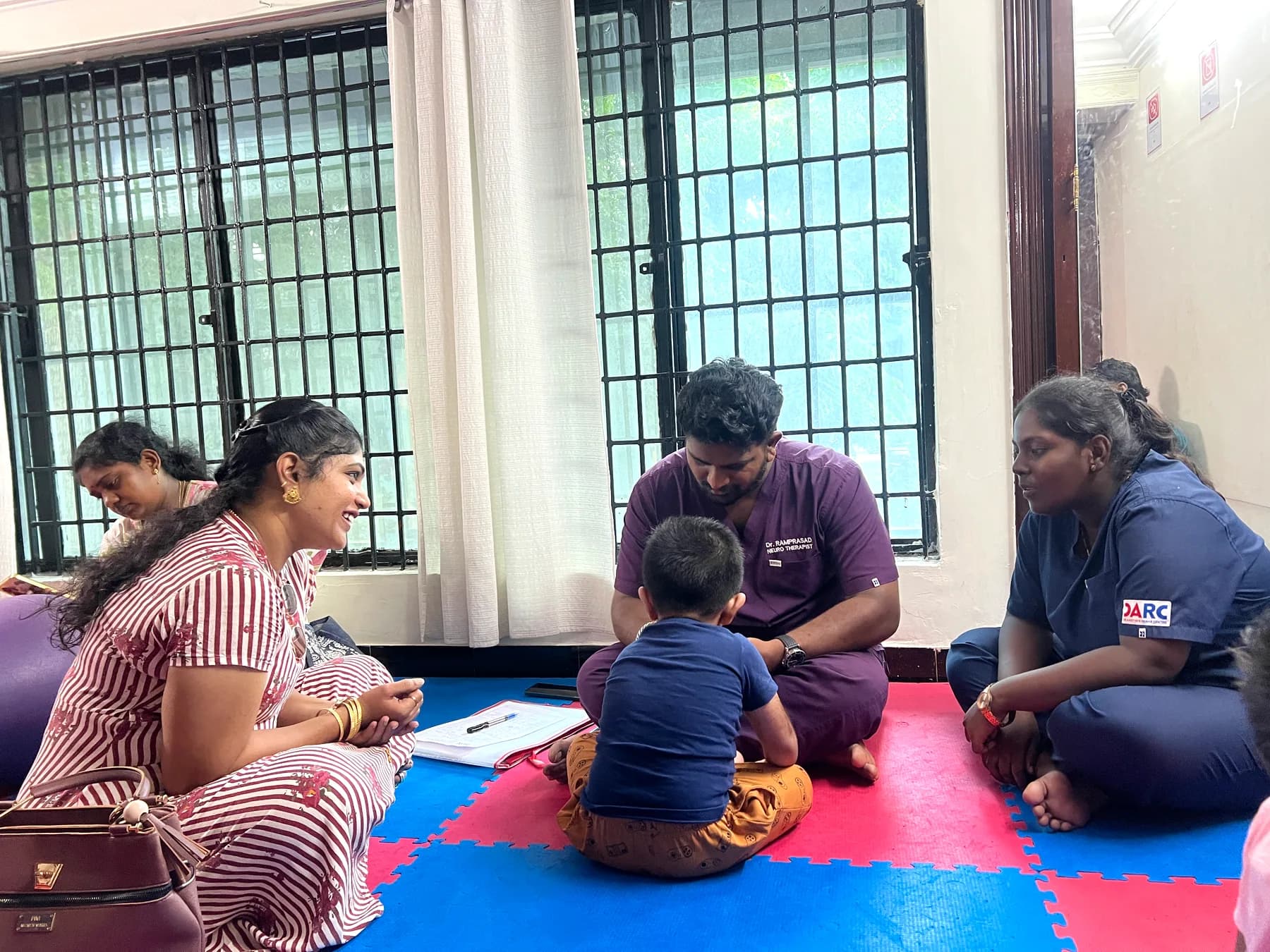
DARC paediatric therapy room in Chennai with therapists supporting children

What families notice

Real clinic spaces and therapist presence
Clear care steps before families invest
Child-led pacing with professional structure
Simple next steps for anxious parents

Inside DARC

Clinic moments that build confidence for families

Therapist-led care

Children are guided gently, never rushed

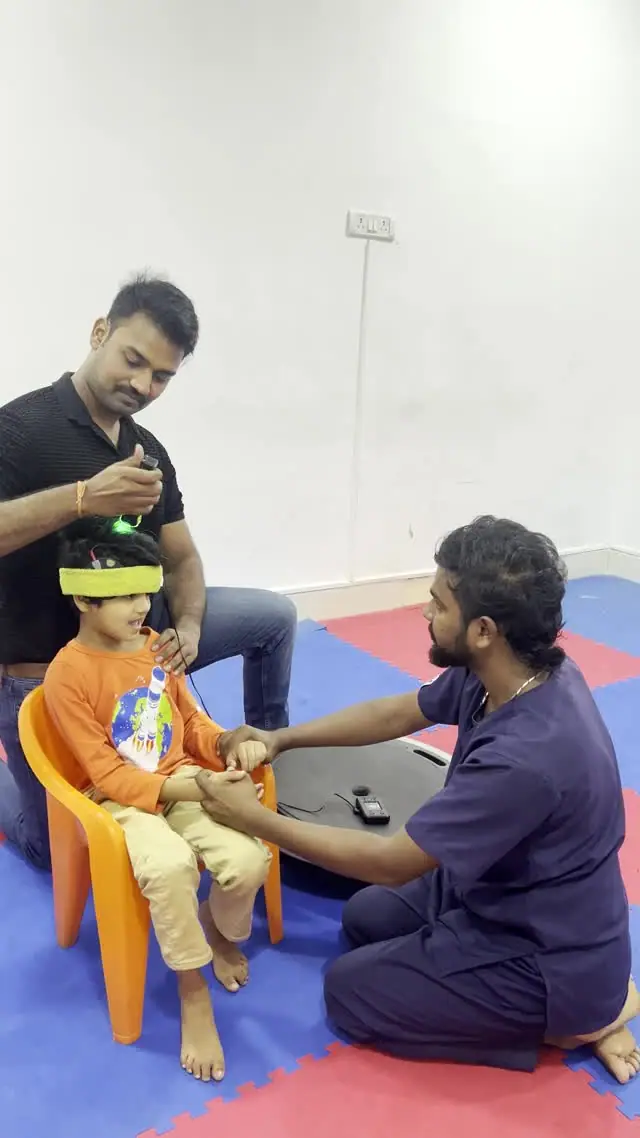
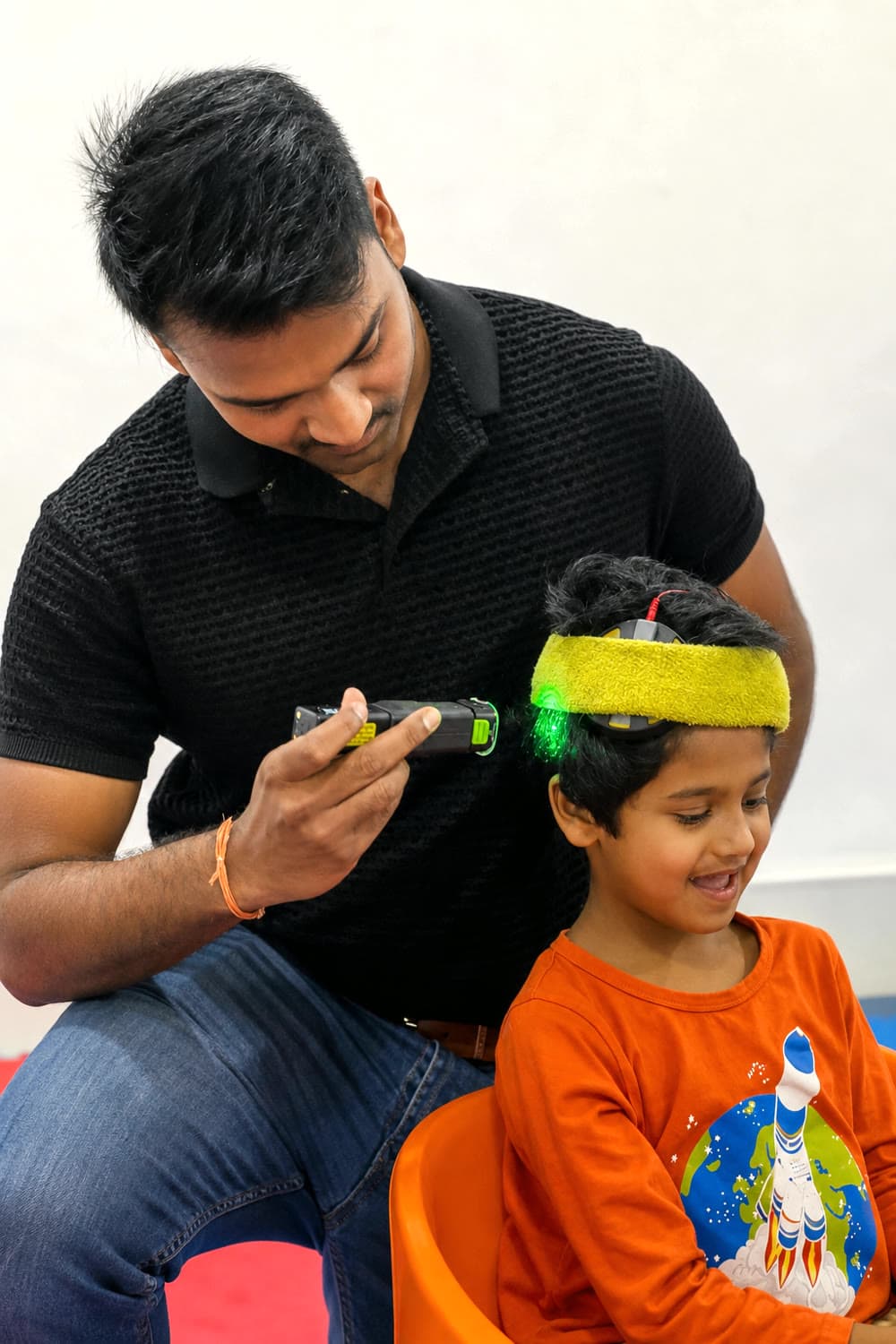
Photobiomodulation laser therapy support for a child at DARC Chennai

Non-invasive support

Comfort-first, closely observed sessions

A calm, visible process from assessment to therapy

The website should feel like the centre itself: organised, warm, clinical, and real. These moments show parent-visible care without turning the page into a photo gallery.

Understanding this support

Which therapy is appropriate for an autistic child?

There is no single best therapy for autism for every child. Assessment helps identify priorities in communication, self-care, play, sensory regulation and learning. A child may need occupational therapy, speech-language therapy, special education, parent coaching or a combination, with goals chosen around everyday participation.

At DARC's autism therapy centre in Chennai, families begin with an assessment and discuss the recommended support at Ashok Nagar or Pallikaranai. Ask who will lead the sessions, what parents can practise at home and how progress will be reviewed. Autism therapy is support for a child's needs, not a promise of a cure.

How autism therapy works at DARC

Autism therapy is not a single treatment — it is a coordinated set of evidence-based interventions that support a child with autism spectrum condition (ASC) to develop the skills they need for communication, regulation, daily function, learning, and social participation. The most effective autism therapy programmes combine multiple disciplines: occupational therapy, speech therapy, sensory integration, behavioural support, and special education — each targeting different aspects of the child's profile.

At DARC, autism therapy begins with a structured consultation led by Dr. Aaditya Malathy, OT, MS (USA), at the Ashok Nagar or Pallikaranai branch. The consultation maps the child's sensory processing, motor development, communication level, regulation capacity, daily function, and family priorities before any therapy is recommended. This assessment-first approach ensures that therapy is built on what the child actually needs — not a one-size-fits-all protocol.

Children with autism present very differently from one another. Some are non-verbal and need AAC support alongside OT; others are verbal but have significant sensory processing or regulation challenges. Some children need early intervention before age 3; others come to DARC as school-age children with a late diagnosis. DARC's multidisciplinary structure means the right combination of therapies can be provided under one roof — with one coordinated plan and monthly progress reviews for parents.

DARC does not use traditional ABA or compliance-based methods. The approach is grounded in occupational therapy science, Positive Behaviour Support, and sensory-informed practice — prioritising the child's regulation, dignity, and long-term functional independence. Families receive practical home strategies, language, and routines so that therapy progress carries into daily life at home and school.

Early intervention for young children

The brain develops faster in the first three years of life than at any other time. Neural connections are formed at an extraordinary rate during this period — connections that underpin motor coordination, communication, social interaction, sensory processing, learning, and emotional regulation. Therapy that starts early works with this neuroplasticity rather than against it.

Research consistently shows that children who receive well-targeted early intervention before age 3 show better long-term outcomes in communication, motor skills, school readiness, behaviour, and independence than children who begin later — even when their initial profiles are similar.

Consider an early intervention assessment if your child: has fewer words than expected for their age; is not pointing, waving, or responding to their name by 12 months; has not reached sitting, standing, or walking milestones within reasonable ranges; is very sensitive or seeking of sensory input; has feeding difficulties; shows little interest in other children or social play; or has lost skills they previously had.

You do not need to wait for a paediatrician's referral. If something concerns you, an OT and speech assessment is the right step — not a wait-and-see approach.

At DARC, early intervention begins with Dr. Aaditya's developmental assessment. For children under 3, this covers gross and fine motor development, sensory processing, primitive reflex status, feeding and oral-motor function, communication and social interaction, play development, self-care, and daily routine participation.

For young children, therapy at DARC is play-based, child-led, and designed to feel like natural interaction rather than formal sessions. Goals are embedded in play — building communication through play routines, developing motor skills through movement games, addressing sensory needs through carefully structured sensory experiences.

Parent coaching is a central part of every early intervention plan. Parents are the most important therapy resource for a child under 3 — they are present during thousands of daily moments that DARC sessions cannot replicate. Teaching parents what to do during bath time, mealtimes, play, and outings multiplies the impact of therapy enormously.

Early intervention plans are usually reviewed every 8-12 weeks because young children change quickly.

DARC avoids fear-based labels and cure promises. The focus is support, clarity and early skill building.
Available at both Chennai branches

Choose the DARC branch that makes consistent visits easier.

For children and families

When this support may be useful.

Autism diagnosis or suspected autism

Speech delay or limited communication

Sensory meltdowns or regulation difficulty

Poor sitting tolerance, play skills, or social interaction

What progress means

Functional changes families can observe.

Progress is tracked through functional goals such as communication, regulation, daily routines, learning, and participation.

Care is guided by Dr. Aaditya's team with OT, SLP, special education, and parent guidance inputs.

Assessment-first planning instead of one-size-fits-all therapy

Parent guidance included so skills are practised at home

Monthly progress reviews with clear next goals

Every child is different. DARC reviews goals against the child's own starting point and daily participation.

◆ What happens in therapy

A clear plan before parents commit.

Parents should know what the first visit is for before committing to repeated sessions. DARC begins by understanding your child's profile, parent priorities, school or home concerns, and which therapy inputs need to work together.

1

Developmental assessment and parent interview

2

OT, speech, sensory, behaviour, or learning goals

3

Child-led therapy activities

4

Home plan parents can use daily

Dr. Aaditya Malathy, Occupational Therapist and Founder at DARC Chennai

Clinical direction

Dr. Aaditya Malathy

Occupational Therapist and Founder · OT, MS (USA)

Specialist-led care

A named clinical lead behind the therapy direction.

Dr. Aaditya leads DARC's assessment-first, root-cause focused approach for children with autism, ADHD, developmental delay, sensory processing concerns and daily function challenges.

Occupational Therapy
Sensory Integration
Primitive Reflex Integration
Parent Guidance
Child Development Planning

Written by

Dr. Aaditya Malathy

Founder, DARC · Occupational Therapist, OT, MS (USA)

Clinically reviewed by

Vasudharany

Head SLP · Speech, language, feeding and communication support

Page reviewed 2026-09-20

Proof and clarity

Why parents trust DARC.

Assessment-first planning instead of one-size-fits-all therapy

Parent guidance included so skills are practised at home

Monthly progress reviews with clear next goals

Two Chennai branches: Ashok Nagar and Pallikaranai

Care is guided by Dr. Aaditya's team with OT, SLP, special education, and parent guidance inputs.

Progress is tracked through functional goals such as communication, regulation, daily routines, learning, and participation.

🎥 Patient Stories

Real families. Real progress.

Shared voluntarily by DARC families. Tap any video to watch.

01
DARC Parent Story

A parent shares their child's therapy journey at DARC

02
DARC Parent Story

A family shares what changed for them

03
DARC Parent Story

Trust, clarity, and visible progress

04
DARC Parent Story

Real parent feedback from DARC Chennai

05
DARC Parent Story

Parents talk about their experience

06
DARC Parent Story

A parent story about care and guidance

07
DARC Parent Story

Clinic support shared by a DARC family

08
DARC Parent Story

A therapy journey shared by a parent

Individual outcomes vary. Stories shared voluntarily by DARC families — no compensation given.

Methods used

Evidence-informed, child-led support.

Occupational Therapy
Speech-Language Therapy
Sensory Integration
Special Education
Parent Coaching
Primitive Reflex and root-cause focused support

Connected care

Support that works together around your child.

Explore related DARC services and local clinic pages without losing the thread of your child's therapy plan.

Prefer speaking to someone? Call DARC and ask which branch, therapist, and assessment pathway fits your child.

+91 99401 40262

Common questions

Clear answers before your first visit.

How much does therapy cost at DARC?+

Fees depend on the assessment, therapy frequency, and the support plan. We explain the recommended plan and cost clearly before parents commit.

Is the therapy safe for my child?+

Sessions are child-friendly and supervised by trained therapists. Non-invasive supports are recommended only when suitable and never presented as a standalone cure.

How quickly will we see progress?+

Some families notice early changes within weeks, while deeper developmental goals take longer. Progress depends on the child's profile, consistency, and home practice.

What age should a child with autism start therapy?+

Early intervention is strongly recommended. Research consistently shows the best outcomes when therapy begins between ages 2 and 5, as the brain is most plastic during this period. However, DARC supports children of all ages — including school-age children and those with late diagnoses — because meaningful progress is possible at every stage.

Can DARC help non-verbal children with autism?+

Yes. DARC's speech therapy programme may include AAC (Augmentative and Alternative Communication) for children who are non-speaking or minimally speaking. The communication approach is selected after understanding the child's individual needs.

Is DARC's approach ABA-based?+

DARC does not use traditional ABA. Our approach is grounded in Occupational Therapy, Positive Behaviour Support (PBS), and sensory-informed practice — prioritising the child's regulation, dignity, and functional progress over compliance-based methods. We believe children learn best when regulated, not drilled.

Can my child attend multiple therapies together at DARC?+

Yes. DARC is specifically structured to coordinate OT, Speech, Sensory, Behavioural, and Special Education together. The team communicates across disciplines so that goals are aligned and parents receive one consistent direction — not conflicting advice from separate providers.

Do you offer autism therapy at both branches?+

Yes. Autism therapy is available at both DARC branches — Ashok Nagar and Pallikaranai. Some specialised assessments and services may be available at specific branches; this is confirmed during the consultation.

✦ Next step

Start with a clear assessment for Autism Therapy Centre in Chennai.

You do not have to decide everything alone. DARC will help you understand the concern, the safest next step, expected timeline, and therapy plan before you commit.