Loading DARC
Preparing the page for you.
Loading DARC
Preparing the page for you.
DARC offers evidence-informed Paediatric Physiotherapy for children with gross motor delays, postural control challenges, coordination difficulties, and movement concerns associated with autism, developmental delays, and neurological conditions — through play-based, child-led therapy with monthly progress reviews.
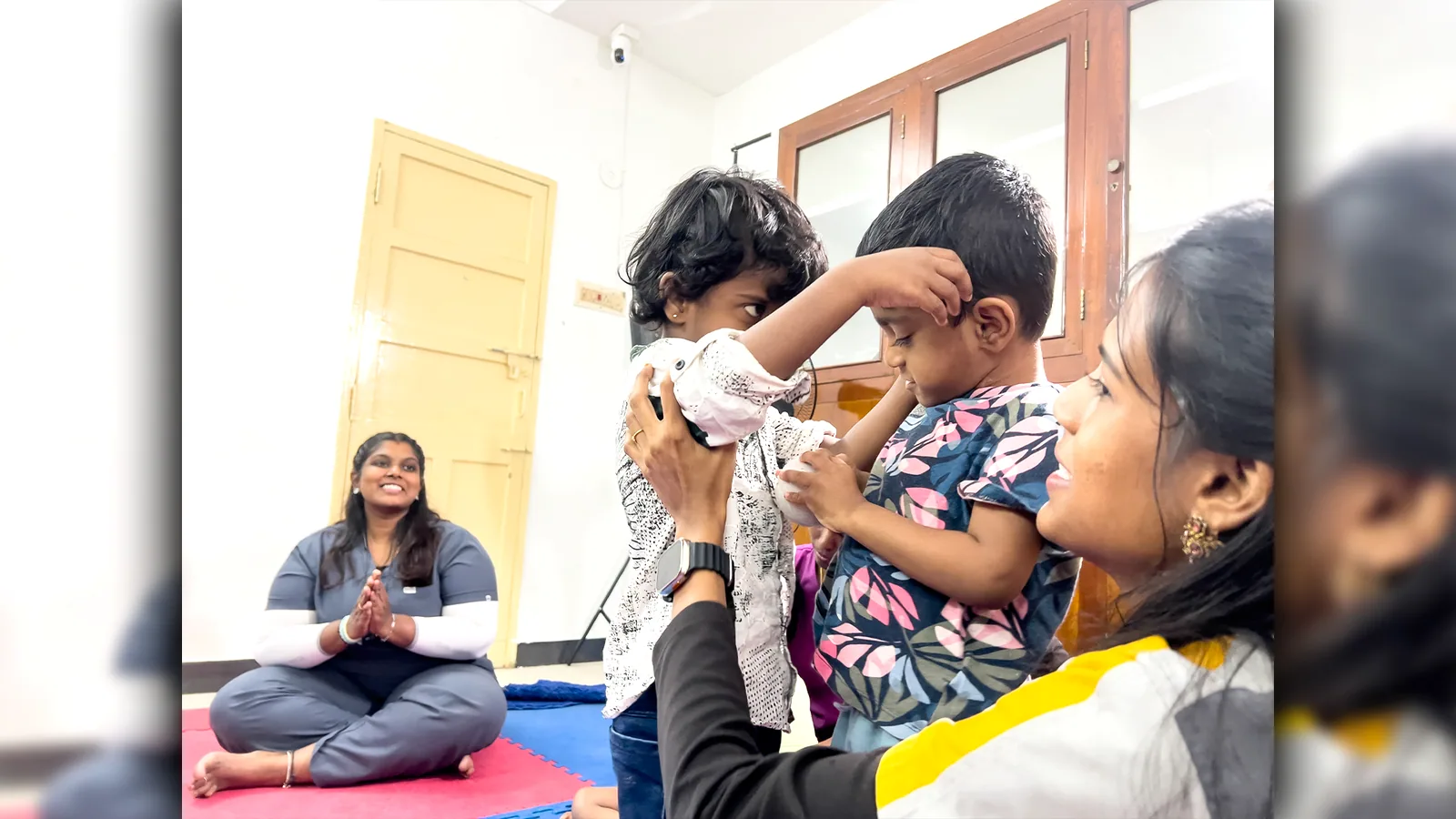
Play-based physio
Physiotherapy
🏃 Motor development
Physiotherapy at DARC begins with a thorough movement profile assessment — then builds child-specific goals around what each child needs to move, balance, and participate more confidently.
Ashok Nagar
Branch
Pallikaranai
Branch
OT
Coordinated
Motor
Movement Goals
300+
Families Supported
8–16
Weeks Average
Home
Parent Guidance
Outcomes vary by child and depend on assessment findings, therapy consistency, home practice, and family goals.
DARC's Physiotherapy approach is built on profile-first assessment. Understanding each child's specific motor challenges — gross motor gaps, postural patterns, coordination difficulties, and balance needs — before selecting any therapy direction.
Every physio journey begins with a thorough assessment of posture, muscle tone, balance, coordination, milestone history, and gross motor patterns.
Sessions are structured around the child's attention and energy — using play-based activities to build motor skills in a non-threatening, enjoyable environment.
Physiotherapy at DARC is coordinated with Occupational Therapy and Speech — so motor, sensory, and communication goals are addressed as a whole, not in isolation.
Families receive structured monthly updates on what motor milestones improved, what still needs support, and the next focus area.
Assessment before approach
Physiotherapy activities are chosen based on the child's specific motor profile — not a general protocol applied to all movement difficulties.
Play-led motor therapy
Sessions feel like structured play — not adult rehab. Goals are embedded in activities the child finds motivating and engaging.
Transparent monthly reviews
Parents receive clear milestone updates every month — what gained, what needs more work, and the home programme for the next phase.
Physiotherapy at DARC is coordinated with Occupational Therapy and Speech — so motor, sensory, and communication goals are addressed together, not in separate silos.
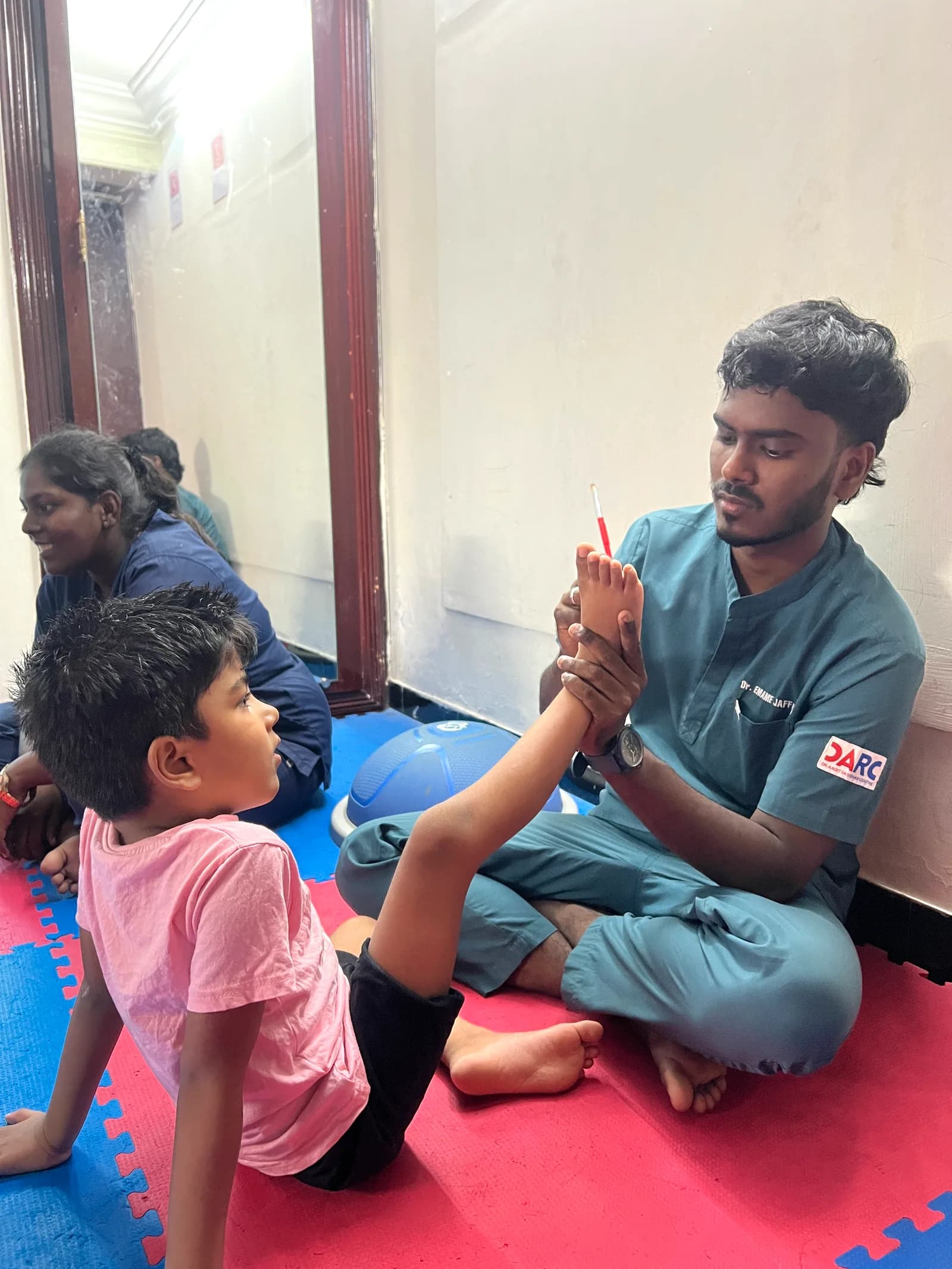
Physiotherapy
Paediatric physiotherapy coordinated with OT, Sensory Integration, and Speech Therapy.
"Paediatric physiotherapy is not adult rehab made smaller. It is child-led, play-embedded, and profile-specific — built around how each child moves, what they find engaging, and what motor skills will make the biggest difference in their daily life."DARC Physiotherapy Team
DARC's physiotherapy approach begins with a thorough movement profile assessment — covering posture, muscle tone, balance, coordination, and gross motor history. Goals are then built around what the child needs to move more confidently at home, at school, and in play — with a home exercise programme and monthly milestone reviews built in from the start.
◆ Our Approach
For each motor area, DARC uses structured, evidence-informed physiotherapy to build skills, independence, and confidence.
Focus
Children who are late to walk, run, climb, or reach movement milestones.
Our Solution
Structured, play-based movement therapy targeting core strength, balance, and milestone progression.
Progress Review: Reviewed
Focus
Difficulty holding an upright posture, slouching, or tiring quickly during seated tasks.
Our Solution
Targeted exercises to build trunk strength, postural endurance, and body control for daily function.
Progress Review: Reviewed
Focus
Difficulty planning and sequencing movements — jumping, throwing, catching, or bilateral activities.
Our Solution
Helping children sequence and coordinate movements through repetitive, graded physical challenges.
Progress Review: Reviewed
Focus
Movement difficulties arising from cerebral palsy, neurological conditions, or developmental causes.
Our Solution
NDT-informed techniques to improve movement quality, muscle tone, and functional independence.
Progress Review: Reviewed
👨👩👧 For Families
● Results
Every child is different. Progress depends on the child's motor profile, therapy consistency, and home exercise practice.
◆ Your Journey
A structured, transparent journey from movement assessment to measurable motor progress.
Week 1–2
We assess posture, muscle tone, balance, coordination, milestone history, and gross motor patterns to build a clear starting picture.
Weeks 3–8
Play-based physiotherapy sessions targeting the child's specific motor goals — in a child-friendly, non-threatening environment.
Month 2+
Parents receive a simple weekly home programme with 2–3 activities to support motor development between sessions.
Monthly
We track milestone gains, refine goals, and update families on what improved and what comes next.
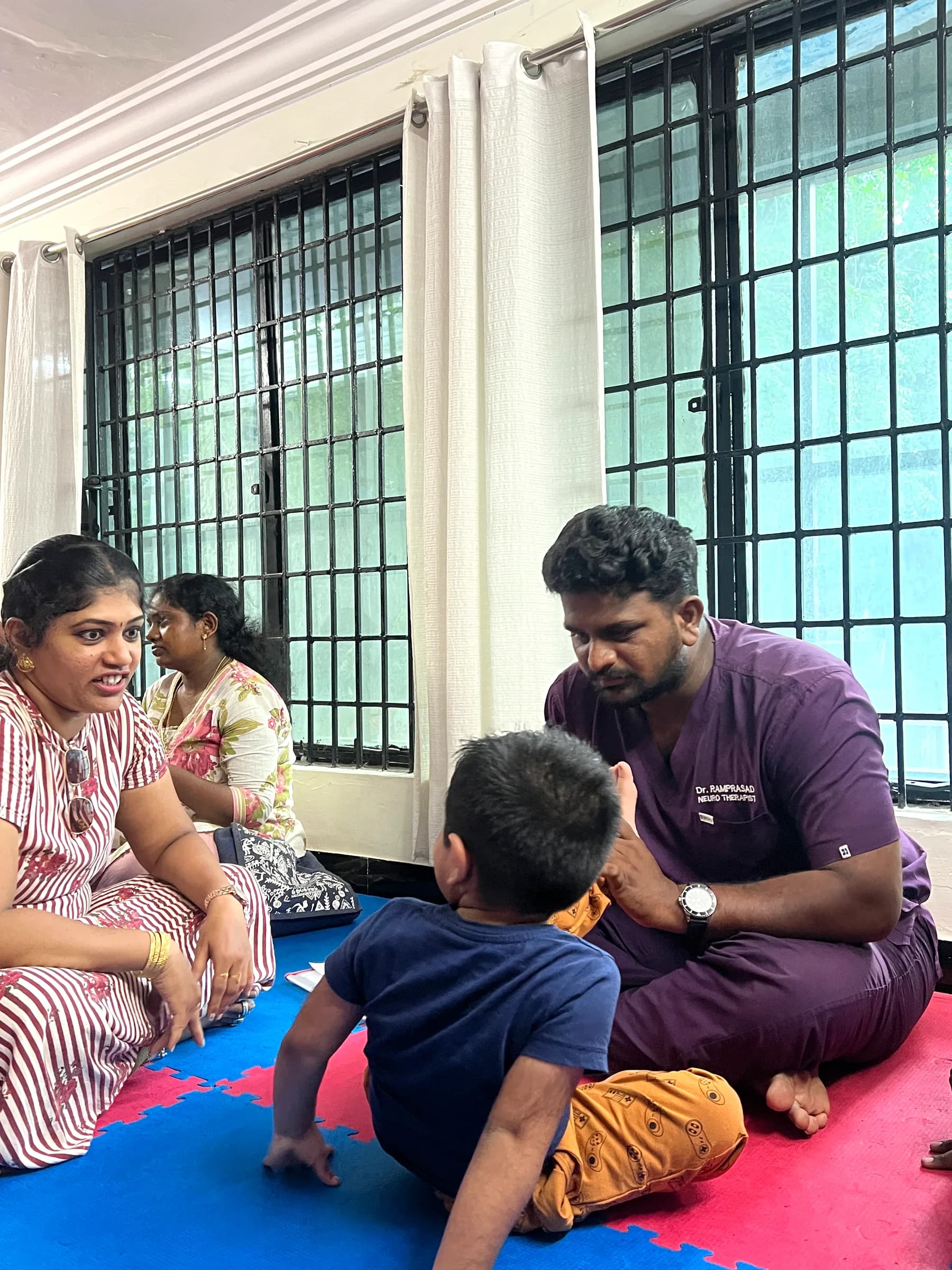
Every family receives a simple weekly home programme with 2–3 exercises to practice daily. These are designed to fit into your existing routines — morning stretches, play-based balance activities, or movement breaks before school.
🤝 Coordinated Care at DARC
At DARC, physiotherapy is coordinated with Occupational Therapy, Sensory Integration, and Speech Therapy so your child's movement, sensory, and communication goals are addressed as a whole — not in isolation. One team, one direction.
❓ Common Questions
Paediatric physio uses child-friendly, play-based techniques. Sessions are shorter, goal-oriented, and designed around the child's attention, energy, and developmental stage rather than adult rehab protocols.
Not necessarily. You can start with a DARC consultation and our team will assess whether physiotherapy is the right direction. If a referral is needed for specific conditions, we'll advise you.
Frequency is determined after assessment. Most children start with 2–3 sessions per week and reduce as skills improve. Home programmes supplement clinic sessions.
Many families notice early improvements in balance or postural control within 4–6 weeks. Milestone-level changes typically appear over 2–4 months depending on the condition and home practice consistency.
Yes. DARC's multidisciplinary approach means physiotherapy, occupational therapy, and speech therapy are coordinated as needed — so motor, sensory, and communication goals are addressed together rather than in silos.
DARC runs paediatric physiotherapy at two Chennai branches, Ashok Nagar and Pallikaranai, so families searching for physical therapy near them can choose whichever branch is easier to visit for regular sessions. Many children also combine OT and physical therapy in one coordinated plan rather than visiting separate clinics.
Yes. Physical therapy and physiotherapy are names for the same profession; PT is a common abbreviation. Paediatric physiotherapy focuses on children's movement, posture, balance and mobility. DARC plans support around the child's assessed movement needs and everyday participation rather than using an adult rehabilitation programme.
Gross motor skills use larger body movements, such as sitting, standing, walking and balancing. A physiotherapy assessment considers the child's current movement abilities, concerns and daily activities. DARC agrees practical goals with the family and reviews progress individually; a milestone checklist alone does not determine a therapy plan.
✦ Next step
Book a physiotherapy assessment or start with the Child Development Check so DARC can guide the right direction.