Best Occupational Therapy Centres in Chennai: 10 Things Parents Must Check
Looking for the best OT centre in Chennai? Use these 10 checks for assessment, therapist continuity, safety, parent guidance, fees and progress reviews.
A quick answer
The best OT centre in Chennai for your family should combine a clear assessment, appropriately qualified therapists, respectful care and practical goals. Use the ten checks below to compare centres fairly. This is a parent checklist, not an independent ranking of Chennai clinics.
- Compare what happens before, during and after a session.
- Ask for written goals and a review process before committing to recurring care.
- Treat equipment, advertising and star ratings as context, not proof of clinical fit.
Educational guidance for parents. Individual assessment determines care; this article does not diagnose your child or promise a treatment outcome.
1. Does the centre assess before recommending a package?
When you search for the best OT centre in Chennai, begin with the intake process. Does someone ask what daily activities concern you, what your child enjoys and what support has already been tried? Or does the conversation jump straight to a fixed number of sessions? An assessment should provide a reason for recommending occupational therapy and a starting point for care.
Ask what information the first visit will produce. You may receive observations, a summary of priorities, recommendations for further assessment or initial goals. The format varies, so clarify what is included before you attend. Be cautious if the same package is recommended to every child with a diagnosis, without asking how that child manages home, play or school routines.
2. Can you identify the regular therapist and their supervision?
Ask who will see your child on ordinary treatment days. Find out their occupational therapy qualification, relevant paediatric experience and how a senior clinician supports the plan. Staff photographs and a founder's biography can help you understand a team, but they do not confirm the person assigned to your child or the arrangements for your preferred appointment.
Continuity matters when a child needs time to become familiar with a person and environment. Ask what happens during leave, staff changes or a transfer between branches. A centre should be able to explain handover notes and how goals are carried forward. It is more reassuring to hear a clear process than an assurance that no change will ever happen.
3. Are the goals about useful daily activities?
Ask for a concrete example of how a proposed goal relates to your child. Catching a ball, tolerating a new activity or completing a tabletop task may be part of a session, but parents should understand the everyday purpose. What difference are you hoping to see when your child gets ready for school, eats lunch or joins a game?
A useful goal includes a baseline and a way to notice change. 'Uses a spoon with fewer spills in a familiar meal' is easier to discuss than 'improves overall development'. Your child's actual goals may be quite different. The important check is whether the centre can explain why those goals matter and how the family will know whether the plan is helping.
4. Does the environment support safety and comfort?
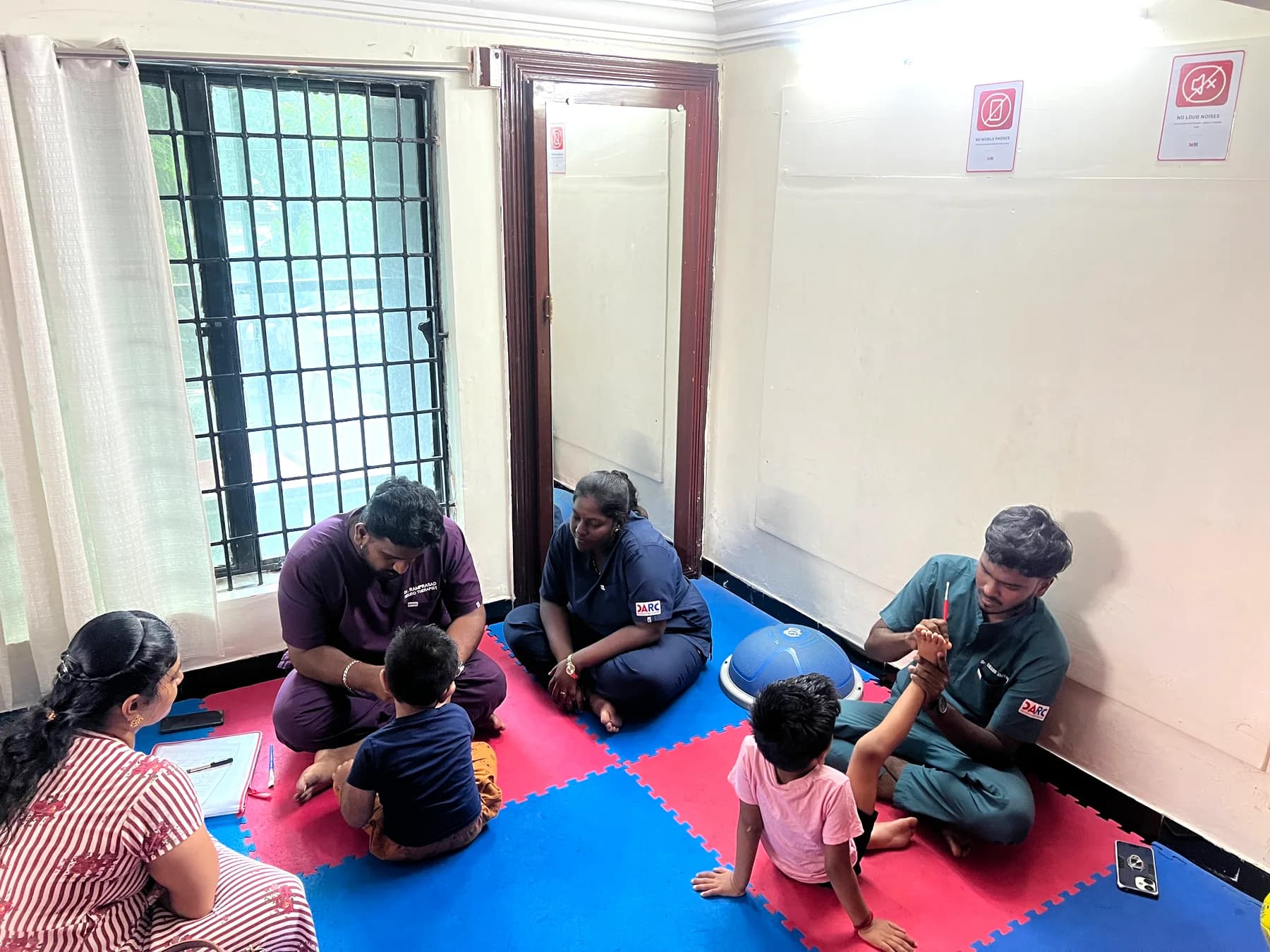
Look at how children enter, move around and leave the therapy area. Ask about supervision, equipment use, hygiene and what happens if a child becomes upset. You do not need specialist knowledge to ask where you can wait, how you can contact the therapist during the appointment and who will update you afterwards. Clarify any access needs before arriving.
A large sensory gym is not automatically a better clinical environment. Equipment should be chosen for an assessed goal and used with appropriate supervision. Ask why a piece of equipment is relevant for your child, rather than assuming more equipment means a more complete plan. A well-adapted everyday activity can be more useful than an impressive room with no clear purpose.
5. Are parents included in practical ways?
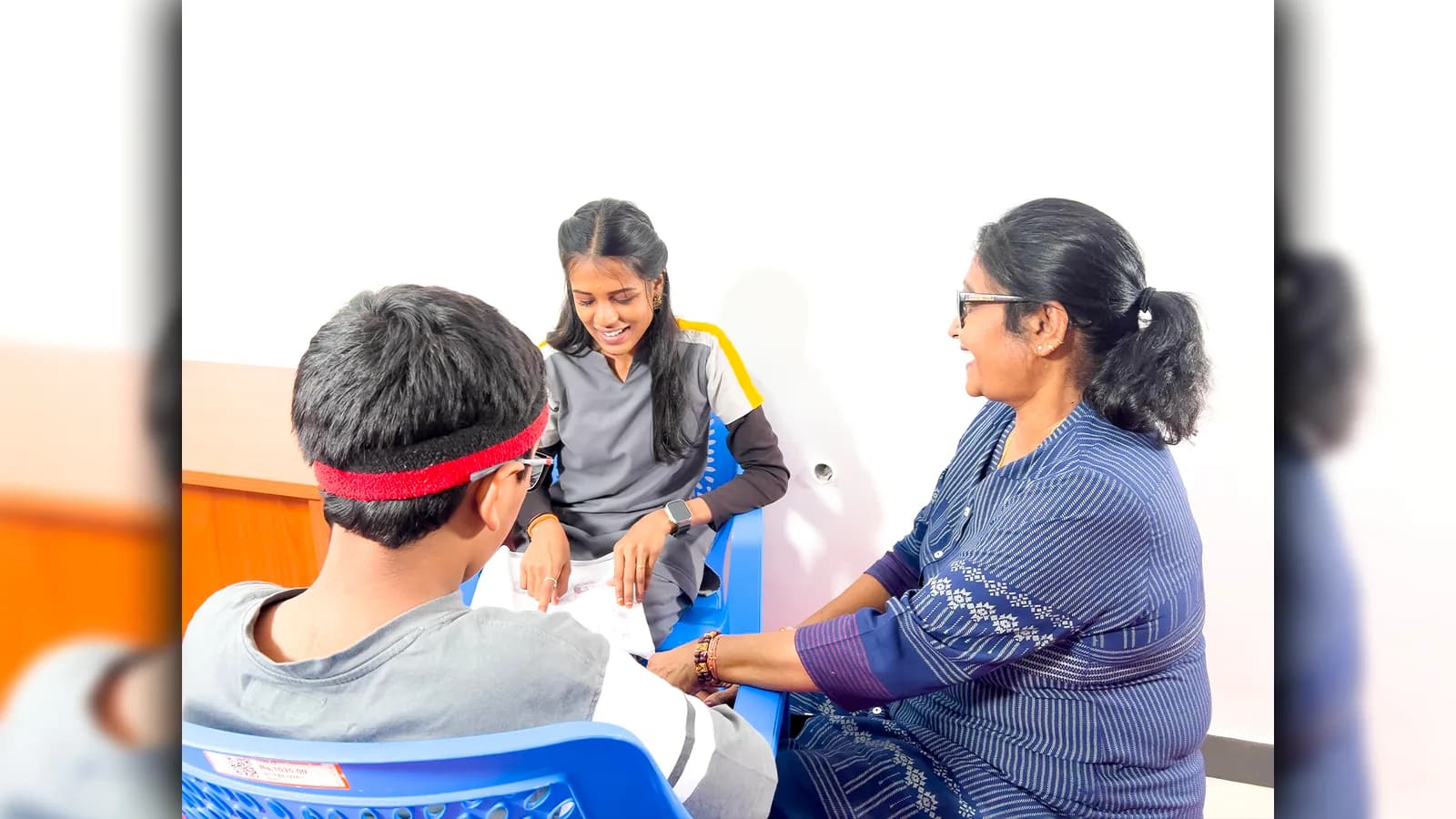
Find out when you can discuss observations and how the centre explains home strategies. Parent involvement should make ordinary routines clearer, not add an unrealistic list of exercises to an already difficult week. Ask for one or two priorities, a demonstration where appropriate and an opportunity to explain what is workable in your household.
Participation can look different across sessions. Sometimes a therapist may suggest observing, joining in or discussing the session afterwards. Ask for the reason and agree on communication arrangements. If you cannot attend personally, ask how another caregiver can share information with you. The centre should make space for questions without making families feel responsible for every slow or uneven change.
6. Is there a defined progress-review process?
Before starting, ask when you will review the goals, who will attend and what evidence you will discuss. A review is more useful when it includes the starting ability, current support needs and observations from home or school. Simply repeating that a child is 'doing well' leaves parents unsure whether the plan needs to continue, change or become less frequent.
A centre should also explain how it responds when change is limited. The answer might involve adjusting the activity, checking whether the goal matters, seeking more information or coordinating with another professional. Continuing the same programme indefinitely is not the only option. Ask how recommendations to pause, reduce or end a service are made and communicated.
7. Can different professionals coordinate without duplicating care?
Some children benefit from OT alongside speech-language therapy, physiotherapy, educational support or medical care. That does not mean every child needs every service. Ask what separate need each proposed discipline addresses. A coordinated centre should explain who leads each goal and how information is shared with your consent, rather than selling a bundle of unrelated appointments.
For example, opening a lunchbox and asking for help are different goals within the same school routine. An OT and an SLP may contribute different skills. Ask how recommendations will work together at home and school. If two professionals give conflicting instructions, you should know whom to contact for a discussion instead of trying to reconcile the plan alone.
8. Are fees, cancellations and reports explained clearly?
Ask for a written explanation of assessment fees, session duration, recurring costs, reviews and any separately charged reports. Clarify cancellation, rescheduling, expiry and refund terms before prepaying. If a quote is monthly, ask how many sessions it actually includes. If a quote is per visit, ask whether caregiver discussion is within the appointment or arranged separately.
Compare the same components between centres. A lower advertised rate may cover a shorter visit or exclude something your family needs. A higher fee does not itself prove better care. Ask what happens financially if the therapist recommends a different frequency or a break. You should understand the decision before committing, especially when travel and time away from work are significant.
9. Does the location fit your real weekly routine?
Check the journey at the time of your likely session. Include school pickup, traffic, waiting time and the return trip. A nearby branch can make parent attendance and reviews easier, but distance should be weighed alongside clinical fit. Call before travelling to confirm the exact address, entrance, appointment arrangements and any access considerations for your child.
DARC's two Chennai branches are in Ashok Nagar and Pallikaranai. The branch pages provide directions and contact numbers so families can discuss which location is more practical. Do not rely on a predicted travel time in a blog: road conditions and appointment availability change. Try the route and ask the team about current arrangements before you plan recurring visits.
10. Are the claims honest and the next step pressure-free?
Be cautious with fixed recovery dates, guaranteed speech, cure claims or claims that one technique explains every developmental concern. Ask what a proposed intervention is intended to change and how the decision will be reviewed. A transparent centre can discuss uncertainty. A treatment plan should make sense even after the marketing language and testimonials have been removed.
Use these ten checks as conversation prompts, not a numerical league table. A missing answer is a reason to ask more, not automatically a reason to reject a centre. DARC publishes this checklist as a provider of care, not an independent clinic-rating service. Our invitation is to ask the same questions of us and choose the next step with a clear understanding of your child's needs.
Common questions
Does this article rank the top ten OT centres in Chennai?
No. It gives ten checks for comparing centres. DARC has not conducted an independent survey of every Chennai provider, and the article does not claim that one centre is universally best. Apply the checklist to each centre you are considering, including DARC.
Is a centre with more equipment always better?
No. Ask whether the therapist can explain how the environment and activities support your child's assessed goals. Equipment is one part of care. Assessment, suitable supervision, respectful interaction and meaningful review are also important when deciding whether a centre is a good fit.
What should I bring when comparing centres?
Bring three daily-life concerns, a brief history of support already tried and your practical questions about timing and costs. You can ask for a description of the assessment process before sharing reports or agreeing to sessions. Keep each centre's answers so you can compare them calmly.
Sources and further reading
Prepared by DARC from the resources below and existing service information. These sources do not endorse DARC or establish a result for an individual child.
- AOTA: What is occupational therapy? (opens in a new tab)
- AOTA: Evaluation and assessment (opens in a new tab)
- RCOT: Children, young people and families (opens in a new tab)
First published . Updated . Read our editorial policy or send a correction.
A clearer next step for your child
Share what is difficult in your child's day. The DARC team can explain the appropriate assessment pathway in Ashok Nagar or Pallikaranai.
No payment is collected on the request form. The team confirms the next step separately.