Skip to content
Down syndrome child development support

Down Syndrome Therapy Support in Chennai

Down syndrome therapy in Chennai: assessment-led occupational therapy, speech-language support and parent guidance at DARC Ashok Nagar & Pallikaranai.

Written by Dr. Aaditya Malathy, OT, MS (USA) · Clinically reviewed by Vasudharany, Head SLP · Last updated

Therapy delivered by the DARC occupational therapy team.

Ashok NagarPallikaranaiChennai
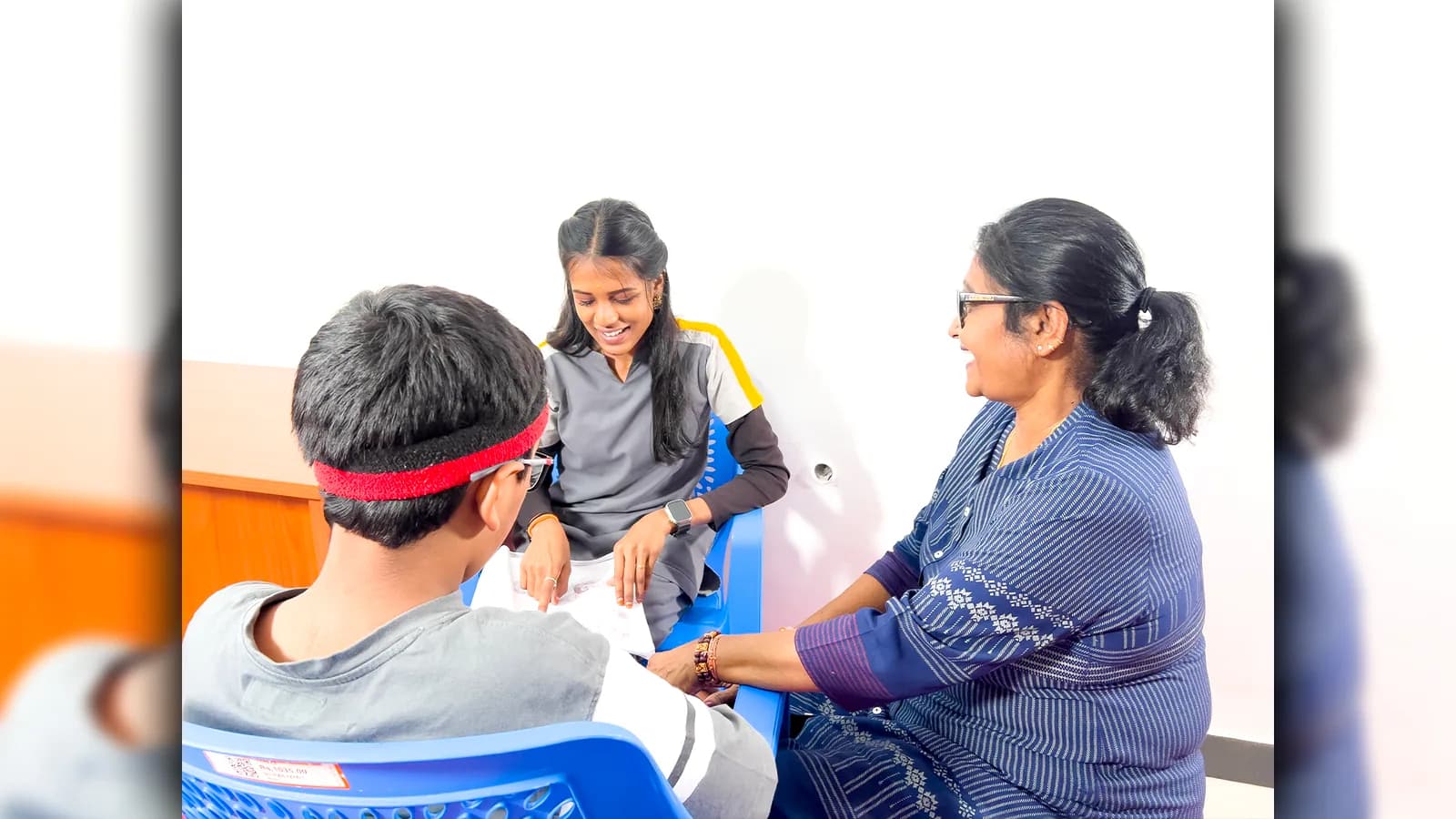
Parent and child receiving developmental therapy guidance at DARC Chennai

Assessment-led care

Child-friendly support with clear goals and parent guidance.

Assessment

Plan starts with understanding

Parent

Guidance included

Progress

Goals reviewed clearly

2 Branches

Ashok Nagar · Pallikaranai

Individual recommendations and outcomes depend on assessment findings, participation, consistency and family priorities.

Plan your child’s developmental consultation

Ages and needs we support

Young children and school-age children with concerns about development, attention, movement or daily participation. Share your child’s age, strengths, existing diagnosis if any and the routines that need support.

Your care team and qualifications

Dr. Aaditya Malathy leads DARC’s consultation-first approach. The consultation helps identify which professional assessments are relevant, including occupational therapy, communication or learning support when needed.

What happens at the first appointment?

  1. Discuss your child’s development

    Share developmental history, existing diagnoses or assessments and the everyday tasks your child finds difficult.

  2. Identify the right starting point

    Discuss which professional assessments may help clarify your child’s needs and whether additional input is needed.

  3. Understand the proposed plan

    Review relevant goals, suggested support, home guidance, fees and the next progress review.

What to bring or prepare

Relevant medical and developmental reports, any current therapy plan and observations from home or school.

Choose your Chennai branch

Ashok Nagar

New No: 59, 7th Ave, Sarvamangala Colony, Manthope Colony, Ashok Nagar, Chennai, Tamil Nadu 600083

Centre hours: Mon–Fri 10:30 AM–8 PM · Sat 9 AM–5:30 PM · Sun closed

Pallikaranai

5/1077, Maxworth Nagar 2nd St, Maxworth Nagar, Pallikaranai, Chennai, Tamil Nadu 600129

Centre hours: Mon–Sat 12 PM–8 PM · Sun closed

Centre hours are not individual clinician availability. Confirm the relevant professional and assessment time before travelling.

Fees and appointment details

Confirm the initial assessment or consultation charge, appointment duration and what feedback or report is included before booking. Therapy fees and frequency are explained after assessment, before you commit to a plan.

Book a consultation

The consultation helps identify the right assessment and next steps for your child.

Is this for my child?

  • Delayed speech or language development
  • Fine motor, play or self-care challenges
  • Feeding participation or oral-motor concerns
  • School readiness and everyday independence goals

How long does it take?

  • Support is reviewed around functional milestones rather than a fixed promise. The review schedule depends on age, goals, health considerations and recommended frequency.

Is it safe?

  • Therapy is paced for the child's comfort, medical history and participation. DARC may recommend medical or other specialist review when needs fall outside therapy scope.

How much will it cost?

  • The team explains recommended services, frequency and fees after assessment so families can understand the plan before committing.

Quick parent answer

Looking for down syndrome therapy support in chennai?

Start with an assessment-led consultation. DARC looks at the concern, the child's daily participation, and any connected sensory, motor, communication, attention, behaviour, or learning needs before recommending therapy direction.

Delayed speech or language development

Fine motor, play or self-care challenges

Feeding participation or oral-motor concerns

School readiness and everyday independence goals

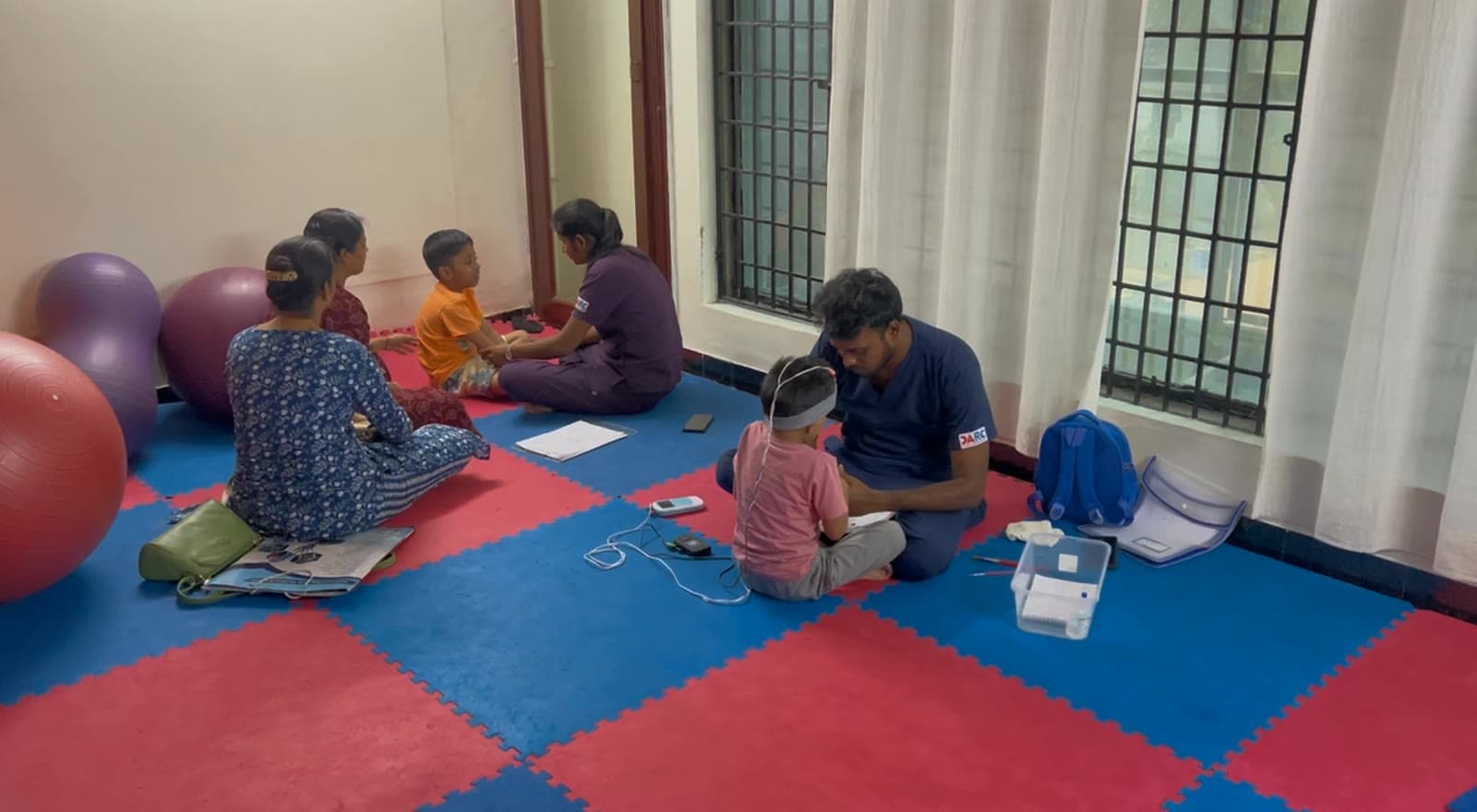
DARC paediatric therapy room in Chennai with therapists supporting children

What families notice

Real clinic spaces and therapist presence
Clear care steps before families invest
Child-led pacing with professional structure
Simple next steps for anxious parents

Inside DARC

Clinic moments that build confidence for families

Therapist-led care

Children are guided gently, never rushed

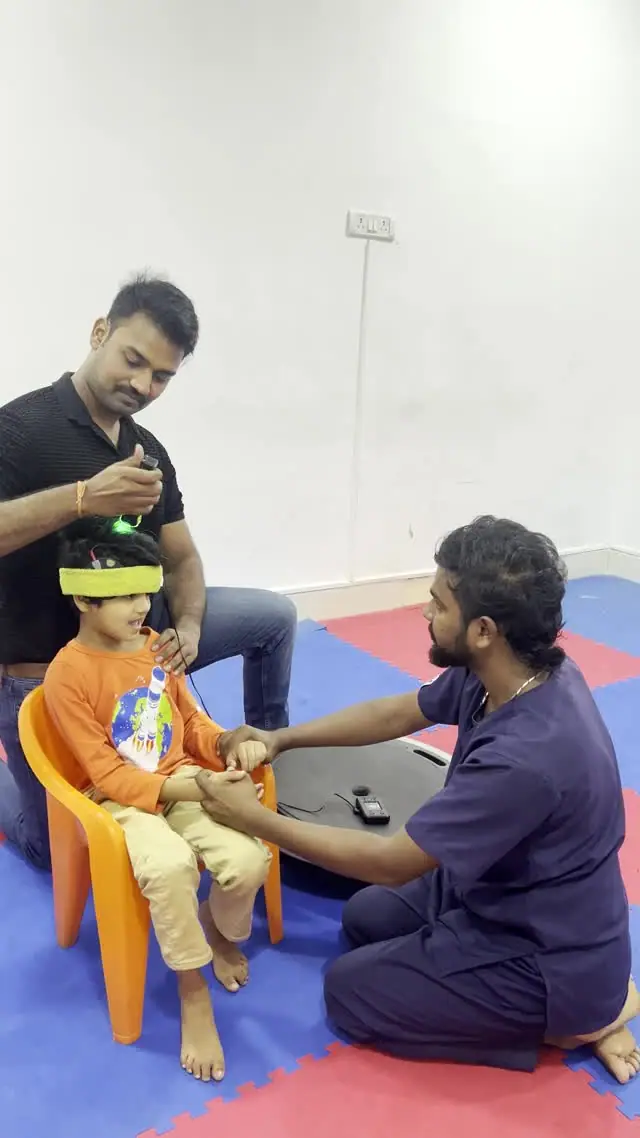
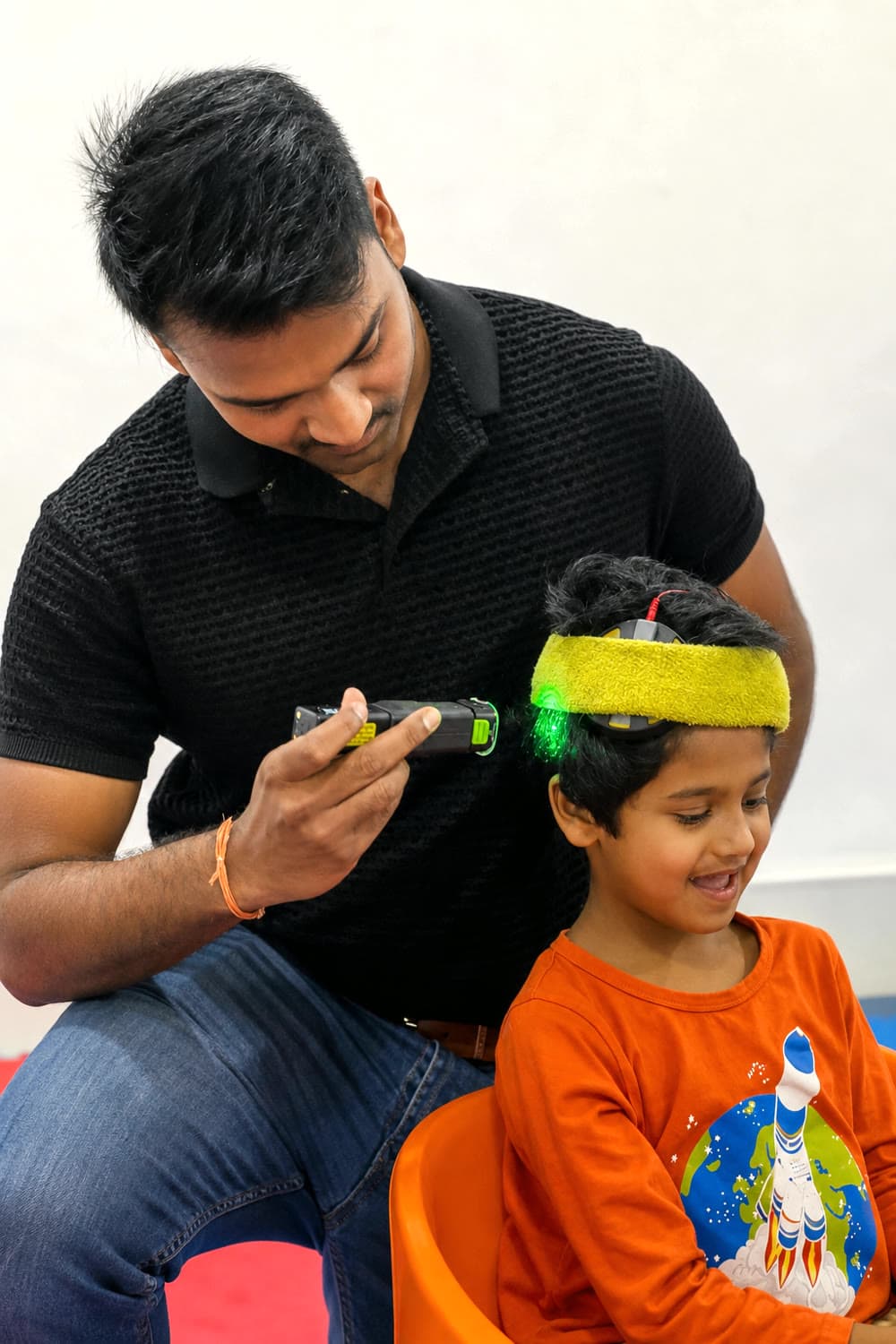
Photobiomodulation laser therapy support for a child at DARC Chennai

Non-invasive support

Comfort-first, closely observed sessions

A calm, visible process from assessment to therapy

The website should feel like the centre itself: organised, warm, clinical, and real. These moments show parent-visible care without turning the page into a photo gallery.

Understanding this support

A coordinated plan for communication and daily skills

Children with Down syndrome have individual strengths and support needs. DARC assesses how communication, muscle tone, motor planning, hand skills, attention and learning affect everyday participation before recommending therapy.

Goals may involve more than one discipline, but families receive a prioritised plan rather than automatically being placed into every service.

  • Early communication
  • Play and motor development
  • Feeding and self-care routines
  • Learning and school participation

Therapy supports development; it does not claim to cure Down syndrome

Families sometimes search for 'Down syndrome treatment'. Down syndrome is a genetic condition, and DARC does not promise a cure. Therapy can help a child practise communication, movement, independence and participation skills.

Recommendations can be adjusted as the child grows, enters school or develops new family priorities.

Down syndrome therapy in more depth

Children with Down syndrome benefit from early, consistent, multidisciplinary support. Occupational therapy helps with motor development, sensory processing, self-care independence, fine motor skills, feeding, and school participation. Speech therapy supports communication development — spoken language, AAC, feeding and oral-motor function, and social communication.

Special education and parent coaching complete the picture for many families — helping children build learning foundations and giving parents practical strategies for home routines that reinforce therapy goals.

The brain is most plastic in the early years. Children with Down syndrome who receive consistent OT and speech support before age 3 typically show better communication outcomes, stronger motor development, greater self-care independence, and easier school transitions than those who begin later.

This does not mean starting later is futile — DARC works with children across the full school-age range. But if your child is under 3 and you have not yet started therapy, an assessment now is important.

Hypotonia (low muscle tone) is nearly universal in children with Down syndrome. It affects feeding in infancy, sitting and walking timelines, fine motor development, and handwriting in school age. Occupational therapy addresses hypotonia through targeted motor activities, postural support strategies, and sensory-motor integration work.

At DARC, the OT assessment identifies which specific motor areas are most limiting the child's daily function and builds goals around those — not a generic gross motor programme applied to all children with low tone.

Most children with Down syndrome develop spoken language more slowly than their receptive understanding would predict. They understand far more than they can express. Speech therapy supports expressive language development, articulation clarity, social communication, pragmatic skills, and where needed, AAC or picture communication systems.

DARC's speech team works alongside the OT team, which is important when feeding and oral-motor difficulties co-occur with speech development needs — a common combination in Down syndrome profiles.

A combined therapy plan is recommended where indicated. Monthly reviews track progress across all therapy areas and adjust the plan as the child develops. Parents receive a home programme that fits real daily routines.
Available at both Chennai branches

Choose the DARC branch that makes consistent visits easier.

For children and families

When this support may be useful.

Delayed speech or language development

Fine motor, play or self-care challenges

Feeding participation or oral-motor concerns

School readiness and everyday independence goals

What progress means

Functional changes families can observe.

Progress is tracked in communication, play, mobility participation, hand skills, self-care, feeding routines and school readiness, based on the child's priorities.

DARC can coordinate occupational therapy, speech-language therapy, special education and parent guidance around shared functional goals.

Assessment-first planning instead of one-size-fits-all therapy

Parent guidance included so skills are practised at home

Monthly progress reviews with clear next goals

Every child is different. DARC reviews goals against the child's own starting point and daily participation.

◆ What happens in therapy

A clear plan before parents commit.

Parents should know what the first visit is for before committing to repeated sessions. DARC begins by understanding your child's profile, parent priorities, school or home concerns, and which therapy inputs need to work together.

1

Developmental and functional assessment

2

Priorities agreed with the family

3

OT, speech or coordinated therapy activities

4

Home strategies and progress review

Dr. Aaditya Malathy, Occupational Therapist and Founder at DARC Chennai

Clinical direction

Dr. Aaditya Malathy

Occupational Therapist and Founder · OT, MS (USA)

Specialist-led care

A named clinical lead behind the therapy direction.

Dr. Aaditya leads DARC's assessment-first, root-cause focused approach for children with autism, ADHD, developmental delay, sensory processing concerns and daily function challenges.

Occupational Therapy
Sensory Integration
Primitive Reflex Integration
Parent Guidance
Child Development Planning

Written by

Dr. Aaditya Malathy

Founder, DARC · Occupational Therapist, OT, MS (USA)

Clinically reviewed by

Vasudharany

Head SLP · Speech, language, feeding and communication support

Page reviewed 2026-09-20

Proof and clarity

Why parents trust DARC.

Assessment-first planning instead of one-size-fits-all therapy

Parent guidance included so skills are practised at home

Monthly progress reviews with clear next goals

Two Chennai branches: Ashok Nagar and Pallikaranai

DARC can coordinate occupational therapy, speech-language therapy, special education and parent guidance around shared functional goals.

Progress is tracked in communication, play, mobility participation, hand skills, self-care, feeding routines and school readiness, based on the child's priorities.

🎥 Patient Stories

Real families. Real progress.

Shared voluntarily by DARC families. Tap any video to watch.

01
DARC Parent Story

A parent shares their child's therapy journey at DARC

02
DARC Parent Story

A family shares what changed for them

03
DARC Parent Story

Trust, clarity, and visible progress

04
DARC Parent Story

Real parent feedback from DARC Chennai

05
DARC Parent Story

Parents talk about their experience

06
DARC Parent Story

A parent story about care and guidance

07
DARC Parent Story

Clinic support shared by a DARC family

08
DARC Parent Story

A therapy journey shared by a parent

Individual outcomes vary. Stories shared voluntarily by DARC families — no compensation given.

Methods used

Evidence-informed, child-led support.

Paediatric occupational therapy
Speech-language therapy
Feeding participation support
School readiness
Parent coaching

Connected care

Support that works together around your child.

Explore related DARC services and local clinic pages without losing the thread of your child's therapy plan.

Prefer speaking to someone? Call DARC and ask which branch, therapist, and assessment pathway fits your child.

+91 99401 40262

Common questions

Clear answers before your first visit.

What therapies may help a child with Down syndrome?+

Depending on assessment findings, a child may benefit from occupational therapy, speech-language therapy, feeding-related support, physiotherapy, special education or parent guidance. Not every child needs every service.

Do you offer early-intervention support?+

DARC supports early developmental goals when they are within the team's scope and coordinates referrals when medical, hearing, physiotherapy or other specialist input is needed.

Can therapy help with school readiness?+

Therapy can support communication, attention, fine motor skills, routines and independence that contribute to classroom participation. Goals are individualised with the family.

How much does therapy cost at DARC?+

Fees depend on the assessment, therapy frequency, and the support plan. We explain the recommended plan and cost clearly before parents commit.

Is the therapy safe for my child?+

Sessions are child-friendly and supervised by trained therapists. Non-invasive supports are recommended only when suitable and never presented as a standalone cure.

How quickly will we see progress?+

Some families notice early changes within weeks, while deeper developmental goals take longer. Progress depends on the child's profile, consistency, and home practice.

✦ Next step

Start with a clear assessment for Down Syndrome Therapy Support in Chennai.

You do not have to decide everything alone. DARC will help you understand the concern, the safest next step, expected timeline, and therapy plan before you commit.