
Occupational Therapy for Autism: What Chennai Parents Should Know
Understand occupational therapy for autism: everyday goals, sensory needs, parent involvement, assessment and how Chennai families can review progress.
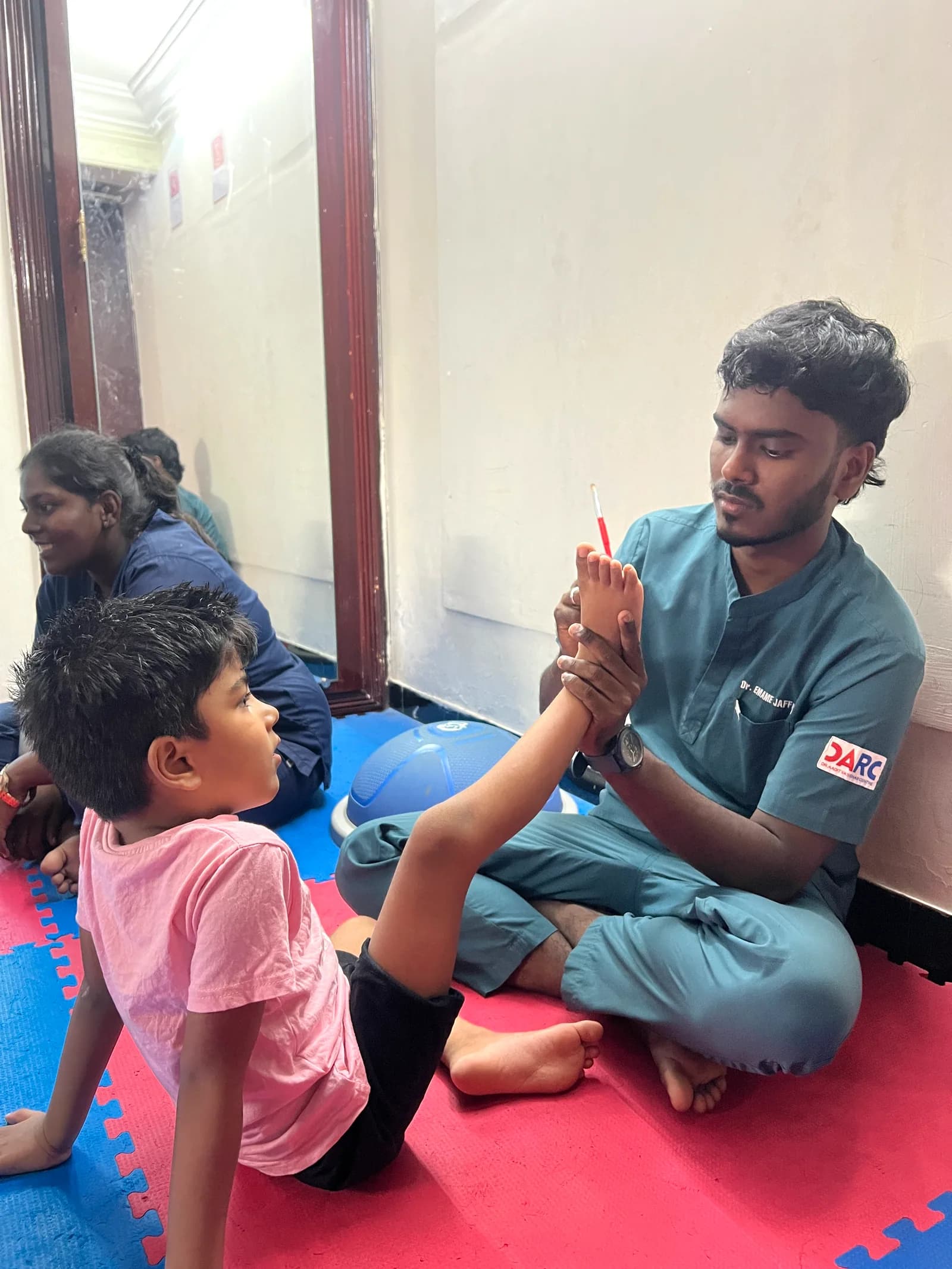
A quick answer
Occupational therapy for autism can support participation in daily activities such as dressing, eating, play and school routines. The plan should reflect the child's individual strengths, sensory needs and family priorities. OT does not cure autism, and a diagnosis alone does not determine the activities or frequency a child needs.
- Choose goals that improve comfort, access and independence in everyday life.
- Sensory support should relate to an assessed participation need.
- Communication, medical and learning concerns may need other professionals alongside OT.
Educational guidance for parents. Individual assessment determines care; this article does not diagnose your child or promise a treatment outcome.
What occupational therapy for autism is trying to help with
For Chennai parents, occupational therapy for autism is often introduced after concerns about routines, play or school participation. The most useful starting question is not 'How do we make the child behave like other children?' It is 'Which activities matter to this child and family, and what is getting in the way?' This keeps the discussion focused on practical support.
An activity can become difficult for several reasons at once. Getting ready for school may involve clothing preferences, sequencing, hand skills, communication and the pressure of a busy morning. Tell the clinician which part is hard and what your child already does well. The plan should distinguish these needs instead of treating every difficulty as a single sensory or behavioural problem.
Begin with a profile of this child, in this family
Autistic children vary widely in interests, communication, motor abilities, comfort with change and support needs. Two children with the same diagnosis may need very different goals. An OT assessment should consider relevant routines and contexts before selecting activities. The family should be able to explain which priorities were chosen and why those priorities are worth working on now.
Prepare observations from comfortable and difficult situations. Perhaps your child enjoys pouring water in play but struggles with handwashing before a meal. That contrast is useful information. Include what happens before the activity, what support has helped and whether there are signs of pain or fatigue. A clinician may suggest additional assessment when a concern is outside occupational therapy's role.
Connect sensory support to participation
Sensory differences can affect how a child experiences sound, touch, movement or busy environments. Ask how a proposed sensory strategy connects to an activity your child wants or needs to join. A quieter waiting space, different clothing option or adapted task may be part of the conversation. A list of sensory activities should not become a programme with no clear purpose.
Notice the child's response instead of assuming that an activity is helpful because it is called sensory therapy. Discuss what greater comfort or access would look like and when to stop or adapt a strategy. Do not copy specialist equipment routines from social media without individual guidance. Ask the therapist about safe use, supervision and whether the same approach is suitable outside the clinic.
Choose goals around independence and a manageable day
Useful OT goals may concern participating in dressing, using everyday objects, joining a play activity or managing part of a school routine. Independence does not have to mean doing everything without support. An appropriate adaptation or a reliable way to ask for help can make an activity more accessible. Discuss what a meaningful improvement would be for your child.
An illustrative dressing goal might focus on putting an arm into a sleeve when the garment is presented consistently. Another child may be working on fasteners or selecting comfortable clothes. These examples are not treatment prescriptions or developmental deadlines. Ask for a baseline, a realistic next step and a way to share observations when the child uses the skill at home.
| Family concern | A useful assessment question |
|---|---|
| School mornings feel overwhelming | Which step is difficult, and what makes it easier? |
| Play materials are avoided | Is the barrier access, interest, movement, sensory experience or something else? |
| Lunch is hard to manage | Which eating, opening, seating or communication needs require assessment? |
| Transitions often become distressing | What does the child understand, anticipate and communicate in that situation? |
OT and speech-language therapy have different roles
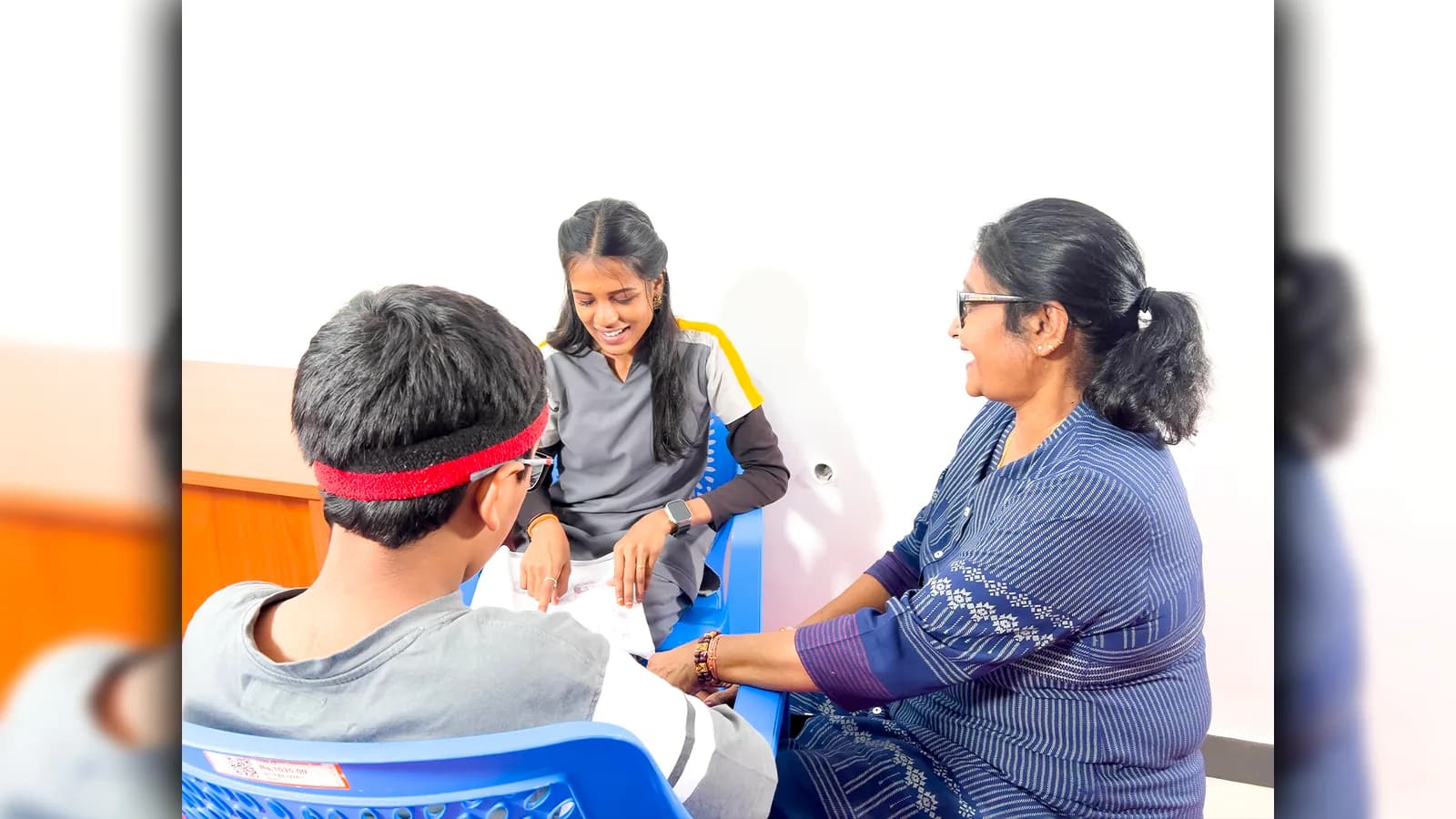
If understanding language, expressing needs or speech clarity is a concern, ask about speech-language assessment. An OT may support access to an activity while an SLP works on communication within it. It is not necessary to delay a communication assessment until a child has completed OT. Ask the team which needs can be addressed together and which require a separate evaluation.
Some children communicate through gestures, signs, pictures or a communication device, with or without speech. ASHA's AAC guidance explains approaches to supporting communication access. Ask an appropriately qualified professional about options rather than assuming speech is the only useful outcome. A coordinated plan should help your child communicate choices, discomfort and requests during everyday activities as well as in sessions.
Keep family involvement realistic and respectful
A home plan should fit your household's resources and routines. Ask for a small number of priorities and agree how to practise them in activities you already do. An example might be offering a manageable part of getting dressed, rather than adding a long evening programme. Tell the therapist if instructions are unclear or if the suggested activity causes distress.
Parents should not be made to feel that every difficult day reflects insufficient effort. Illness, sleep, changes at school and ordinary family pressures can affect participation. Share that context at reviews. NICE's guidance for autistic children stresses support for families and coordination of care; local services and individual plans vary, so use it as a basis for questions rather than a promise of a specific service.
Review changes across home, school and the clinic
Ask what the team will record and how it relates to your priorities. A child may first participate with one therapist, then with a caregiver and later in a different setting. Those are different pieces of information. A new clinic skill is encouraging, but you also need to know whether it makes the real routine easier and what support remains necessary.
At a review, compare the child's current participation with the starting point. Include comfort, amount of assistance and consistency, not only whether a task was completed. If the plan is not helping, ask what will change and whether another assessment is needed. No provider can responsibly guarantee a particular amount of progress within a fixed number of days for every autistic child.
Ask how the plan respects your child's ways of participating
Talk about what your child finds enjoyable, how they make choices and what they do when an activity becomes too much. A useful plan should make room for those signals. Ask whether the goal is increasing access to an activity the child values or simply making a behaviour look more typical. That distinction matters when deciding which goals are worthwhile for your family.
For example, a child may prefer a quieter play space or a different way to handle materials. Ask whether an adaptation can support participation rather than removing it to make the activity harder. If a proposed goal concerns reducing a behaviour, discuss its function, any safety issue and how the child's needs will still be met. The explanation should identify a practical benefit rather than treating difference itself as a problem.
Share these priorities with the other adults involved in care. A consistent explanation can help school staff and relatives understand the purpose of support. If the family's priorities and the proposed programme do not match, request a discussion before continuing. Consent and a shared understanding are ongoing parts of care, not questions answered once when the first appointment is booked.
Plan the next step in Chennai without committing blindly
When contacting a centre, describe your child's most important daily-life concern and ask which assessment is appropriate. Confirm who will assess, what the visit includes and how fees are explained. If ongoing OT is recommended, discuss scheduling, travel and how reviews will fit school and family routines. You can ask for time to understand the proposal before agreeing to a block of sessions.
DARC offers consultation access through Ashok Nagar and Pallikaranai. Our role in this article is to explain questions parents can ask, not to diagnose your child online. If there is a loss of previously acquired skills, new pain or another medical concern, contact your child's doctor rather than relying on a therapy booking alone. Clinical priorities and referrals should follow the child's actual needs.
Common questions
Can occupational therapy cure autism?
No. OT may support participation, comfort and independence in activities that matter to the child and family. It is not a cure for autism. Discuss specific goals and any evidence or uncertainty around an intervention rather than accepting a promise that a diagnosis will disappear.
Does every autistic child need sensory integration therapy?
No single approach is appropriate for every autistic child. Ask whether assessment identifies a sensory-related barrier to an important activity, what the proposed strategy is intended to change and how the child's response will be reviewed. Other adaptations or professional input may be appropriate.
Does OT have to come before speech therapy?
There is no universal sequence. Communication concerns can be assessed by an SLP while daily participation concerns are assessed by an OT. When both are appropriate, ask how the professionals will coordinate. A child should not be denied a way to communicate while waiting to finish another programme.
Sources and further reading
Prepared by DARC from the resources below and existing service information. These sources do not endorse DARC or establish a result for an individual child.
- CDC: Autism treatment and intervention (opens in a new tab)
- NICE: Support and management for autistic children (opens in a new tab)
- ASHA: Augmentative and alternative communication (opens in a new tab)
- AOTA: Evaluation and assessment (opens in a new tab)
First published . Updated . Read our editorial policy or send a correction.
A clearer next step for your child
Share what is difficult in your child's day. The DARC team can explain the appropriate assessment pathway in Ashok Nagar or Pallikaranai.
No payment is collected on the request form. The team confirms the next step separately.