
How Long Does Occupational Therapy Take to Show Progress?
Understand occupational therapy progress: early changes, useful goals, home observations, review questions and what to do when improvement is unclear.

A quick answer
There is no universal timeline for occupational therapy progress. Early changes may involve comfort, participation or needing less help; using a skill reliably in everyday life can take longer. Agree on a baseline, specific goals and a review point so the team can adjust the plan instead of promising results by a fixed date.
- Measure change in a meaningful activity, not just the number of sessions attended.
- Track the amount of help and the settings in which a skill appears.
- If progress is unclear, ask for a review and a reasoned adjustment.
Educational guidance for parents. Individual assessment determines care; this article does not diagnose your child or promise a treatment outcome.
Why a fixed number of sessions cannot predict the outcome
Parents asking about occupational therapy progress are often trying to make a difficult decision: how much time, money and hope should we put into this plan? That deserves a clear answer, but not an invented deadline. The starting skill, the activity, the child's health and comfort, available support and the environment can all affect what change is possible and how it appears.
A useful provider should explain the uncertainty and still offer a plan for checking whether care is helping. Ask what the team expects to observe, how that relates to your daily-life goal and when you will review it together. A promise of a complete result after a fixed number of sessions skips the individual assessment that should guide those decisions.
Define progress before starting to count weeks
A child may begin a task more willingly, need fewer reminders, complete an extra step or manage the activity more comfortably. Those can be meaningful changes even when the whole routine is not independent yet. Ask the therapist to explain which type of change matters for the chosen goal and how it will be recorded without putting the child under constant observation or testing.
Choose a baseline in a familiar activity. Record what the child can do, the help needed and the setting. For example, note whether an adult opens a lunch container completely or whether the child can finish opening it once the lid is loosened. That comparison is more useful than describing the child as 'better' or 'still delayed' without saying what changed.
| Instead of only saying | Record something you can observe |
|---|---|
| Attention is better | Joins the chosen activity with fewer adult reminders |
| Hand skills improved | Completes a specified step with less assistance |
| Sensory issues are better | Takes part in a previously difficult routine with greater comfort |
| No progress | The baseline and current help needed are the same in this setting |
Settling into therapy is different from a functional gain
Becoming familiar with a clinician or room can make it easier to see what a child can do. A smoother arrival may be helpful, particularly when the setting was initially stressful. But if the referral concerned getting dressed or using classroom materials, the team should also explain how the plan will address that concern. Attendance and familiarity alone are not a complete outcome.
Ask what the therapist is learning as the child settles and whether the initial goals still fit. Early observations sometimes reveal strengths that were not visible at the first visit, or a barrier that needs more attention. A plan can become more specific as the team learns. The important thing is that the family understands the reason for the direction rather than waiting through an undefined preparation phase.
Look for transfer from the clinic to ordinary life
A child may show a skill with one therapist before using it with a caregiver or at school. The materials, instructions, pace and distractions can be different. Ask how the team will help the skill become useful in the routine that matters. Tell them when it appears spontaneously and when it still needs support. Both are valuable pieces of information.
Keep an example from home and, when relevant, one from school. You do not need to film or record every attempt. Brief notes about ordinary opportunities can identify what makes success easier. Discuss whether changes to the task or environment are part of the solution. The aim is participation, so an appropriate adaptation may be a meaningful outcome even when the original task remains difficult.
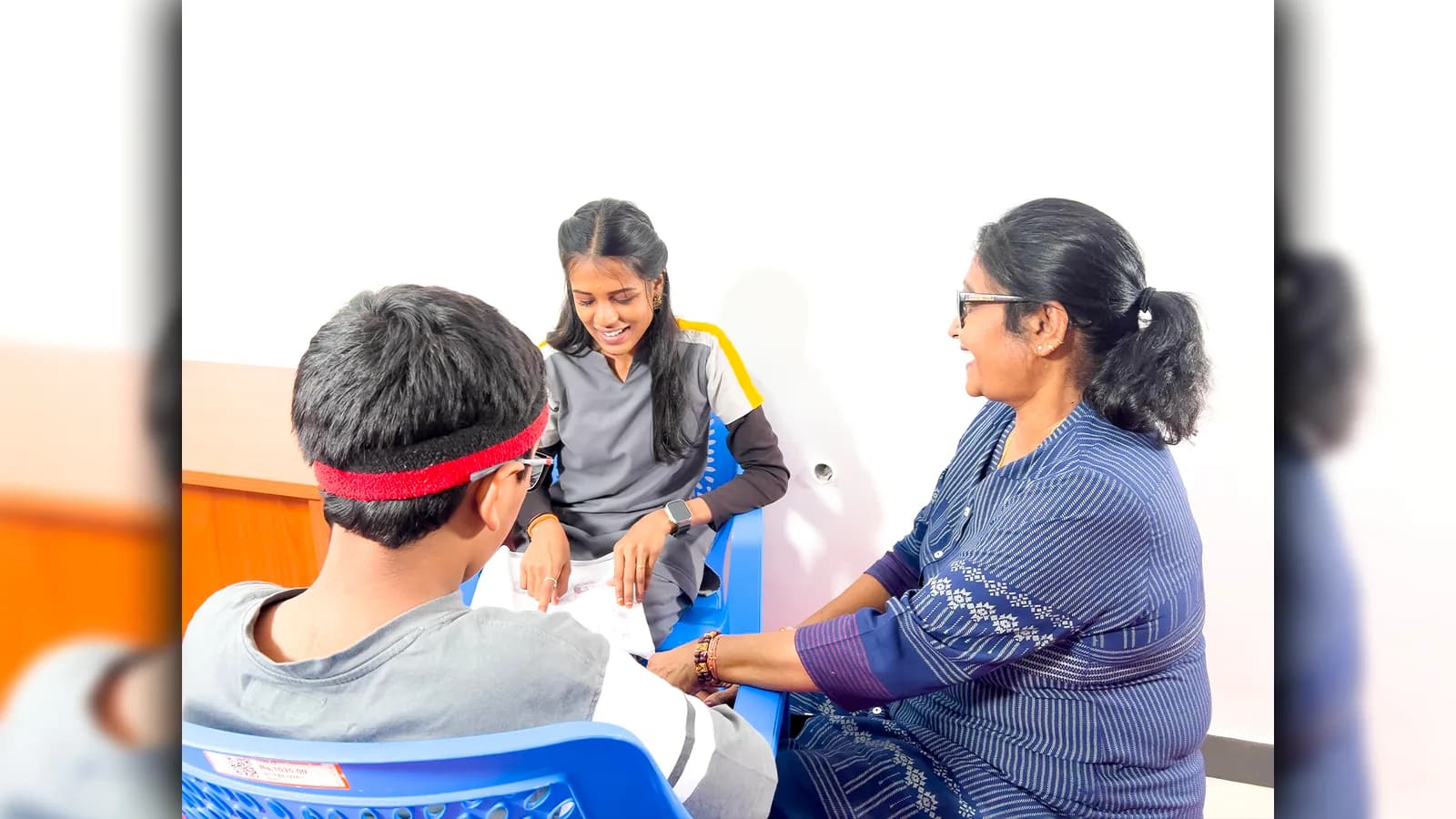
Why progress may be uneven
Children do not demonstrate every skill equally on every day. Illness, sleep, unfamiliar people, school changes or an uncomfortable activity can affect participation. Share relevant context with the therapist rather than interpreting a difficult day as the loss of all progress. Compare patterns across opportunities and settings, while taking new or persistent concerns seriously.
A plan that is too demanding can also obscure what the child can do. Ask whether the goal, task setup or level of assistance needs to change. Avoid responding to uncertainty by adding more exercises without guidance. If there is an actual loss of previously acquired skills, new weakness, pain or another medical concern, contact the child's doctor; that needs assessment beyond a routine progress discussion.
What a useful review conversation includes
At the agreed review, return to the original goals. Compare the baseline, current ability, assistance required and observations from daily life. Ask what the therapist thinks explains the pattern. If a score is used, ask how it connects to the activities you care about and whether the comparison is appropriate. A score and an everyday example can provide different information.
Ask what happens next. Is the current approach still justified? Should the activity change, the goal be narrowed or a different concern be assessed? Could the frequency be reviewed, or is more information needed first? Record the agreed next step and a new review point. A review should lead to a reasoned decision, not just confirm another block of sessions by default.
- What was the starting ability, and what is different now?
- Where does the change appear: clinic, home, school or more than one setting?
- How much help is still needed, and is the activity more comfortable?
- What will we continue, change or clarify before the next review?
What to ask when you cannot see improvement
Start by checking whether everyone is measuring the same goal. A therapist may be working on a preparatory task while the family is waiting for a change in dressing. Ask for the connection and the evidence that the approach remains appropriate. If the link is weak or unclear, request a discussion of alternatives rather than assuming the only answer is more time.
Share what is realistic at home and whether guidance was clear enough to use. Then ask whether the problem needs another assessment, a different professional's input or a second opinion. Lack of progress should not automatically be blamed on the child or parents. A useful response acknowledges uncertainty, reviews the available information and sets out what will be different in the next stage.
Keep the record small enough to use
Choose one brief note about the target activity at an agreed interval, rather than recording every attempt. Write what the child did, what help was needed and anything unusual about the setting. Share an example of success too. This makes the review more concrete while leaving room for ordinary family life and the child's own experience of the activity.
Make the plan accountable and sustainable
Talk about the practical load as well as the clinical goals. A schedule that repeatedly disrupts sleep, school or family functioning may be difficult to maintain. Discuss priorities and suitable alternatives with the treating professional. Do not increase or stop a programme solely because an online article describes another child's experience. Your child's assessment and response should guide the decision.
At DARC, parents can ask the team to explain goals, progress observations and the next review. Keep the discussion tied to what your child can do in everyday life. A responsible plan can include continuing, adapting, reducing, pausing or concluding care when appropriate. The decision should be explained, with useful guidance about what to watch for next rather than an indefinite promise that a breakthrough is just around the corner.
Common questions
Can I expect progress within a month?
Some families may notice early changes, but no one-month outcome applies to every child or goal. Agree on what the clinician will observe and when to review it. Ask whether an early change reflects comfort in the setting, a skill emerging with assistance or a useful change in daily life.
Does more frequent OT always mean faster progress?
No universal rule establishes that more visits are always better. Frequency should have an individual rationale and be reviewed in context. Ask how the proposed schedule supports the goals, how the child responds and how it fits school, rest and family routines.
Should we stop if the child has a difficult week?
Discuss the change with the treating team rather than deciding from one week alone. Share relevant illness, sleep, school or routine changes and compare the longer pattern. A new loss of skills, pain or weakness should also be raised with the child's doctor rather than treated only as a therapy issue.
What if progress happens only in the clinic?
Ask how the task, instructions and surroundings differ at home or school. The plan may need support for transfer or changes to the activity and environment. Record a simple everyday example and bring it to the review so the team can work on the situation that matters to your family.
Sources and further reading
Prepared by DARC from the resources below and existing service information. These sources do not endorse DARC or establish a result for an individual child.
- AOTA: Evaluation and assessment (opens in a new tab)
- RCOT: Children, young people and families (opens in a new tab)
- CDC: Concerned about your child's development? (opens in a new tab)
First published . Updated . Read our editorial policy or send a correction.
A clearer next step for your child
Share what is difficult in your child's day. The DARC team can explain the appropriate assessment pathway in Ashok Nagar or Pallikaranai.
No payment is collected on the request form. The team confirms the next step separately.