Occupational Therapy vs Speech Therapy: Which Does Your Child Need?
Compare OT vs speech therapy for children: what each supports, when both may help, which assessment to ask for and how to avoid unnecessary sessions.
A quick answer
The OT vs speech therapy decision depends on the activity your child finds difficult. Occupational therapy focuses on participation in everyday tasks; speech-language therapy focuses on communication and related needs. A child may need one, both or a different assessment. There is no universal rule that OT must happen first.
- Describe the concern before choosing a therapy name.
- Language, speech clarity and communication access need an SLP's input.
- A combined plan should have a distinct purpose for each professional.
Educational guidance for parents. Individual assessment determines care; this article does not diagnose your child or promise a treatment outcome.
Start with the problem, then choose the professional
Parents comparing OT vs speech therapy often hear conflicting explanations: one person suggests sensory work, another recommends speech sessions, and someone else says to wait. Begin with what actually happens in your child's day. Is your child unable to make a request understood, struggling to open a lunchbox, or finding both parts of snack time difficult? Those situations call for different questions.
A diagnosis does not make the decision on its own. Two children with autism, ADHD or developmental delay may have different communication and participation needs. Write down three situations and what help is currently required. Include strengths, preferred activities and the languages used at home and school. A good assessment uses those details to decide what needs closer attention and who can help.
What occupational therapy focuses on
Occupational therapy is concerned with taking part in meaningful daily activities. For children, the conversation may involve dressing, using play materials, managing school tasks or joining family routines. An OT considers the child, the task and the environment together. A change to the way an activity is arranged may be part of the plan, alongside building a relevant skill.
Parents might describe difficulty with buttons, scissors, keeping a comfortable position for a task or organising the steps of getting ready. These observations are reasons to ask about assessment, not proof that a specific sensory programme is required. The OT should explain what has been found, how the findings relate to participation and whether another professional needs to assess a different concern.
What speech-language therapy focuses on
A speech-language pathologist assesses concerns such as understanding language, expressing ideas, speech sounds and social communication. A child who speaks in long sentences can still have a communication difficulty; a child with few spoken words may communicate many things through other means. Tell the SLP what the child understands and how they currently express choices, requests, protests and shared interests.
Describe communication in the child's comfortable languages and familiar settings. If the concern is unclear speech, give examples of words listeners find difficult. If it is understanding, describe the instructions that cause confusion. Hearing may also need assessment. Communication support can include speech, gestures, pictures or other AAC options, so ask about access to communication rather than treating spoken words as the only goal.
A practical comparison for everyday concerns
Use this table to prepare for a conversation, not to decide a treatment plan at home. The same activity can involve several needs. When the difficulty is unclear, ask which initial assessment would help distinguish them. A centre offering multiple services should explain why it recommends each one, and whether the priorities can be addressed without adding unnecessary visits.
For example, leaving a classroom activity could reflect confusion about instructions, difficulty managing the task, discomfort, fatigue or another issue. Calling it an attention problem does not resolve the question. Share what happens before and after the child leaves, whether the same thing happens in preferred activities and what changes when an adult provides support. This gives clinicians a clearer starting point.
| What you notice | Who to ask | What to clarify |
|---|---|---|
| Requests are hard to understand | Speech-language pathologist | Speech clarity, language and communication options |
| Getting dressed needs substantial help | Occupational therapist | The difficult steps, hand skills and task setup |
| Instructions are often misunderstood | Speech-language pathologist | Language understanding and relevant hearing needs |
| Using classroom materials is difficult | Occupational therapist | Motor, task and environmental barriers |
| Several parts of a routine are difficult | A coordinated assessment team | Which need each discipline would address |
When both services may help
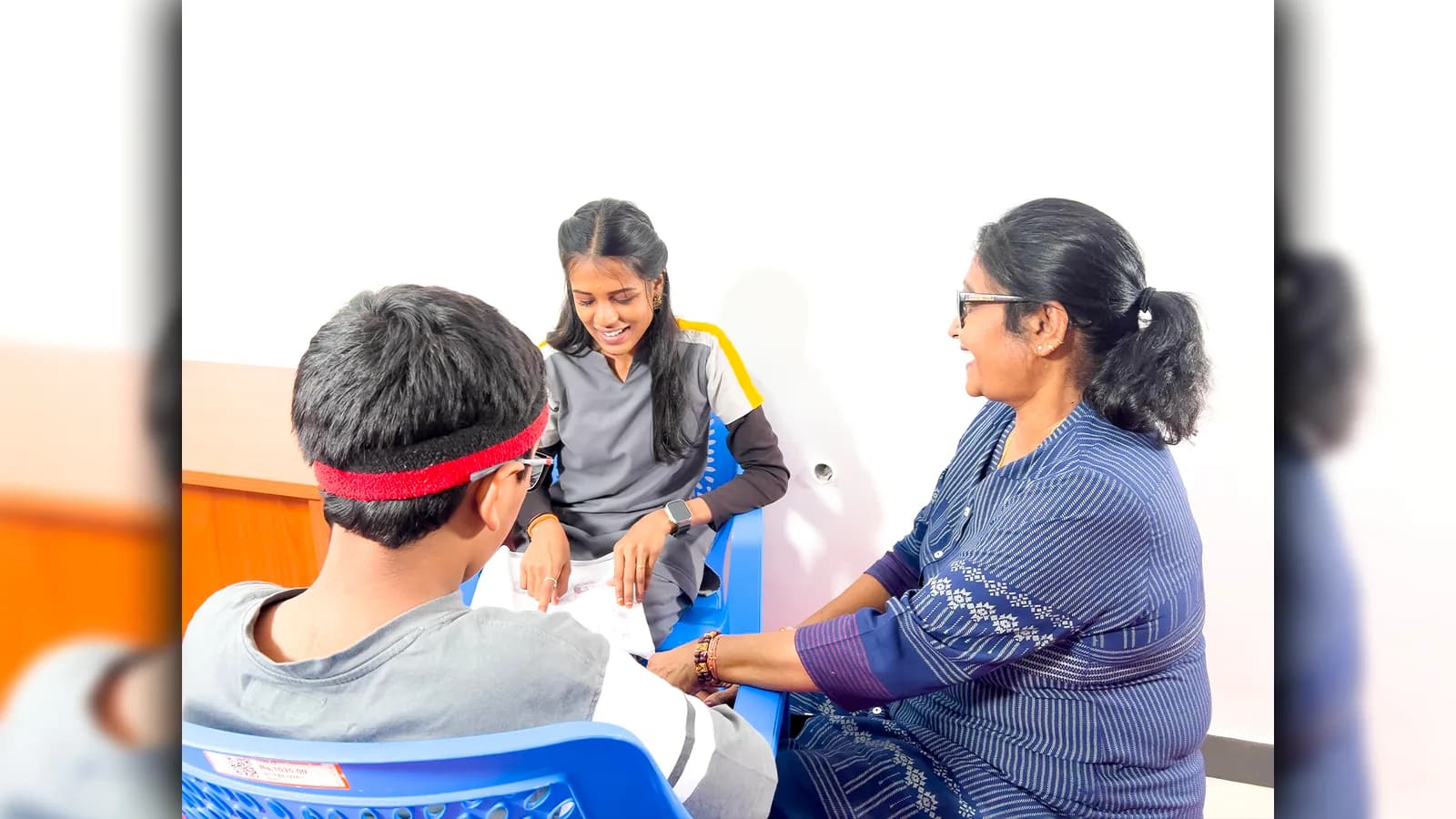
Both services may be appropriate when assessment identifies separate goals that matter. During lunch, an OT might address access to containers or utensils while an SLP addresses asking for help or making choices. During play, different professionals might support handling materials and communicating with a partner. These are planning examples, not a claim that every child needs combined treatment.
Ask how the team will coordinate. Who records each goal? Which strategies should caregivers use? With your consent, how can a teacher contribute observations? If recommendations conflict, request a shared discussion. The benefit of a combined plan should be clearer participation in the routine, not simply a longer timetable. It should remain possible to review, reduce or stop one service if it is no longer needed.
Does OT need to come before speech therapy?
There is no general requirement for a child to finish OT before receiving a speech-language assessment or a way to communicate. If someone recommends a particular sequence, ask for the child-specific reason, the intended benefit and the review point. A preference for one service should not become an indefinite barrier to assessing another important need.
A child who cannot yet tolerate a conventional tabletop session may still need communication support. Professionals can discuss adaptations to setting, materials and interaction rather than making stillness the entry requirement. ASHA's AAC guidance is particularly relevant when speech is limited or unreliable. Ask an SLP how communication access can be supported while other areas of development are being addressed.
How to avoid a confusing or overloaded weekly plan
Ask which goals are most important now and how each appointment contributes. Include travel, school demands, rest and family time when considering a timetable. More sessions are not automatically more useful. If several services are recommended, ask whether the team can identify the highest-priority concerns and review the schedule as more information becomes available.
Home guidance should also fit together. Rather than receiving separate long exercise lists, ask for a small number of practical opportunities within existing routines. A caregiver should know which strategy belongs to which goal and whom to ask when it is not working. Tell the team what is realistic, including who is available to accompany the child and what languages caregivers prefer for explanations.
Separate communication differences from task demands
A child may participate differently with a familiar adult, in a comfortable language or in a preferred activity. Tell the team about those differences. If the child understands a routine in Tamil at home but appears confused by English instructions at school, the assessment needs that context. A difficulty following a task should not automatically be called a motor or attention problem without considering what was understood.
Likewise, a child who communicates clearly in a relaxed conversation may struggle to request help while handling a difficult object or navigating a noisy room. Describe both the communication and the activity. Ask which professional will clarify each part. A coordinated assessment can help distinguish the roles without assuming that one therapy name explains the whole situation.
Parents can ask for explanations in language they understand and for a simple summary to share with caregivers. You should not have to translate competing technical labels into a home programme on your own. Clear definitions of the concern, the professional role and the next decision make the comparison useful.
Prepare useful information for the first conversation
Bring reports you already have, but do not feel you must obtain a diagnosis or buy new testing before asking for guidance. List the concern, an example, the setting and the assistance needed. Include information about hearing checks, school observations and changes in skills where relevant. Ask the clinician what additional information is necessary rather than assuming every report must be repeated.
In Chennai, DARC's Ashok Nagar and Pallikaranai teams can explain the available consultation pathway. Ask who should assess the concern first, what the fee covers and how recommendations are shared. A clear next step may be an OT assessment, an SLP assessment, both or a referral elsewhere. The right answer should come from the concern and findings, not the list of services a centre sells.
Common questions
My child is not talking. Should I book OT or speech therapy?
Ask about a speech-language assessment and relevant hearing or developmental evaluation. OT may also be appropriate if there are separate daily participation concerns, but lack of speech alone does not establish the need for OT. Tell the clinician how your child currently communicates, what they understand and whether skills have changed.
Can OT improve speech directly?
OT can support access to activities in which communication happens, but it does not replace assessment and treatment by an SLP for speech-language needs. Ask who is responsible for the communication goal. Avoid accepting a guarantee that a sensory or motor programme alone will produce spoken language.
How will I know whether both therapies are needed?
Ask each professional to name the assessed concern, a distinct goal, the starting ability and the planned review. Both services should have a clear purpose. If one proposed service has no identifiable goal beyond the diagnosis, request clarification before agreeing to recurring sessions.
Sources and further reading
Prepared by DARC from the resources below and existing service information. These sources do not endorse DARC or establish a result for an individual child.
- AOTA: What is occupational therapy? (opens in a new tab)
- ASHA: Augmentative and alternative communication (opens in a new tab)
- CDC: Autism treatment and intervention (opens in a new tab)
- AOTA: Evaluation and assessment (opens in a new tab)
First published . Updated . Read our editorial policy or send a correction.
A clearer next step for your child
Share what is difficult in your child's day. The DARC team can explain the appropriate assessment pathway in Ashok Nagar or Pallikaranai.
No payment is collected on the request form. The team confirms the next step separately.