Child-friendly support with clear goals and parent guidance.
Assessment
Plan starts with understanding
Parent
Guidance included
Progress
Goals reviewed clearly
2 Branches
Ashok Nagar · Pallikaranai
Individual recommendations and outcomes depend on assessment findings, participation, consistency and family priorities.
Plan a sensory-focused OT assessment
Ages and needs we support
Young children and school-age children whose sensory responses affect play, attention, self-care or daily routines. Share your child’s age and the situations that feel difficult.
Your care team and qualifications
Sensory support is part of DARC’s occupational therapy approach, led by Dr. Aaditya Malathy and the paediatric OT team. Recommendations follow your child’s individual assessment.
Centre hours are not individual clinician availability. Confirm the relevant professional and assessment time before travelling.
Fees and appointment details
Confirm the initial assessment or consultation charge, appointment duration and what feedback or report is included before booking. Therapy fees and frequency are explained after assessment, before you commit to a plan.
The consultation helps identify the right assessment and next steps for your child.
Is this for my child?
Strong reactions to sound, touch, clothing or food textures
Movement seeking, crashing or difficulty staying settled
Fear of movement or poor body awareness
Sensory overload affecting school and family routines
How long does it take?
DARC sets a review point after assessment. Progress is judged through participation and regulation in real routines, not a guaranteed number of sessions.
Is it safe?
Sensory activities are graded and monitored. The team avoids force and does not use distress as evidence that an activity is working.
How much will it cost?
Fees depend on the assessment findings, recommended frequency and whether sensory work is part of a broader occupational therapy plan.
Quick parent answer
Looking for sensory processing therapy in chennai?
Start with an assessment-led consultation. DARC looks at the concern, the child's daily participation, and any connected sensory, motor, communication, attention, behaviour, or learning needs before recommending therapy direction.
Strong reactions to sound, touch, clothing or food textures
Movement seeking, crashing or difficulty staying settled
Fear of movement or poor body awareness
Sensory overload affecting school and family routines
What families notice
Real clinic spaces and therapist presence
Clear care steps before families invest
Child-led pacing with professional structure
Simple next steps for anxious parents
Inside DARC
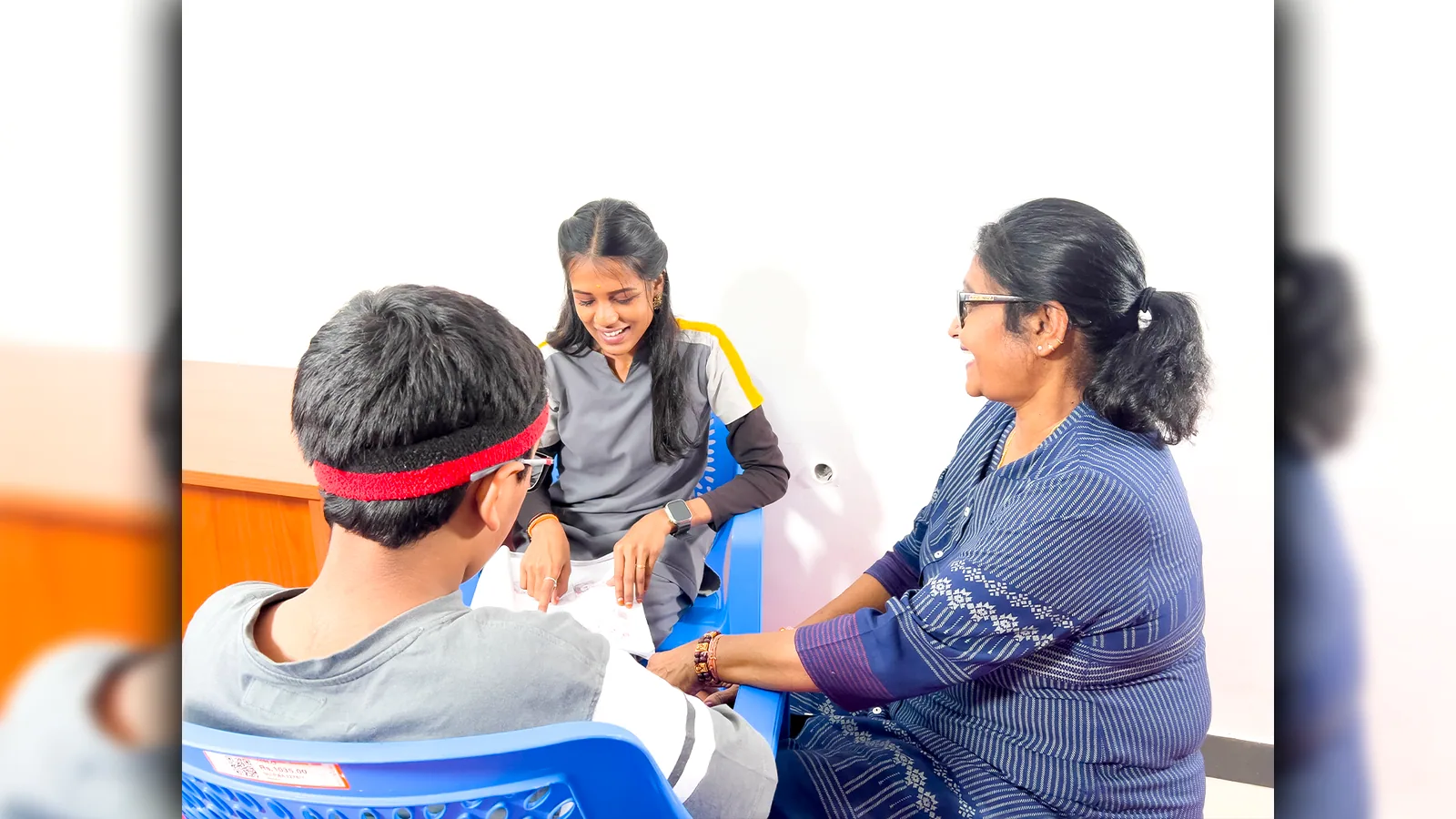
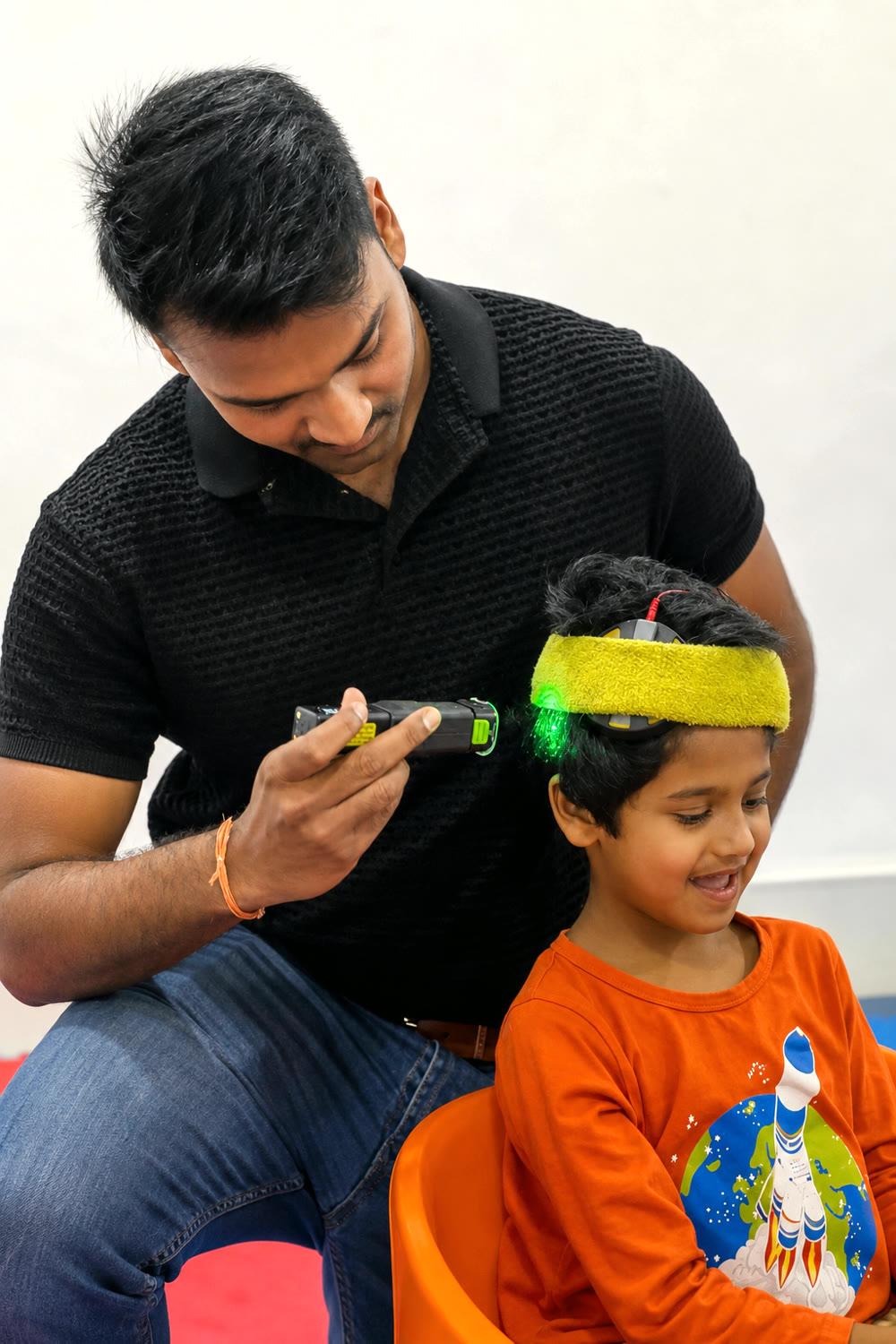
Clinic moments that build confidence for families
Parent guidance
Discuss your child's needs with the team
Non-invasive support
Comfort-first, closely observed sessions
A calm, visible process from assessment to therapy
The website should feel like the centre itself: organised, warm, clinical, and real. These moments show parent-visible care without turning the page into a photo gallery.
Sensory differences matter when they affect participation
Children can be sensitive to some sensations, seek others or have difficulty noticing body signals. Assessment considers the pattern, the setting and what the child is trying to do when a challenge occurs.
DARC focuses on the functional impact: getting dressed, eating, playing, travelling, joining a classroom, sleeping or moving safely.
Sound and visual environments
Touch and clothing
Movement and balance
Body awareness and regulation
The plan may change the task or environment
Support is not limited to clinic equipment. A useful plan may include adjusting the environment, preparing for transitions, changing how a task is introduced and identifying regulation strategies the child accepts.
DARC explains the reasoning to parents and reviews whether strategies are improving everyday participation.
Available at both Chennai branches
Choose the DARC branch that makes consistent visits easier.
DARC Ashok Nagar
New No: 59, 7th Ave, Sarvamangala Colony, Manthope Colony, Ashok Nagar, Chennai, Tamil Nadu 600083
Strong reactions to sound, touch, clothing or food textures
Movement seeking, crashing or difficulty staying settled
Fear of movement or poor body awareness
Sensory overload affecting school and family routines
What progress means
Functional changes families can observe.
Parents and therapists track practical changes such as easier transitions, improved recovery, safer movement and greater participation in daily activities.
Sensory processing support is led through DARC's paediatric occupational therapy pathway, with other disciplines involved when appropriate.
Assessment-first planning instead of one-size-fits-all therapy
Parent guidance included so skills are practised at home
Monthly progress reviews with clear next goals
Every child is different. DARC reviews goals against the child's own starting point and daily participation.
◆ What happens in therapy
A clear plan before parents commit.
Parents should know what the first visit is for before committing to repeated sessions. DARC begins by understanding your child's profile, parent priorities, school or home concerns, and which therapy inputs need to work together.
A named clinical lead behind the therapy direction.
Dr. Aaditya leads DARC's assessment-first, root-cause focused approach for children with autism, ADHD, developmental delay, sensory processing concerns and daily function challenges.
Occupational Therapy
Sensory Integration
Primitive Reflex Integration
Parent Guidance
Child Development Planning
Written by
Dr. Aaditya Malathy
Founder, DARC · Occupational Therapist, OT, MS (USA)
Clinically reviewed by
Vasudharany
Head SLP · Speech, language, feeding and communication support
Page reviewed 2026-09-20
Evidence and professional references
These independent sources inform the page's general educational context. They do not endorse DARC and do not replace individual professional assessment.
Assessment-first planning instead of one-size-fits-all therapy
Parent guidance included so skills are practised at home
Monthly progress reviews with clear next goals
Two Chennai branches: Ashok Nagar and Pallikaranai
Sensory processing support is led through DARC's paediatric occupational therapy pathway, with other disciplines involved when appropriate.
Parents and therapists track practical changes such as easier transitions, improved recovery, safer movement and greater participation in daily activities.
🎥 Patient Stories
Real families. Real progress.
Shared voluntarily by DARC families. Tap any video to watch.
Is sensory processing disorder the same as autism?+
No. Sensory processing differences can occur in autistic children and in children with other developmental profiles. DARC assesses the child's individual needs rather than assuming a diagnosis from sensory behaviours alone.
What happens during a sensory assessment?+
The therapist reviews parent concerns, daily routines and sensory responses, then observes movement, regulation and participation. Additional referral may be recommended if another cause needs investigation.
Will you provide a sensory diet?+
When appropriate, the therapist may recommend an individual set of activities or environmental strategies. DARC does not use one standard sensory diet for every child.
Is sensory processing OT different from general occupational therapy?+
Sensory processing OT is occupational therapy with a specific focus on how a child registers and responds to sound, touch, movement and other input. It is delivered by the same paediatric OT team and is often combined with broader occupational therapy goals rather than treated as a separate service.
How much does therapy cost at DARC?+
Fees depend on the assessment, therapy frequency, and the support plan. We explain the recommended plan and cost clearly before parents commit.
Is the therapy safe for my child?+
Sessions are child-friendly and supervised by trained therapists. Non-invasive supports are recommended only when suitable and never presented as a standalone cure.
How quickly will we see progress?+
Some families notice early changes within weeks, while deeper developmental goals take longer. Progress depends on the child's profile, consistency, and home practice.
Start with a clear assessment for Sensory Processing Therapy in Chennai.
You do not have to decide everything alone. DARC will help you understand the concern, the safest next step, expected timeline, and therapy plan before you commit.